Quick Index Pages

▼

11 juni 2023

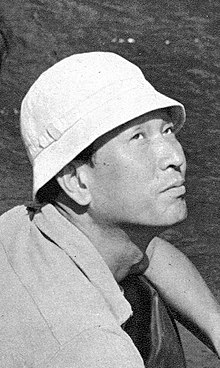
Kurosawa Akira (Great Auteur Film Directors)

Kurosawa Akira (1910-1998) is the most famous Japanese film director outside of Japan, the first Japanese prize winner at an international festival, and someone who has contributed greatly to the international recognition of Japanese cinema. But in Japan, Kurosawa's position was far from secure - in fact, he was somewhat negatively regarded as the "most (or: "too") Western" of its great directors. His style, after all, is somewhat similar to the Anglo-Saxon "action and ethics" style, and Kurosawa had a tendency to confront certain moral and social problems head-on, with a rather "preachy" attitude, which is rare in Japan. He was also inspired by Western literature, such as Shakespeare and Dostoyevsky, in several of his films. Interestingly, Kurosawa is also appreciated in the West for his depictions of Japanese culture, especially in his so-called "samurai films," which had a major influence on the Western genre in the 1960s. One could say that Kurosawa was neither very Japanese nor very Western, but rather stood between the two cultures.


These elements are characteristic of Kurosawa:

1. Movies about men (samurai and businessmen). Kurosawa was a macho director. Unlike other prominent Japanese directors such as Mizoguchi, Naruse and Ozu, women played a minor role in his films (the only exception being the early No Regret for Our Youth).

2. Humanism

3. Technique
- Use of long lenses
- Influence on silent film
- Static formalism from Red Beard on (in all later films)


Kurosawa's career can be divided as follows:


1. 1940s: the early films (war and immediate post-war years)
Sanshiro Sugata is a judo film that glorifies the wartime "hard school" of training among macho men - such men should not be "weakened" by women, so there is not even a kiss between Sanshiro and his girlfriend. The Most Beautiful is the kind of cheap propaganda film that could have been made in Mao's China or Stalin's Soviet Union. One Wonderful Sunday is full of Hollywood bathos. In fact, the best film Kurosawa made during this period was the Kabuki-film The Men Who Tread on the Tiger's Tail, which however wasn't released until many years after it was shot.

2. 1950-1963: the great films

3. 1965-1993: the late movies


In conclusion, I think Kurosawa is somewhat overrated, especially in the West. But he did make a number of wonderful films - such as those listed up below.

The ten best films by Kurosawa are:

1. Stray Dog (Nora inu, 1949)

Nora Inu ("Stray Dog") is about a young policeman (Mifune Toshiro) whose gun is stolen and used to kill someone. He goes almost crazy to get it back and runs all over Tokyo. His superior (Shimura Takeshi) gives him moral support. The movie shows that in a more individualistic society you have to bear the consequences of your actions. The last part is an almost documentary-style chase film in which the hunter and the hunted (both ex-soldiers) become more and more alike. With its visual innovation and themes of obsession, doppelgangers, and post-war chaos, this is one of the greatest films Kurosawa ever made.

2. Rashomon (1950)

An innovative period drama that questions the nature of memory: four contradictory and incompatible eyewitness accounts of the same rape-murder incident show that the witnesses are only concerned with their own pride (or, in Japanese, "face"). The truth cannot be known because the movie registers all four accounts in the same realistic way. This was contrary to what Japanese audiences expected, as movies had always told them what to think and what reality to believe in. The audience was confused, but that was Kurosawa's intention, as he wanted the Japanese to become stronger individuals who could think for themselves and make up their own minds after their passivity during the war years. The movie ends with a humanistic message when the woodcutter who witnessed the crime decides to raise a foundling as his own child. Despite being a "difficult" film, Rashomon was a financial success in Japan, being the fourth highest grossing of the fifty-two films released by Daiei in 1950. After winning the Golden Lion at the Venice Film Festival the following year, Rashomon was released to great acclaim in the U.S. and other countries. The film had been invited to the festival without Kurosawa's knowledge, and no Japanese were present. Even Daiei president Nagata was surprised (he had no faith in this difficult film), but he smelled money and in the following years would consciously make films aimed at foreign film festivals, trying to repeat the success of Rashomon; other studios would follow suit. The movie also marked the breakthrough of actor Toshiro Mifune. See my detailed review.


3. Ikiru (1952)

Akira Kurosawa's Ikiru wins the Kinema Junpo Award for best film of the year. It is Kurosawa's clearest and most compassionate statement of his existential humanism, in the story of a dying bureaucrat, Watanabe, who bypasses bureaucracy to help others and give his life meaning, even by doing one small good. Previously, he had been so immersed in his small daily routine that he had never learned to live. Probably Kurosawa's greatest achievement, quiet and contemplative. The first half of the movie gives us Watanabe's inner state in a straightforward plot, the second half fragments the story into flashbacks, as the various colleagues at Watanabe's funeral review his struggle through their eyes - failing to give him any credit for his efforts to build a playground in a small wasteland in a poor part of town. Shimura Takeshi gives a great performance as Watanabe - his big, pleading eyes and his hangdog face are unforgettable. Won the Special Prize at the 1954 Berlin International Film Festival.

4. Seven Samurai (Shichinin no Samurai, 1954)

The greatest samurai movie ever made, a thrilling three-hour epic. In this seamless fusion of philosophy and entertainment, seven ragged samurai set out to protect a poor farming village from bandit raids in exchange for nothing more than room and board. They win after stunning battle scenes in the rain and mud (though three of their number are killed), but find that the real winners are the farmers, who no longer need them and want them gone so they can get on with their normal lives - leaving the samurai to wonder about the meaning of life. Daily life, in this case the cycle of seasons with its agricultural activities, is more important than winning a war, than friendship, even than love. Won the Silver Lion at the 1954 Venice Film Festival.


5. Throne of Blood (Kumonosujo, 1957)

Shakespeare's Macbeth transported to medieval Japan and the slopes of Mt Fuji and brought to the screen with interesting elements from the Noh theater. Very stylized cinematic technique. Strong performances by Mifune as the hardened, animalistic warrior and Yamada Isuzu as his ruthless wife. Set in an unforgettable ghostly, fog-enshrouded landscape. Arguably, the best Shakespeare adaptation ever made.


6. The Hidden Fortress

Kurosawa Akira's "The Hidden Fortress" is an entertaining period movie set during the civil wars of the sixteenth century. Two clownish peasants help a young princess and her faithful retainer travel incognito through a war-torn region in exchange for gold, not knowing that he is a general and the woman is a princess. Kurosawa's pioneering film in the widescreen format, which he uses to great advantage, and his biggest box-office success of the fifties. This fast-paced, meticulously staged adventure was a major influence on George Lucas' Star Wars, particularly in its technique of telling the story from the perspective of the film's lowest characters. Almost all of the major characters from Star Wars have clear analogues in The Hidden Fortress, including the princess. Berlin Film Festival Director's Award.


7. The Bad Sleep Well (Warui yatsu hodo yoku nemuru, 1960)

An attack on the collusion between big business and the government, a great social problem film (shakai-mono) with noir overtones and a very dark ending. After all, it was 1960 (the year of the big demonstrations against the renewal of the security treaty with the USA) and rebellion against the authorities was in the air. A man (Mifune Toshiro) hides his identity to expose corruption in a construction company with government ties and to avenge the forced suicide of his father. Some elements of Hamlet have been incorporated into the story - there is even a kind of ghost. Mori Masayuki plays the boss and Kagawa Kyoko his crippled daughter. Very suspenseful drama. Marks the debut of Kurosawa's own production company - Kurosawa's films were more expensive than those of other directors at Toho and the studio asked him to step in as co-producer. Included in the 11th Berlin International Film Festival. This movie may be less known, but it is certainly not a lesser Kurosawa.


8. Yojimbo & Sanjuro

Yojimbo is a hard-boiled Western in samurai garb that would inspire countless Westerns, including Sergio Leone's A Fistful of Dollars. A thoroughly amoral ronin (Mifune) arrives in a small town where competing crime lords vie for supremacy. The two bosses each try to hire the newcomer as a bodyguard, and the ronin sardonically plays both sides, encouraging the bad guys to wipe each other out. Full of brutal and subversive humor, as in the grotesque opening shot of a dog holding a severed human hand in its mouth. The film's dynamic energy explodes in the finale, a duel with a gun-toting gangster (Nakadai Tatsuya). A well-deserved Best Actor award at the Venice Film Festival for Mifune Toshiro. Yojimbo did what Seven Samurai had not yet been able to do: it dealt the deathblow to Toei's soft-hearted, warm, family-like period films (a style that was now moving to TV).

By the way, Toho sued Sergio Leone for copyright infringement, as A Fistful of Dollars was effectively an unofficial and unlicensed remake of Kurosawa's film (the matter was eventually settled out of court). Leone, by the way, claimed that both films were based on two earlier, alternative sources that neither of them had acknowledged: both films were partly derived from Dashiell Hammett's novel Red Harvest (1929), but mostly from Carlo Goldoni's eighteenth-century play Servant of Two Masters (according to British critic Sir Christopher Frayling). The basic premise of Goldoni's play is that the protagonist plays two camps against each other. The plot of Servant of Two Masters can also be seen in Hammett's detective novel Red Harvest. Significantly, the Continental Op hero of the novel is a man "without a name" - like Mifune in Yojimbo.

A kind of sequel to Yojimbo was Tsubaki Sanjuro ("Sanjuro"): the same hero as in Kurosawa's previous film acts as a mentor to a group of nine idealistic young samurai who try to root out corruption in the clan administration. Most of the movie is a light-hearted black comedy, but the final confrontation ends with an impossible "fountain of blood" that would become the beginning of over-the-top violence in genre films. From now on, the floodgates of blood would be open. Together with Yojimbo, Tsubaki Sanjuro started the genre of "gruesome period films" (zankoku jidaigeki).


9. High and Low (Tengoku to jigoku, 1963)

A thriller in which shoe magnate Gondo (Mifune) learns that his son has been kidnapped. An outrageous ransom is demanded that will surely bankrupt the businessman. Then the son is discovered at home, unharmed - by mistake the kidnapper took the chauffeur's son. But the ransom remains the same, and Gondo is faced with a moral dilemma: should he still pay the bankrupting ransom, even now that his own son is no longer involved? This first part takes place in "Heaven", Gondo's huge mansion on a hill in Yokohama. The second half of the movie is set in "Hell" (Yokohama's poor and wild downtown) and shows the police investigation, as usual in Japan, conducted by a large group of detectives working together as a team (the chief detective is played by Nakadai Tatsuya). In the finale, Gondo confronts the kidnapper (Yamazaki Tsutomu), who has been sentenced to death for killing two of his colleagues, in prison in a harrowing scene. The motivation for the crime was envy - the kidnapper, a poor intern at a hospital, had to look up from his poor hovel at the Gondo Mansion, which stands proudly on the hill above the city. Loosely based on a novel by Ed McBain (King's Ransom, 1959).

10. Ran (1985)

Ran by Kurosawa Akira is a monumental movie that transports Shakespeare's King Lear to 16th-century Japan: an elderly lord (superbly played by Nakadai Tatsuya) abdicates to his three sons, two of whom turn against him. Actor Peter (of Funeral Parade of Roses fame) plays the transvestite jester, and there is a Mahleresque score by Takemitsu Toru. A majestic and monumental movie that shows the scourge of greed and the thirst for power, as well as the folly of war. Among the many awards Ran received, Wada Emi won an Oscar for Best Costume Design.


Studies about Kurosawa:

  • The Films of Akira Kurosawa, by Donald Richie (Revised edition, University of California Press, 1984)
  • The Warrior's Cinema, by Stephen Price (Princeton University Press, 1991)
  • Kurosawa, Film Studies and Japanese Cinema, by Mitsuhiro Yoshimoto (Duke University Press, 2000)
  •  Kurosawa's Rashomon, by Paul Anderer (Pegasus Books, 2016)
  •  Waiting on the Weather, by Nogami Teruyo (Stone Bridge Press, 2006)
  • Something Like an Autobiography, by Akira Kurosawa (Vintage Books, 1983)


10 juni 2023

Japanese Comedy Films

Horror, samurai, and gangster movies travel more easily between cultures than comedies - humor is very culturally specific. Here are 13 Japanese comedies that should transcend cultural boundaries. The comedies set in the business world of the 1960s and the economic miracle are particularly interesting, also from a social point of view, and Tora-san is the eternal outsider, whose tragic fate confirms how lucky the other Japanese are to lead such respectable lives as families together.


1. Umarete wa mita kedo, "I was born, but..." (Ozu Yasujiro, 1932)

A family consisting of a father, a mother, and two young boys has moved to the outskirts of Tokyo and is now living near the company president's residence. The father has always been the boys' hero, but now they see him humbly greeting the big boss every day, so they are very disappointed. This leads to disobedient behavior and even a tantrum from the children, until the boys learn that society has its ranks and that their father can't do anything about it. The only antidote is to attain high positions themselves. (Also see my blog article about Ozu Yasujiro)

2. Hyakuman Ryo no Tsubo, "The Million Ryo Pot", (Yamanaka Sadao & Okochi Denjiro, 1935)

A breezy farce about the fruitless search for a lost pot that is believed to contain a treasure map. The film features the famous one-eyed and one-armed swordsman Tange Zazen, played by Okochi Denjiro - a heroic staple of jidaigeki since 1927 - but Yamanaka turns him into a soft-hearted slacker who sponges off the much stronger woman who runs a shooting gallery (the only film role played by Kiyozo, a real-life geisha from Tokyo's Shinbashi district). This subversion of bushido (and the tateyaku type) is typical of the humanist Yamanaka - there is no swordplay in this domestic comedy. In the end, Tange and the shooting gallery mistress adopt a little boy who helped them find the pot, and they become a happy family. (Also read my blog article about Okochi Sanso, the villa of Okochi Denjiro in Kyoto's Arashiyama)


3. Hesokuri Shacho, "The Boss and the Slush Fund", begin of the Company President series by Toho that ran from 1956 to 1970 and in all consists of 33 installments (Morishige Hisaya, 1956) 

The Shacho series was Morishige Hisaya's greatest cinematic achievement. Morishige plays a spoiled but lovable company president. Although Morishige and other actors appear again and again in these movies, the settings are different each time. For example, one time it is a food company, another time a real estate company, a department store, etc. Morishige is married and rather afraid of his wife (usually played by Kuji Asami), who torments him with health food. More than his work during the day, he seems to be interested in what happens "after five" when he often has to entertain clients in ryotei (expensive Japanese style restaurants) and bars. He always falls in love with the madams and mama-sans of these establishments, even taking them with him on business trips, but he never manages to be unfaithful to his wife, no matter how hard he tries. At the last moment, before his lips meet hers, there is inevitably a knock at the door and something unforeseen disturbs his amorous plans. (Based on my blog article about Morishige Hisaya)

4. Giants and Toys (Masumura Yasuzo, 1958)

A deliciously wicked satire on the new cutthroat competitiveness of the postwar corporate world and the economic miracle - more vicious than the "Company President" films made around the same time by Morishige Hisaya. Still, there is no lack of humor in the competition between three candy companies (World, Giant, and Apollo) for caramel sales. World decides to make Kyoko, an unknown working-class girl with bad teeth, the star of their new advertising campaign, dressed in a space suit and wielding a ray gun. Meanwhile, the advertising manager's assistant, on orders from his boss, is having an affair with Apollo's ad girl in order to learn about her campaign plans. As Kyoko's popularity rises to unprecedented heights, the young woman is less and less inclined to go along with World's plans for her, working on a career as a singer and dancer, and upsetting the company's carefully laid plans. After a story by Kaiko Takeshi. (Also read my blog article about Masamura Yasuzo)

5. Daigaku no Wakadaisho, begin of Wakadaisho series (Kayama Yuzo, 1961)

The role with which actor and singer Kayama Yuzo became identified was that of Wakadaisho, the "Young Guy" (literally "young captain", the leader of a sports team). Wakadaisho ran from 1961 to 1971. All of the films are in color and CinemaScope, and feature broadly filmed sporting events (it was no coincidence that the series started a few years before Japan hosted the Olympics in 1964). Kayama plays Tanuma Yuichi, the son of a traditional sukiyaki restaurant owner and the leader of a sports club at university - a different sport in each film. He lives with his rather irascible father and a sweet and funny grandma Riki (a great performance by Iida Choko). Tanuma's counterpart at the same university is the "Aodaisho" played by Tanaka Kunie. "Aodaisho" is actually the Japanese Rat Snake, and in the movie is a spoiled rich kid (who looks unattractive and funny) with a yacht and a sports car, who uses his money power to compete with the Wakadaisho for girls. The movies all follow the same pattern. The Wakadaisho meets a nice young woman and they fall in love. The Aodaisho hinders their courtship in one way or another, while the fact that Tanuma is very popular with other women causes the new face to have fits of jealousy. Then Tanuma wins first place in an important sports event, and the young lovers become close again. (From my blog article on Kayama Yuzo)


6. Nippon Musekinin Jidai, "The Age of Irresponsibility in Japan", begin of series with Ueki Hitoshi as irresponsible salaryman (Ueki Hiroshi, 1962)

In the classic comedy The Age of Irresponsibility in Japan Ueki Hitoshi played an idiosyncratic salaryman who captured the spirit of the times. Thanks to the hard work of its people, Japan had returned to prosperity. The 1960s was the time of consumerism, of TVs, cars and "my homes". It was just before the Tokyo Olympics and the nation felt confident about the future. It was even possible to work a little less hard and enjoy life, which is exactly what Ueki's salaryman type does. He is "genki", optimistic and energetic. While his colleagues sit yawning at their desks, he storms into the office, yells "Work, work" and starts working the phones to make a sales appointment with a big voice and a smile - his toothy grin has become his trademark. He almost seems to be the archetype of the ideal employee, but he also has an "irresponsible" side: he doesn't care about small rules and procedures, sets his own time, jumps the hierarchy and uses very unusual methods to be successful. He boldly says what he thinks. Any real-life employee who tried to behave like Ueki would have been fired within seconds. But it was satisfying to see a guy in the movie breaking all the office rules! It gave the real salarymen of Japan the motivation to continue their grinding work. The Age of Irresponsibility was so popular in Japan that more movies featuring Ueki were made at a rapid pace. Another group of Ueki films was created around the title "Nippon Ichi no XX Otoko", "The Best XX Man of Japan", starting with Nippon Ichi no Iro Otoko, "The Sexiest Man of Japan", followed by Nippon Ichi no Gomasuri Otoko, "The Greatest Flatterer of Japan" and Nippon Ichi no Gorigan Otoko, "The Greatest Pusher of Japan". A total of ten of these films were made by 1971. (From my blog article about Ueki Hitoshi)


7. The Graceful Brute, by Kawashima Yuzo (1962) 

Shitoyakana kedamono ("Elegant Beast") is a dark satire that turns Ozu on his head. A greedy, materialistic family of four (parents and adult son and daughter) lives together in a small two-room apartment, but they are completely supported by the dubious activities of the children. Instead of taking a job himself, Maeda Tokizo had his daughter Tomoko seduce the famous novelist Yoshizawa Shuntaro, from whom the family immediately started borrowing money, with no intention of ever paying anything back. Their apartment was actually bought by the famous writer as a love nest for his trysts with the daughter, but she moved in with the family, and now the writer has to take her to hotels, and no matter how he tries, he can't get the family out. Thanks to Yoshizawa's recommendation, the son Minoru lands a job with talent agent Katori Ichiro, from whom he immediately starts embezzling. His boss wants the money back to hide his own dubious financial adventures from his clients and the tax collector - but his books are so irregular that there is no chance of him going to the authorities. When Katori climbs the stairs to the apartment at the beginning of the movie, the family hastily hides all their valuable possessions out of sight, because it doesn't hurt to look poor - a poverty they knew in the past and still fear so much that they have become fraudsters. But even among swindlers, there is always someone who will outwit you. This is the "Beautiful Beast", Mitani Yukie, the chic but also selfish and calculating bookkeeper of the talent agency, played in a great role by Wakao Ayako. The son Minoru is in love with her and has given her at least half of the money he managed to embezzle. But Minoru is not the only one who put money in her pocket. Katori, his external account and even the tax collector have all fallen for Yukie's charms. Yukie now quits her bookkeeping job because she has saved enough money to buy a love hotel - an investment in her future, as she has a young son, and knows that it would be difficult to get married as a single mother (and she is not really interested in marrying either). She is the perfect femme fatale because she doesn't look like one! The Maedas are truly a viper's nest, a symbol of the materialistic society of the early 1960s. Shot entirely in the family's apartment, with many interesting camera angles (like Rear Window). The screenplay was written by Shindo Kaneto. A masterwork. (Text copied from my blog article about Wakao Ayako).


8. Otoko wa Tsurai yo, "It's Tough Being a Man", beginning of the Tora-san series of 48 feature films (Yamada Yoji & Atsumi Kiyoshi, 1969)

The Tora-san films ran from 1969 to 1995, and actor Atsumi Kiyoshi became synonymous with the character of Tora-san, concentrating on a role that increasingly seemed to be a part of himself. After his death at the age of 68, the series was cancelled, and Tora-san died with Atsumi Kiyoshi. The character of Tora-san was created jointly by Atsumi Kiyoshi and the series' director/scriptwriter, Yamada Yoji. As Tora-san, Atsumi Kiyoshi plays a tekiya, a yakuza type who peddles junk at temple and shrine festivals. He travels around the country with his suitcase full of cheap stuff, dressed in geta, a brown checkered jacket, a hat and a haramaki (a knitted belly band). Although he is rather excitable (more so in the early movies than in the later ones), he also has a big heart. He is yasashii (soft, friendly) and as the Japanese used to say, "wet". He always wants to help others, but because he is a bad listener and too hasty, he often makes the situation worse. Over the course of the long series, Tora-san became nothing less than a national hero.

All the movies follow the same pattern: Tora-san returns home to Shibamata, where he is warmly welcomed, especially by his half-sister Sakura (who acts as his surrogate mother), but inevitably he starts an argument or quarrel. In a huff, he leaves for the Japanese countryside, where he meets a damsel in distress, helps her with whatever problem she has, and falls in love with her. Tora-san in love is so shy that he is a sight to behold - he is unable to explain himself and only stutters. From the "Madonna's" side ("Madonna" was the title used for Tora-san's love interest, played by a different popular actress in each film), there usually seems to be more sisterly affection than love, but Tora is blind to this. This is usually followed by another visit to Shibamata with the girlfriend, so the family can shake their heads at the lovelorn Tora-san. In the end, he usually sets his girlfriend up with another man (a husband she ran away from, a boyfriend she just had a fight with, etc.). This is also partly out of kindness. And after that, he goes back on his travels to heal his broken heart. (Also read my blog article about Atsumi Kiyoshi, including profiles of all Tora-san films)

9. Torakku Yaro: Goiken Muyo, "Truck Guys: Your Opinion is Useless", beginning of the Truck Guys series (Suzuki Norifumi with Sugawara Bunta and Aikawa Kinya, 1975)

Sugawara Bunta and Aikawa Kinya play two truckers who travel around Japan in highly decorated trucks ("dekatora"). Sugawara is unmarried and lives in his truck (after sometimes spending the evening in a "soapland"), while his colleague has a motherly wife with seven or eight children and another one on the way. The plot formula borrows one element from Tora-san: as soon as Sugawara falls in love, he becomes immensely shy. Moreover, like in Otoko wa tsurai yo, his choice is always an unlucky one, as he ends up having to help his beloved in her romance with another man. In the movie's finale, he has to race his truck to meet a deadline to bring the couple together. Although completely unknown abroad, this ten-film series is considered in Japan as "cult director" Suzuki Norifumi's greatest contribution to cinema. (From my blog article: A History of Japanese Film by Year: Decline and Stagnation (1975-1979))

10. Marusa no Onna, "A Taxing Woman," begin series of satirical films made by Itami and his wife Miyamoto (Itami Juzo & Miyamoto Nobuko, 1987)

Itami Juzo (1933-1997), the son of prewar satirical jidaigeki director Itami Mansaku, first worked as an actor before taking the director's chair. He achieved international fame with Tampopo in 1985. His most characteristic style was social satire, lampooning the extravagances of the bubble economy era. His humor stemmed from incongruous situations and the resourcefulness of his heroines in the face of adversity. With A Taxing Woman, Itami hit the jackpot with a light comedy starring his wife, actress Miyamoto Nobuko, as a plucky tax inspector who goes after tax cheats, represented by tax evader king Yamazaki Tsutomu. Part 2 was made in 1988 and features a religious sect led by Mikuni Rentaro as a holy tax evader. Besides the social satire, the films are interesting in that they present a strong, modern type of female lead. This funny first film deservedly won the Kinema Junpo Award for Best Film of the Year and the Japan Academy Prize for Picture of the Year. (From my blog article: A History of Japanese Film by Year: Disintegration of the Studio System (1980-1989))

11. Tsuribaka Nisshi, "Fishing Fool's Diary", begin of a series (Nishida Toshiyuki & Mikuni Rentaro, 1988)

Tsuribaka Nisshi is a comedy film by Kuriyama Tomio, based on a fishing manga by Yamasaki Juzo and Kitami Kenichi. It is the first movie in a series that would run to twenty installments by 2007. Most of the early films were released on a double bill with Otoko wa tsurai yo. The movie focuses on the salaryman Hamasaki Densuke ("Hama-chan", played by Nishida Toshiyuki), who is a typical irresponsible salaryman a la Ueki Hitoshi, as his overriding passion is fishing. His unlikely fishing buddy is the CEO of the construction company where he works, Suzuki-san (Mikuni Rentaro), who was bored to death with his job, but regains his vitality thanks to his fishing expeditions with Hama-chan. At first, Hama-chan is completely unaware that the lonely old man he meets after being transferred to the Tokyo headquarters is the boss of his construction company. The two men become friends over their shared passion for fishing. But this is something that has to be hidden from his colleagues at work, especially from his irascible boss Sasaki (played by Tani Kei)! In this first movie, Eri Ishida plays Hamachan's wife. (From my blog article: A History of Japanese Film by Year: Disintegration of the Studio System (1980-1989))

12. Minna Yatteru ka? "Getting Any?" (Kitano Takeshi, 1994)

Getting Any? is a compilation of comedy sketches that begins with a pleasant idiot dreaming of car sex and ends with him where he belongs: (literally) on a big pile of shit. This was not the way to win over moviegoers in Japan - the movie was mostly met with silence and misunderstanding, and at first glance it was not the way to stay popular at international film festivals either. But the movie is actually quite interesting and fits Kitano's biography like a glove. Kitano started out as a Manzai comedian in the 1970s, part of a duo called "Two Beats", with in-your-face jokes that were often cruel and politically incorrect. In the 1980s, Kitano also started his own group of young manzai comedians that he trained. So manzai was very much a part of his life, and in this movie, manzai-style comedy is not only the inspiration, but also the subject - in the sense that even manzai is parodied. The main character is played by Dankan, one of Kitano's manzai students. Note the deadpan face, which is typical. In little sketches that could be part of a Monty Python movie, Dankan goes from having car sex to becoming a movie star, which gives Kitano the opportunity to include spoofs of samurai movies (Zatoichi, which he would later remake), yakuza movies (another genre that would become very dear to his heart), and pink movies, to end with Toho monster movies. To emphasize Kitano's dual personality, the movie is announced as "the fifth film by Kitano Takeshi" and "the first film by Beat Takeshi" (using his Manzai name - this is also his TV name, but this movie has nothing to do with Kitano's TV work). On a cultural level, the movie ironically shows the completely wrong ideas some Japanese young men can have about women. The movie premiered at the London Film Festival. (From my blog article: A History of Japanese Film by Year: The Rise of Indies (1990-1994))

13. Shall We Dance? (Suo Masayuki & Yakusho Koji, 1996)

Suo Masayuki's Shall We Dance? served to prove that Japanese directors can make perfect Hollywood-style feel-good, slick romantic comedies. Though one might question whether this is the way to go for Japanese cinema, Shall We Dance? is so well done in every way that it silences such a discussion. It is also an interesting look at the traditional "salaryman" life: married at 20, a child at 30, and a house at 40 - meaning that you are tied to your company and your job for the rest of your life. In the movie, Sugiyama, such a "salaryman" (Yakusho Koji) tries to find a purpose outside of his mortgage and office drudgery through ballroom dancing - not very common in Japan and often considered something for "lecherous men" until this movie changed that view. It helps that he falls in love with his dance teacher Mai (Kusakari Tamiyo) after he sees her at the window of the school from his commuter train (in Japan, train lines and buildings are very close together!). Takenaka Naoto plays his dance-crazed office mate, who is obsessed with Latin dancing and hides under a big wig. Yakusho's wife Masako wonders why he regularly comes home late and hires a private detective to find out if he is seeing another woman (in Japan, many people find it difficult to ask confrontational questions and therefore opt for such solutions). In the end, of course, the hard-working salaryman returns to his family, and his wife allows him to continue dancing, having seen how much it has given him a purpose in life besides his job - they even take a few tentative steps together in the garden. Kinema Junpo Award for Best Film of the Year and Japan Academy Award for Picture of the Year. The film became the highest-grossing Japanese film in the U.S. to date, and was also remade. (From my blog article: A History of Japanese Film by Year: Revival (1995-1999))