Showing posts with label History. Show all posts

March 28, 2022

Autumn in the Heavenly Kingdom: China, the West, and the Epic Story of the Taiping Civil War by Stephen R. Platt (book review)

Behind this beautiful, poetic title (reminding me of the Yuan-dynasty play "Autumn in Han Palace") lies a fascinating study of what was one of the most destructive and bloody wars of all time: the Taiping Civil War (so far in English called "Taiping Rebellion," but author Stephen R. Platt makes clear this was much more than a mere rebellion), which engulfed China from 1851 to 1864. It pitted the Chinese insurgents of the "Taiping Heavenly Kingdom" against the waning authority of the 200 year old Qing dynasty of the Manchus. In the course of the brutal war at least between 20 and 30 million people lost their lives - a death toll 30 times higher than that of the American civil war which partly took place in the same period. Most of the victims succumbed to the epidemics and famines caused by the civil war, but the number of direct victims of violence was also in the many millions. The rebels and the imperial forces that suppressed the uprising differed little in brutality and blood lust. It took the population in the region where the civil war raged (the provinces Jiangxi, Hubei, Anhui, Zhejiang and Jiangsu in central China along the Yangzi) 50 years to recover to its pre-1850 level. The destruction of cities and cultural monuments (Confucian and Buddhist temples and their art treasures) was also huge, although the conduct of the Taiping troops was not one bit worse than that of the imperial forces. The Taiping were no monsters (as was sometimes asserted) and life under the Taiping, for example in cities as Hangzhou and Shaoxing, was better than the unhappy fate of the citizens after those cities fell in the hands of government troops.


[Scene from the Taiping Civil War]


To compound the miseries of China's rulers, in the late 1850s Britain and France mounted a separate war against them over trading rights, which led to the infamous destruction and looting of the Summer Palace near Beijing - a shameful act of Western barbarism.

The main actors of the Taiping Civil War were:
- Hong Xiuquan, a Hakka from a poor village in Guangdong, frustrated in his ambition to become a scholar-official in the civil service. After reading a pamphlet which he had received from a Protestant missionary, Hong had a vision telling him he was the younger brother of Jesus and that he had been sent to rid China of the "devils", meaning the corrupt Qing government and the Confucian teachings. (Showing the pernicious influence of missionary activities in a foreign culture, as in a cross-cultural setting alien religious teachings can be completely misunderstood).
- Hong Rengan, Hong Xiuquan's cousin, who joined the Taiping forces in Nanjing in 1859 and was given considerable power by Hong. Interestingly, Hong Rengan had been the assistant of Scottish missionary and scholar James Legge and had helped him in his great work of the translation of the Confucian classics into English. Hong Rengan believed he could build a bridge between the Taiping and the British and therefore advocated a policy of appeasement that ultimately proved ruinous when there was no positive response from the other side.
- Zeng Guofan, who had set up a local irregular army in Hunan, which became the main armed force fighting for the Qing against the Taiping (the regular Qing army was too weak due to corruption). Zeng's personal army proved effective in gradually turning back the Taiping advance and retaking much of Hubei and Jiangxi provinces. After a long battle Zeng conquered the rebel capital Nanjing in 1864, putting an end to the war. He could have continued on to Beijing to topple the Manchu dynasty, but he remained loyal to the empire and lived out his last years as a scholar.
- British ambassador Frederick Bruce who after only a short sojourn in China, believed that the Qing dynasty was a force of civilized monarchy standing against a chaotic horde of rebels. Both Hong Rengan and Bruce thought they had a deep insight into each other's civilization, and both were wrong.
- Frederick Townsend Ward and Charles George Gordon, commanders of the "Ever Victorious Army," a small imperial army directed and trained by Europeans.

The army of the Taiping insurgents was characterized by tight discipline, puritanism, and fanaticism. The soldiers wore long hair (the braided tail imposed on the Chinese by the Manchus was taboo among the Taiping). Men and women serving in the army lived in separate camps and any sexual contact was punishable by death. The Taiping were filled with an ardent desire for reform. They dreamed of a sanctuary state based on social justice. In their fanaticism they remind me of the early Communists under Mao Zedong. The Taiping state eventually expanded to command a population base of nearly 30 million people.

At the same time, the Taiping Civil War was a total war. Almost every citizen who had not fled the Taiping Heavenly Kingdom was given military training and conscripted into the army to fight against the Qing imperial forces. During this conflict, both sides tried to deprive each other of the resources which they needed in order to continue the war and it became standard practice for each to destroy the opposing side's agricultural areas and butcher the populations of cities. The Taiping were also extremely nationalistic and carried out widespread massacres of Manchus, so much that one could even speak of a genocide campaign.

Platt also shows that China in the 19th c. was not a closed system, but that the empire was deeply integrated into the world's economy through trade. China and the United States were Britain's two largest economic markets, and faced with the prospect of loosing both due to simultaneous civil wars, Britain abandoned its neutrality in China while allowing the U.S. Civil War to run its natural course. As usually is the case with interventions by Western powers in the internal affairs of other cultures, the unintended outcome was wholly undesirable: the fact that Britain saved the Manchus only meant that the Chinese were consigned to another five decades of oppression by a corrupt power. When the Taiping Civil War occurred, the Manchu Dynasty had reached the end of its tether and by preventing its overthrow, Gorden and his "Ever Victorious Army"
arrested a normal and natural process. It was a huge mistake of Britain to help the Manchus in putting down the Taipings so that they could continue their corrupt and inept regime which hampered reforms and kept China weak. And it even didn't lead to increased trade for Britain - on the contrary.

So the overall picture of the Taiping Civil War is one of total devastation without any positive results - as is the case with wars in general. The tale of the foreign intervention and the fall of the Taiping is a tale of "how perceived connections across cultures can in fact turn out to be fictions," as Platt warns, and he concludes: "When we congratulate ourselves on seeing through the darkened window that separates us from another civilization, we sometimes do so without realizing that we are only gazing at our own reflection."

August 29, 2021

Early Chinese Historiography

Early Chinese Historiography

  1. Oracle Bone Inscriptions (Shang Dynasty, ca. 1570-1045 BCE)

    Oldest corpus of Chinese writing. These inscriptions record the divinations  performed at the court of the last nine Shang Kings (starting with Wu Ding, who died in 1189 BCE). The king or his diviners would address an oral charge about the future (the weather, the harvest) or a plan to be executed (a war, a hunt), and then apply an intense heat source to hollows bored into the back of a cattle scapula or turtle shell, and then interprete the resultant stress cracks as auspicious or inauspicious. The question, and often also the answer of the oracle, would then be incised into the bone and kept as a record. The bones were discovered in 1898 near Anyang (Henan province); local inhabitants had found these bones for ages, but had not realized what the bones were and generally reburied them or ground them up as "dragon bones" for medicine. Now finally late Qing scholars recognized their true nature. Private collectors and archaeologists eventually collected over 200,000 oracle bone fragments from the area, which must have been the Shang's major sacra-administrative center (possibly Yin, the capital of the last twelve kings of the Shang). The inscriptions contain around 5,000 different characters, though only about 1,200 of them have been identified with certainty. They provide important information on the late Shang period, and scholars have reconstructed the Shang royal genealogy from the cycle of ancestral sacrifices they record. These records confirmed the existence of the Shang, which some scholars had until then doubted.

    Translations: Sources p. 5-23; Mair p. 3.


    [Ox scapula recording divinations by Zheng in the reign of King Wu Ding]

  2. Inscriptions on Bronze Vessels (Western Zhou Dynasty, 1045-771 BCE)

    Thousands of inscriptions from the Western Zhou dynasty (1045-771 BCE) have come down to us, cast into ritual bronze vessels. Such vessels were generally intended to commemorate some achievement of the person for whom they were cast, and run the gamut from the briefest mention of the name of the addressee, to narratives of several hundred characters, recounting appointments at court, victories in battle, etc. Those inscriptions are reliable sources - especially as we have very little written sources for the Western Zhou - but they of course only enlighten us about a narrow segment of society.

    Translations: Mair p 4-6.


    [A bronze vessel from the Fu Hao Tomb,
    where many vessels with inscriptions were found]

  3. Shang Shu (Venerated documents) or Shu Jing (Classic of documents)

    Proclamations of Zhou and pre-Zhou rulers. The book has had a convoluted history. The pieces all pretend to date from the 3rd millennium BCE down to the 7th c. BCE. About half of the text was lost during the Han and reconstituted or forged in the 3rd or 4th c. CE. Of the remainder, just a handful of pieces are pre-Zhou. Other parts of it can not have been written earlier than the 3rd c. BCE, which is probably the time when the book was put together. Earlier, the various pieces circulated separately. By comparison with the style of archaic Chinese used in bronze vessel inscriptions from the Western Zhou, the following parts of the Shang Shu are probably authentic (note that in traditional China the whole Shang Shu was seen as a true record of the words and deeds of ancient rulers):
    1. The Five Gao (Announcements) chapters (Da Gao "The Great Announcement", Jiu Gao "Announcement about Drunkenness" (these two record speeches by King Wu's son and successor King Cheng); Kang Gao (Announcement ot the Prince of Kang", Luo Gao (Announcement concerning Luo" (two speeches by the Duke of Zhou), Shao Gao "Announcement of the Duke of Shao" (a speech by the Duke of Shao)
    2. Jun Shi "Prince Shi" - a statement of political philosophy spoken by the Duke of Zhou to the Duke of Shao; 
    3. Gu Ming "Testamentary Charge" - King Cheng's final testament.
    4. The Hong Fan "Great Plan" and Jin Teng "The Metal-Bound Coffer" chapters are often considered as important, but in fact these betray both linguistic and conceptual traits for which there is no evidence before the Late Spring and Autumn period (770-481 BCE) at the earliest.
    5. Two further speeches ascribed to the Duke of Zhou are border cases, as they are probably of Western Zhou date but written after the time of the Duke of Zhou.
    6. Pan Geng is supposed to have been a speech delivered by a Shang king in c. 1250 BCE, but the language is so different from that of the oracle bone inscriptions we also have from this period, that it is highly unlikely Pan Geng was written during the Shang dynasty.

      Shang Shu at Chinese text project, Chinese text with full translation by James Legge: https://ctext.org/shang-shu

      The full translation in Penguin Classics is not up to the necessary scholarly level and too idiosyncratic, so it can not be recommended.

      Partial translations: Sources p. 29-37 (Canon of Yao, Canon of Shun, The Great Plan, The Metal-Bound Coffer,
      Announcement of the Duke of Shao): Mair p. 507-510 (The Great Announcement); Owen p. 124-125 (Tang's Vow); Watson p 21-36 (Announcement of the Duke of Shao, The Metal-Bound Coffer).


      [A page of an annotated Shujing manuscript from the 7th century,
      held by the Tokyo National Museum]

  4. Chunqiu (Spring and Autumn Annals)

    Chronicle of the state of Lu (the state where Confucius lived) covering the years 722 to 481. The Spring and Autumn Annals was probably composed in the 5th c. BCE. Spring and Autumn' is equivalent to 'Annals, digested under the four seasons of every year,' only two seasons being given for the sake of brevity. It is the earliest surviving Chinese historical text in annals form (other Zhou states kept similar records, but these have all been lost). The records are very terse: they record events that occurred in Lu during each year, such as the accessions, marriages, deaths, and funerals of rulers, battles fought, sacrificial rituals observed, celestial phenomena considered ritually important, and natural disasters. The entries average only 10 characters per entry, and contain no elaboration on events or recording of speeches. But because the Annals was traditionally regarded as having been compiled by Confucius (after a claim to this effect by Mencius), it was included as one of the Five Classics. The Annals' succinct style was interpreted as Confucius' deliberate attempt to convey "lofty principles in subtle words," making commentaries necessary to bring that out (an example: using the normal word for "death" in the case of the decease of a ruler and not the specific honorable term usual in the case of rulers, to show that a particular ruler had not behaved as he should). Three commentaries have survived: the Commentary of Gongyang, the Commentary of Guliang, and the Commentary of Zuo. The Gongyang and Guliang commentaries were compiled during the 2nd c. BCE, although they may incorporate earlier written and oral traditions of explanation from the period of Warring States. The Commentary of Zuo (Zuo Zhuan) is different in character and will be treated below. The Annals became so important that the era they treat became generally known as the Spring and Autumn period (771-476 BCE).

    Vol V of the Chinese Classics by James Legge contains a translation of the Spring and Autumn Annals: Part one https://archive.org/details/chineseclassics01legggoog, and Part two https://archive.org/details/chineseclassics03legggoog. The Zuozhuan is also included.

    Watson pp. 37-40.

  5. Zuo Zhuan (the Commentary of Zuo or Zuo Tradition)

    Besides textual exegesis, the 30 chapter Zuo Zhuan also contains succinctly told, highly detailed accounts of the events recorded in the Chunqiu, and of events of the same period not mentioned therein. It thus offers a lively and variegated picture of Chinese chivalrous society from the 8th to 5th c. BCE and its wars. The center of gravity of the book is not with the state of Lu, but with the state of Jin. The Zuo Zhuan was probably originally written as a stand-alone work (probably in the second half of the 4th c. BCE) and only later cut up into a commentary on the Chunqiu. The period it covers is also a bit off: 722 BCE to 468 BCE. The Zuo Zhuan is the first narrative history we have from China and by far the best historiographical work we have from the ages before the Han dynasty. The Zuo Zhuan is also the source of many Chinese sayings and idioms, and its concise, flowing style came to be considered as a model of elegant classical Chinese. Its tendency toward third-person narration and portraying characters through direct speech and action became hallmarks of Chinese narrative in general, and its style was imitated by historians, storytellers, and ancient style prose masters for over 2000 years of Chinese history.

    Note: The Guoyu (Discourses of the States) is a collection of 240 speeches attributed to rulers and their advisors from the same period as the Zuo Zhuan. The anonymous work was at least partly compiled on the basis of the same materials as the Zuo Zhuan. However, it has none of the literary qualities of the Zuo Zhuan - the speeches are very didactic and cumbersome.

    Modern translation: The Tso Chuan, Selections from China's Oldest Narrative History, by Burton Watson (Columbia UP 1989).

    A complete translation can be found in Legge's translation of the Spring and Autumn Annals (cut up to fit the Chunqiu, so see above). Another web-based Legge edition (perhaps easier to read than the previous one) can be found here.

    Other partial translations: Watson pp. 40-66; Owen p. 78-80 and 125-27; Mair 514-17.


  6. Zhanguoce (The Intrigues of the Warring States)

    The Spring and Autumn period is followed by the Warring States period (475-221 BCE), an era characterized by warfare, as well as bureaucratic and military reforms and consolidation. It concluded with the Qin wars of conquest which led to that state's victory over all other states in 221 BCE and the establishment of the first unified Chinese empire. The chapters of the Zhanguoce take the form of anecdotes which serve to illustrate various strategies and tricks employed by the Warring States. With the focus more on providing general political insights than on presenting the whole history of the period, there is no stringent year-by-year dating. Stories are sorted chronologically by under which ruler they take place, but within the reign of a single king there is no way to tell if the time elapsed between two anecdotes is a day or a year. Most of the 452 longer and shorter texts consist of speeches or letters addressed to a prince or high minister in order to persuade him to a certain policy, or to make him abandon one. The emphasis is on the persuasiveness of the arguments and not on the correctness of the proposed action. The style is sharp and sometimes witty, and to support the argumentation often fables and anecdotes are employed. However, the historical reliability of these texts is very limited; probably many of them were written as a school exercise in speaking persuasively in response to a hypothetical assignment. The Zhanguoce was compiled in the second half of the first century BCE by the imperial court librarian Liu Xiang. Due to its amoral political opportunism, the Zhanguoce has often been criticized, although the text has also been admired for its style.

    Full translation: Chan-kuo Ts'e by J.I. Crump (Oxford: Clarendon Press, 1970); partial translation: Legends of the Warring States, Persuasions, Romances and Stories from the Chan-kuo Ts'e, by J.I. Crump (Michigan UP 1999). Also see Watson p. 74-91.

    Chinese text at Chinese text project: https://ctext.org/zhan-guo-ce


  7. Shiji (Records of the Grand Historian)

    The Shiji is a monumental history of ancient China finished around 94 BCE by the Western Han Dynasty official Sima Qian (140-87) after having been started by his father, Sima Tan, Grand Astrologer to the imperial court. The Shiji is a history from the earliest (mythical) times to the reign of Emperor Wu of Han in the author's own time. The history was compiled on the basis of the historical works discussed above, comparable texts which since have been lost, and verbal accounts Sima Qian collected during his many travels through the Chinese empire. The Shiji consists of 130 chapters in five genres:
    1. Basic Annals: largely similar to records from the ancient Chinese court chronicle tradition, such as the Spring and Autumn Annals.
    2. Tables: one genealogical table and nine chronological tables. They show reigns, important events, and royal lineages in table form.
    3. Treatises: eight chapters on the historical evolution of ritual, music, pitch pipes, the calendar, astronomy, sacrifices, rivers and waterways, and financial administration.
    4. Hereditary Houses: the histories of the various states during the Zhou dynasty, as well as the most important domains under the Han dynasty.
    5. Biographies: the largest of the five sections, covering more than 40% of the work. Biographical profiles of about 130 outstanding ancient Chinese; some chapters are dedicated to one particular person, others are about two related figures; and again others cover small groups of figures who shared certain roles, such as assassins, caring officials, or Confucian scholars. Unlike most modern biographies, the biographies do not describe individual persons as fully as possible, but instead try to give an impression of the exemplary fulfillment of a social role. The last chapters in this section describe the relations between China and various neighboring peoples. 

    The Records set the model for the 24 subsequent dynastic histories of China (only the section Hereditary Houses would be dropped as not relevant in later times, for the rest all dynastic histories follow the model of the Shiji, breaking history up into smaller, overlapping units dealing with famous leaders, individuals, and major topics of significance.

    Translations: Watson, Burton, trans. (1961). Records of the Grand Historian of China. New York: Columbia University Press; Yang Hsien-yi and Gladys Yang (1974), Records of the Historian. Hong Kong: Commercial Press;
    William H. Nienhauser, Jr., ed. (1994– ). The Grand Scribe's Records, 9 vols. Bloomington: Indiana University Press. Ongoing translation, and being translated out of order. As of 2020, 92 out of 130 chapters.

    Studies: Durrant, Stephen (2001). "The Literary Features of Historical Writing". In Mair, Victor H. (ed.). The Columbia History of Chinese Literature. New York, NY: Columbia University Press. pp. 493–510; Watson, Burton (1958). Ssu Ma Ch'ien Grand Historian Of China. Columbia University Press; The Cloudy Mirror, Tension and Conflict in the Writings of Sima Qian, by Stephen W. Durrant (State University of New York Press, 1995).

    The Shiji in Chinese text project:
    https://ctext.org/shiji


    [Records of the Grand Historian. Transcription; oldest manuscript of the Shiji; handed down in the Oe family. Tohoku University, Sendai]


  8. Hanshu (Book of Han or History of the Former Han)

    History covering the Western, or Former Han dynasty from the first emperor in 206 BCE to the fall of Wang Mang in 23 CE, based on the model of the Shiji, but now only for one dynasty. The work was composed by Ban Gu (32–92 CE), an Eastern Han court official, with the help of his sister Ban Zhao, continuing the work of their father, Ban Biao. The work was finished in 111. More than the Shiji, the Hanshu relies on preserved source material. What is gained in historical reliability, is lost in liveliness. For the periods it overlapped with the Shiji, Ban Gu adopted nearly verbatim much of Sima Qian's material. An outstanding scholar in her own right, Ban Gu's sister Ban Zhao is thought to have written volumes 13–20 (eight chronological tables) and 26 (treatise on astronomy). As with the Records of the Grand Historian, Zhang Qian, a notable Chinese general who traveled to the west, was a key source for the cultural and socio-economic data on the Western Regions contained in the 96th fascicle. From the Tang dynasty on, the compilation of the history of the previous dynasty would be undertaken by a large governmental bureau.

    Translation: Watson, Burton. 1974. Courtier and Commoner in Ancient China. Selections from the History of the Former Han. Columbia University Press, New York. (A translation of chapters 54, 63, 65, 67, 68, 71, 74, 78, 92, and 97).

    Hanshu in Chinese text project: https://ctext.org/han-shu


    [Three Heroes of Three Kingdoms, by Sakurai Sekkan (1715–1790),
    depicting Liu Bei, Guan Yu and Zhang Fei.]

  9. Sanguozhi (Records of the Three Kingdoms)

    The history of the late Eastern Han dynasty (c. 184–220 CE) and the Three Kingdoms period (220–280 CE), written by Chen Shou in the third century. The work synthesizes the histories of the rival states of Wei, Shu and Wu in the Three Kingdoms period into a single compiled text. Chen Shou (233–297) was a former Shu state official. The work was not based on an official commission, but done on the initiative of Chen Shou himself. In the fifth century, Pei Songzhi (372-451) was ordered by Emperor Wen of the Liu Song dynasty to write an extensive commentary on the work, because the text was too concise and contained too many errors. The commentary, which was completed in 429, was remarkably thorough and modern from a historiographical point of view.

    The reason I mention The Records of the Three Kingdoms here, is that it became the main source for the 14th century historical novel Romance of the Three Kingdoms (Sanguo Yenyi), one of the most popular Chinese novels.

    Translation (partial): Robert Joe Cutter and William Gordon Crowell, Empresses and Consorts: Selections from Chen Shou's Records of the Three States With Pei Songzhi's Commentary (University of Hawaii Press, 1999). Includes volumes 5, 34, and 50.

    The Sanguozhi in Chinese text project: https://ctext.org/sanguozhi

    The novel of the Romance of the Three Kingdoms exists in three translations: by Charles H. Brewitt-Taylor, (Tuttle Publishing), Moss Roberts (California UP) and Yu Sumei, edited by Ronald C. Iverson (Tuttle Publishing).


References:
An Anthology of Chinese Literature by Stepen Owen, Norton 1996; The Cambridge History of Ancient China (ed. Michael Loewe and Edward L. Shaughnessy), Cambridge UP 1999; The Columbia Anthology of Traditional Chinese Literature (ed. Victor Mair), Columbia UP 1994; The Columbia History of Chinese Literature (editor: Victor Mair), Columbia UP 2001; Early Chinese Literature by Burton Watson, Columbia UP 1962; A Guide to Chinese Literature by Wilt Idema and Lloyd Haft (Michigan UP 1997); Sources of the Chinese Tradition from the earliest times to 1600 (compiled by WM. Theodore de Bary & Irene Bloom), Columbia UP 1999.

All photos from Wikimedia Commons.

August 6, 2021

The 13 Buddhist Sects of Japan

The 13 Buddhist Sects of Japan

Nowadays, there are 13 independent Buddhist sects (some large, others small) in Japan. Here is an overview.

First, we have the "Six Schools of the Nara Period (8th c.). These were not competing sects, but rather "academic study groups" of which several different ones could be established at one and the same temple. Each school contributed to the later development of Buddhist thought in Japan. In this period Buddhism was largely confined to the court and aristocracy, with the state spending lavishly on temples and Buddhist statues.

Three of the Six Nara schools are still active. Together they have a total of roughly 580,000 followers (as Japanese religion is - different from for example Christianity - not a personal, confessional religion, but often a matter of the family historically belonging to a particular sect or having its graves there, these figures should be read with some skepticism).

All Nara temples are important repositories of Buddhist art.

(1) Hosso Buddhism

  • Hosso-shu (Skt. Yogachara; Ch. Faxiang) "Practice of Yoga School", also called Yuishiki-shu (Ch. Weishi) "Consciousness-only School"
  • Teachings:
    • Based on the doctrine of the Indian Buddhist Idealist school Vijnanavada (one of the two major Indian schools of Mahayana philosophy), first expounded in the 4th c. by Vasubandhu (Seshin) and Asanga (Mujaku), who emphasized that reality is nothing but mental ideation. In Japan, the basic scripture of this school is the Joyuishikiron ("Treatise on the Establishment of the Doctrine of Consciousness Only).  
    • Understanding of reality comes from one's own mind, rather than actual empirical experience (a precursor of George Berkeley!). The universe exists only in the mind of the perceiver.
    • Vijnanavada (Yogachara) teachings were brought from India to China by Xuanzang (Genjo, the famous Chinese monk whose journey to India became the subject of the novel Journey to the West (Xiyouji)). His disciple Kuiji (Jion Daishi) is considered as the first true patriarch of the school. 
    • The school was brought to Japan by Dosho (who had studied for 10 years with Xuanzang) in 662 and again by Genbo in 735. During the Nara period (8th c.) Hosso doctrine was widely studied in Japan and Hosso was connected with several prominent temples, such as Horyuji (now independent denomination), Yakushiji, Kofukuji and (later) Kiyomizudera (now independent). 
    • In contrast to later Japanese Buddhist schools, the Hosso school maintains that not all beings possess the Buddha-nature. Buddha-hood can only be achieved by the select few.
    • Although a scholastic type of Buddhism with few adherents because of its philosophical difficulty, in later ages Hosso monks were involved in important debates, such as Tokuitsu with Saicho and Jokei with Honen.
  • Founder (in Japan): Dosho in 662
  • Head temples: Yakushiji (Nara), Kofukuji (Nara)
  • Other important temples: -
  • Main image: Shaka Nyorai, Yakushi Nyorai
  • Style of temples: Hosso temples as Yakushiji and Kofukuji are renowned for their superb statues and other art works, both in the temple halls and in the attached "national treasure halls." 
  • Basic scripture: Joyuishikiron ("Treatise on the Establishment of the Doctrine of Consciousness Only")
  • One of the 6 schools of Nara Buddhism
  • 518,324 followers; 55 temples
  • https://www.yakushiji.or.jp/en/ (Yakushiji) and https://www.kohfukuji.com/english/ (Kofukuji)
  • The important collection of Buddhist statues owned by Kofukuji includes the Six Hosso Patriarchs (in the National Treasure Hall) and very impressive statues of Vasubandhu (Seshin) and Asanga (Mujaku) in the Northern Round Hall.

[Xuanzang, the "father" of Hosso Buddhism]

(2) Kegon Buddhism

  • Kegon-shu (Skt. Avatamsaka, Ch. Huayan) 
  • Teachings:
    • An influential Chinese lineage named for the text that is its focus, the Kegonkyo, which declares the mutual interpenetration (or connectedness) of all things. It also propounds the doctrine that all beings have the Buddha-nature. 
    • The school was founded in China in the late 6th–7th century by Dushun and further systematized in the 7th–8th century by Fazang. The doctrine first reached Japan in 736, carried by Daoxuan (Dosen, 702-760), a pupil of Fazang, and by a monk from southern India, Bodhisena.
    • Daoxuan was not only responsible for importing Huayan school teachings to Japan, but also the Bodhisattva Precepts (see below), so his influence on Japanese Buddhism was very large. He also presided over the opening of Todaiji.
    • Roben (689-773), the founder of Todaiji, was an early expert in the Kegonkyo. Todaiji was the head temple of the Kokubunji system, the network of provincial temples throughout Japan, which was inspired by the idea of centralized religious authority as propagated by the Kegon school.
    • In the Kamakura period, further authorities were Gyonen of Todaiji and Myoe of Kozanji. Although the doctrine of this sect greatly influenced Japanese Buddhism, and was widely studied by priests of various other sects, it did not prosper on its own. 
  • Founder: Roben in 740
  • Head temple: Todaiji (Nara)
  • Other important temples: Shinyakushiji (Nara), Abe no Monjuin (Nara), Obitokedera (Nara)
  • Main image: Rushana Butsu. Largely equivalent to Dainichi Nyorai, this is a cosmic, solar Buddha who sits at the center of the universe. Shakyamuni was seen as a manifestation and envoy of Rushana, appearing in infinite worlds throughout the universe. The message was one of centralized religious authority (and, by implication, centralized state power).
  • Style of temples: Kegon temples as Todaiji are renowned for their superb statues and other art works.
  • Basic scripture: Kegonkyo (Avatamsaka Sutra; Eng. "Flower Garland Sutra")
  • One of the 6 schools of Nara Buddhism
  • 38,654 followers; 60 temples
  • http://www.todaiji.or.jp/english/index.html


[Roben]


(3) Ritsu Buddhism

  • Risshu (Skt. Vinaya, Ch. Lü)
  • Teachings:
    • Ritsu was mainly concerned with Mahayana rules of behavior and ascetic discipline for monks and nuns. Interest in these precepts was especially high in the Nara period (8th c.) when control over the monastic community was a central concern of the state. 
    • The first Chinese monk to bring ideas regarding the precepts to Japan was Daoxuan (Dosen) - see above. 
    • The teaching was officially transmitted to Japan by the senior Chinese "precept master" Jianzhen (Ganjin), who arrived in 754. He established the Kaidanin (ordination platform) at Todaiji from which he conferred Bodhisattva precepts. Every monk or nun was required to receive precepts at this or two other (in the Kanto area and in Kyushu) official ordination platforms. In 759 Ganjin founded his own temple, Toshodaiji. 
    • After a decline, the school was revived in the 13th c. by such important monks as Eison and Ninsho. In this period a form in which it was combined with Shingon as "Shingon-Risshu" developed. Saidaiji, Hannyaji, Byakugoji and Hozanji (Ikuma Shoten) in Nara are important Shingon-Risshu temples. Others are Shomyoji (Yokohama), Gokurakuji (Kamakura) and Gansenji and Joruriji in Kyoto Pref. So there are far more important Shingon-Risshu temples than pure Risshu temples; however, these are now counted as Shingon temples.
  • Founder: Ganjin in 759
  • Head temple: Toshodaiji (Nara)
  • Other important temples: Mibudera (Kyoto)
  • Main image: Rushana Butsu
  • Style of temples: Like other sects from the Nara period, the Ritsu temple Toshodaiji is renowned for its superb statues and other art works.
  • Basic scripture: Shibunritsu (Dharmaguptaka-vinaya)
  • One of the 6 schools of Nara Buddhism
  • Risshu: 29,500 followers; 26 temples (Shingon-Risshu: 105,500 followers; 90 temples)
  • https://toshodaiji.jp/english/index.html 

[Jianzhen (Ganjin)]
 
An important stream of thought was also the fourth Nara school, the Sanron school (Skt. Madhyamaka, Ch. Sanlun, "Three Treatises"), which focused on the idea of emptiness (sunyata): all existing entities are devoid of any essence because all things are interdependent. Madhyamaka was, together with the Idealistic Vijnanavada school, one of the two major streams in Buddhist philosophy in India and goes back to the philosopher Nagarjuna (c. 150-250 CE). Several Nara temples as Gangoji and Daianji were centers of Sanron studies, and although Sanron never became a separate sect, its thought was very influential on later Japanese Buddhism, as Tendai and Zen. Sanron was introduced into Japan around 625 by the Korean monk Ekan, who resided at Gangoji Temple (in Asuka). (The remaining 2 Nara schools were originally not independent, but were studied in tandem with other Nara schools - Jojitsu with Sanron, and Kusha with Hosso).


In the early 9th c., after the capital had been transferred from Nara to Kyoto, two new indigenous sects were established by Japanese monks who had studied in China, namely Tendai and Shingon. Both sects built their headquarters on mountain tops to enable quiet ascetic practice. All beings contain within themselves a mirror of Buddha-hood, but it takes strenuous austerities and knowledge of secret rituals to polish it. Both sects are "esoteric," meaning that there was a secret transmission between master and pupil and that magical formulas were important. The six Buddhist schools from Nara were gradually overshadowed by these two schools, and Kyoto became the new Buddhist capital. Both schools had strong ties with the court and aristocracy in Kyoto.

Thanks to this sponsorship, Tendai and Shingon temples are (like the Nara temples) great repositories of Buddhist art.

(4) Tendai Buddhism

  • Tendai-shu (Ch. Tiantai)
  • Teachings:
    • Founded in China by Zhiyi (Chigi), based upon the teachings of the Lotus Sutra (Fahuajing), which subscribes to different levels of truth and therefore attempts a synthesis of different philosophical concepts. Central is also the teaching of emptiness - that all things, being impermanent, are devoid of self-entity. 
    • The sect was transmitted to Japan in 806 by Saicho (767-822), who became the founder of Japanese Tendai Buddhism. However, the Japanese and Chinese sects are basically different as Japanese Tendai also includes doctrines of Esoteric Buddhism (Mikkyo, increasingly important in Heian Japan), Zen and Ritsu, together with the Tendai doctrine proper. 
    • Through application of the theory of honji-suijaku, Shinto deities were regarded as various manifestations of Buddhas and Bodhisattvas.
    • The populist Buddhist movements of the Kamakura period evolved from Tendai. 
    • Important Tendai leaders after Saicho were Ennin and Enchin, who both helped perfect the esoteric elements in Tendai to better compete with the Shingon school. Unfortunately, their lineages clashed and the followers of Enchin set up a separate branch called Jimon-shu at Onjoji (Miidera). The influence of Tendai finally declined with the fortunes of the court aristocracy.
  • Founder: Saicho (Dengyo Daishi) in 806
  • Head temple: Enryakuji (on Mt Hiei)
  • Other important temples: Onjoji (Otsu, Shiga Pref.), Ishiyamadera (Otsu, Shiga Pref.), Saikyoji (Shiga Pref.), Rinnoji (Tochigo Pref.), Chusonji (Hiraizumi, Iwate Pref.), Motsuji (idem), Risshakuji (Yamagata), Sanbutsuji (Tottori Pref.), Yokokuraji (Gifu Pref.), Kaneiji (Tokyo), Kitain (Saitama Pref.), Engyoji (Himeji), Kakurinji (Hyogo Pref.), Rengeoin (Sanjusangendo, Kyoto), Sanzenin (Kyoto), Shinnyodo (Kyoto), Shorenin (Kyoto), Bishamondo (Kyoto), Manshuin (Kyoto), etc. etc.
  • Main image: Yakushi Nyorai
  • Style of temples: There are numerous Tendai temples and they are all interesting as they contain great statues and other art works.
  • Basic scripture: Hokekyo (Lotus Sutra)
  • One of the 2 major schools of Heian Buddhism
  • Tendai-shu: 1,534,854 followers; 3,350 temples
  • Tendai Jimon-shu: 317,850 followers; 197 temples
  • http://www.tendai.or.jp/english/ 
  • http://www.tendai-jimon.jp/  

[Saicho]


(5) Shingon Buddhism

  • Shingon-shu (Ch. Zhenyan)
  • Teachings:
    • Shingon is the Japanese translation of the Sanskrit "mantra" (secret word, mystic syllable), which was adopted as the sect name because of its important role in the teachings of this school. The sect claims direct descent from Mahavairocana (Dainichi), via Nagarjuna, who 800 years after the demise of Sakyamuni discovered the long-hidden scripture Dainichikyo in an iron tower in southern India.
    • These scriptures were brought to China, where Kukai (774-835) received them from Huiguo (Keika). This type of Tantristic Buddhism was however never very popular in China proper (as opposed to Tibet).
    • It was only in Japan that the teachings were sufficiently systematized by Kukai to form an independent sect. Kukai identified Dainichi with the Dharmakaya or Ultimate Reality. He also taught that is is possible to the attain Enlightenment in this very existence. In Japan esoteric Buddhism flourished, particularly in the Heian period. It still remains one of the main currents in Japanese Buddhism today. 
    • Ritual is one of the major elements of Shingon Buddhism and difference about ritual was the reason the sect split into the Ono and Hirosawa schools, each again with many branches. Another important branch called Shingi-Shingon was in 1140 established by Kakuban at Negoroji temple (Wakayama Pref.).
  • Founder: Kukai (Kobo Daishi) in 816
  • Head temple: Kongobuji (Koyasan, Wakayama Pref.)
  • Other important temples: Toji (Kyoto), Daigoji (Kyoto), Hasedera (Nara), Muroji (Nara), Daikakuji (Kyoto), Jingoji (Kyoto), Shinshoji (Narita), Yakuoin (Tokyo), Natadera (Ishikawa Pref.), Myotsuji (Obama, Fukui Pref.), Jodoji (Onomichi, Hiroshima Pref.), Kanshinji (Osaka Pref.), etc. etc.
  • Main image: Dainichi Nyorai
  • Style of temples: Just as in the case of Tendai Buddhism, Shingon temples are very rich in statues and other art work.
  • Basic scripture: Dainichikyo (Mahavairocana Tantra), Kongochokyo (Vajrasekhara Sutra)
  • One of the 2 major schools of Heian Buddhism
  • Koyasan Shingonshu: 4,561,680 followers; 3,544 temples
  • Shingonshu Daigojiha: 527,590 followers; 874 temples (and many other branches)
  • https://www.koyasan.or.jp/en/
  • https://www.daigoji.or.jp/  


[Kukai]

In the Kamakura period (1180—1333) new forms of populist Buddhism developed,in contrast to the Buddhism of the Nara and Heian periods which had been mainly the religion of the court and aristocracy. These new forms with their many adherents and mass appeal are still the most important Buddhist sects today. 

First we look at Amidism or Pure Land Buddhism, an "easy way to paradise." In the late Heian period (10th-12th c.) people believed that the world had entered "Mappo," a degenerate epoch in which Buddhism would be in decline. Salvation was only possible by faith in Amida, the Buddha of the Pure Land (Jodo) across the Western Ocean. Tendai priests as Kuya and Genshin were the first to teach that Amida was a compassionate Buddha who would save earnest believers.

The basic goal of Amidism concides with that of general Mahayana Buddhism: realizing the wisdom to see things, including the self, as they truly are. However, such wisdom can only be brought forth from within each person by the transforming power of Amida, and not through self-generated effort. 

There are two very large sects and two much smaller ones. In total, Amidism is by far the largest stream in Japanese Buddhism, with more than 22 million followers. Temples left the mountains (where they had been moved by Tendai and Shingon) and came down to the cities.


(6) Jodo Buddhism

  • Jodo-shu (Pure Land Sect)
  • Teachings:
    • Based on Nagarjuna's principle of the easy road to Nirvana, Daocho's teaching on the Pure Land as opposed to the way of the sages, as well as Shandao's view of sudden enlightenment. 
    • Although Amidist ideas had already reached japan in the Nara period, and Kannon, the "goddess of mercy" who was considered as a manifestation of Amida, was from an early time the most popular Bodhisattva, it surprisingly took a long time before Amidism was establshed as an independent sect. 
    • The Japanese priest Honen (1133-1212) first publicly taught this doctrine in 1175 at Kurodani in Kyoto. He taught that salvation through the mercy of Amida could be achieved by endlessly reciting the phrase "Namu Amida Butsu," "I take my refuge in the Buddha Amida" - the more times the better as many others were clamoring for Amida's attention. The purpose was rebirth in Amida's Pure Land in the West. Note that this was not thought of as an endpoint like the Christian Heaven; being reborn in the Pure Land only made it easier, under guidance of Amida, to realize Enlightenment.
    • This doctrine was based on a vow by Amida promising rebirth in his Pure Land to all who call on his name 10 times at death.
    • The movement became very popular, arousing the enmity of the older sects, so that Honen and his disciples were briefly exiled. 
    • The sect later split into five branches, of which the Chinzei and Seizan branches still exist.
  • Founder: Honen in 1175
  • Head temple: Chionin (Kyoto), Zojoji (Tokyo)
  • Other important temples: Kotokuin (Kamakura's Big Buddha), Konkaikomyoji (Kurodani in Kyoto), Zenrinji (Eikando, also Kyoto), and Komyoji (Kyoto)
  • Main image: Amida Nyorai (and Honen himself)
  • Style of temples: Jodo temples are much more simple than Nara temples or Tendai and Shingon temples. Some have a beautiful Amida statue, but few other statues or art works are on display.
  • Basic scripture: Jodo Sanbukyo (Sukhavati Vyuha, Amitabha Sutra, and Amitayurdhyana Sutra), the "Threefold Pure Land Sutras."
  • One of the 2 largest Pure Land schools
  • 6,021,900 followers; 6,908 temples
  • https://jodo.or.jp/english/about2/ 


[Honen]


(7) Jodo Shin Buddhism

  • Jodo-shin-shu, Shin-shu (True Pure Land Sect, Shin sect)
  • Teachings:
    • In contrast to Honen, Shinran (1173-1263) taught that even a single instance of sincere belief was sufficient for salvation - it was not necessary to endlessly recite the Nenbutsu. The repetition of the Nenbutsu was instead regarded as the expression of a thankful heart.
    • Shin Buddhism also differs from the more conservative Jodo-shu in giving up the "vinaya" (precepts) discipline which the Jodo sect retained, allowing its priests to marry, eat meat and live as laymen. 
    • Although members worship before the founder's image as the revealer of the Amida doctrine, the sect has discarded all other images.
    • In the 16th c. the sect developed an extensive ecclesiastical organization which also included secular and military power, even ruling entire provinces. This religious monarchy was destroyed by Oda Nobunaga between 1570-80. 
    • The sect is divided into the Otani and Honganji schools, due to a succession dispute in 1602, which was used by the Tokugawa shogunate to divide the large sect and thus diminish its power.  
  • Founder: Shinran in 1224
  • Head temples: Nishi Honganji, Higashi Honganji (both Kyoto)
  • Other important temples: Tsukuji Honganji (Tokyo), Zuisenji (Toyama Pref.), Senjuji (Mie Pref.)
  • Main image: Amida Nyorai (and Shinran himself).
  • Style of temples: Shin temples are often huge, to accommodate large congregations (the immense halls of the Honganji temples in Kyoto convey the popular nature of the sect), but they are simple and relatively undecorated, lacking statues or other art works. Note that the hall dedicated to Shinran is usually larger than the hall dedicated to Amida.
  • Basic scripture: Jodo Sanbukyo (Sukhavati Vyuha, Amitabha Sutra, and Amitayurdhyana Sutra), the "Threefold Pure Land Sutras."
  • One of the 2 largest Pure Land schools
  • Nishi Honganji: 6,940,967 followers; 10275 temples
  • Higashi Honganji: 5,333,146; 8,607 temples
  • https://www.hongwanji.or.jp/english/  (Nishi) and http://www.higashihonganji.or.jp/english_top/ (Higashi)


[Shinran]


(8) Ji Buddhism

  • Ji-shu ("Hourly" Sect, in the sense of "24 hours a day", referring to the incessant devotion of the name of the Buddha Amida)
  • Teachings:
    • Originally a mendicant Amidist order, founded by Ippen (1239-1289), a wayfaring hijiri (holy man). 
    • Ippen taught that the name of the Buddha Amida contained within it both Amida's attainment of Buddha-hood and the salvation of all beings, united as a single "timeless" event. He distributed paper talismans (fuda) inscribed with this name. His followers also practiced Nenbutsu dancing as an ecstatic event celebrating the immediacy of salvation available in the name of Amida.
    • In his travels around famous religious places in Japan (the Kumano Shrines, Zenkoji temple in Nagano, Shitennoji in Osaka, etc.), Ippen acquired many disciples. The ideal Jishu life was one of impoverished mendicant wayfaring, distributing paper talismans with Amida's name and thus saving all who received them.
    • The Jishu found much support among the warrior class, as they provided funerals and services for battleground deaths. 
    • Jishu monks (recognizable by the element "Ami" in their name) also served the shogunate as art connoisseurs. 
    • In the 14th and 15th centuries Jishu was the leading Pure Land group, but since then it has almost withered away.
  • Founder: Ippen in 1274
  • Head temple: Shojokoji (popularly called "Yugyoji")
  • Other important temples: -
  • Main image: Amida Nyorai
  • Style of temples: Ji temples usually lack interesting statues or other art works (an exception is the museum of Yugyoji).
  • Basic scripture: Jodo Sanbukyo (Sukhavati Vyuha, Amitabha Sutra, and Amitayurdhyana Sutra). The sect also recognizes the Kegonkyo and Hokekyo as these teach a sort of Nenbutsu.
  • One of the 2 smaller Pure Land schools
  • Now 59,000 followers; 410 temples
  • http://www.jishu.or.jp/english-page 


[Ippen]


(9) Yuzu Nenbutsu Buddhism

  • Yuzu-nenbutsu-shu  
  • Teachings:
    • Japanese Buddhist sect founded upon the teachings of Ryonin (1073-1132), who taught that by practicing the Nenbutsu (the chanting of the name of the Buddha Amida) one "interfuses" with other practitioners, not only leading to one's rebirth in Amida's Pure Land, but enabling the salvation of all mankind. In other words, calling the name of Amida saves not only the one who practices it, but also others who do not. 
    • Ryonin propagated his ideas in the area around Kyoto. 
    • At the request of the Retired Emperor Toba, Ryonin built Dainenbutsuji in 1127 in Osaka.
  • Founder: Ryonin in 1117
  • Head temple: Dainenbutsuji (Osaka)
  • Other important temples: -
  • Main image: Amida Nyorai
  • Style of temples: Yuzu Nenbutsu temples lack interesting statues or other art works.
  • Basic scripture: Jodo Sanbukyo (Sukhavati Vyuha, Amitabha Sutra, and Amitayurdhyana Sutra). Also recognizes the importance of other scriptures as the Kegonkyo and Hokekyo.
  • One of the 2 smaller Pure Land schools
  • 123,375 followers; 356 temples
  • https://www.dainenbutsuji.com/ (only in Japanese)


[Dainenbutsuji, Osaka]
 

Zen was already a part of Tendai practice, when in the late 12th c. it was reintroduced from Song-China as an independent sect. It brought a new wave of Chinese culture to Japan. As "jiriki," a religion based on one's own power of ascetic practice and meditation, Zen stands in opposition to Amidism which stresses "tariki," complete reliance on salvation by the outside power of Amida. Zen teaches that all people possess the Buddha nature and that, by awakening to that Buddha nature, a person may achieve enlightenment. The means to that enlightenment is meditation. Japanese Zen Buddhism counts almost 5 million followers. There are two main streams in japanese Zen Buddhism, Rinzai and Soto; a third one, Obaku, which entered Japan much later and had much less influence, is in fact connected to the Rinzai sect.

(10) Rinzai Zen Buddhism

  • Rinzai-shu (Ch. Linji)
  • Teachings:
    • One of the five Chinese Chan (Zen) sects - Zen was the principal school of Buddhism in Song-China. Founded by Linji Yixuan (Rinzai Gigen, d. 867), whose name it takes. Prospered greatly in China, and later also in Japan as its teachings and practice were highly esteemed by Kyoto's aristocracy and the samurai class. 
    • Eisai (also called Yosai, 1141–1215) studied twice in China, of which the second and longest period in the Rinzai monastery Jingdesi. Upon his return to Japan in 1191, bringing with him Zen scriptures and tea seeds, he founded Shofuku-ji in Kyushu, Japan's first Zen temple. In 1202 he founded Kenninji in Kyoto.
    • Rinzai Zen puts stress on koan (mind-twisters with no rational answers) and a sudden, sometimes violent, enlightenment. Vigorous meditation, sharp verbal exchanges between master and student, and the use of blows with a rod and shouts (katsu) are integral to Rinzai practice. Koan were used to discourage students from rationalization and drive them toward a direct perception of self and reality.
    • Japanese understanding of Rinzai practice was greatly enhanced by Chinese emigre masters who began to come to Japan after the mid-13th c. 
    • The Rinzai monasteries were linked by the shogunate into an officially sponsored network headed by five great monasteries in Kamakura and five in Kyoto (gozan). Under the leadership of monks as Muso Soseki Rinzai Zen reached its apogee of religious, political and cultural influence in the 14th and 15th centuries.
    • Because of its more worldly character and its eclecticism, as well as reliance on powerful and wealthy sponsors, Rinzai Zen has left a deep imprint on Japanese culture, such as ink painting and the tea ceremony. 
    • The Rinzai sect has 14 sub-schools in japan.
  • Founder: Eisai in 1191
  • Head temple: Myoshinji (Kyoto), Kenchoji (Kamakura), etc.
  • Other important temples: Engakuji (Kamakura), Kenninji (Kyoto), Tofukuji (Kyoto), Tenryuji (Kyoto), Nanzenji (Kyoto), Shokokuji (Kyoto), Daitokuji (Kyoto), Eigenji (Shiga Pref.), Zuiganji (Miyagi Pref.), Eihoji (Gifu Pref.)
  • Main image: Shaka Nyorai
  • Style of temples: There are no interesting statues in Rinzai Zen temples, but they have beautiful architecture with clean lines, and there are often great landscape gardens. Thanks to the connection with wealthy donors, the temples regularly possess magnificent screen paintings as well. Rinzai Zen temples are very much worth visiting.
  • Basic scripture: Prajnaparamita Sutras, incl. the Heart Sutra
  • One of Japan's three Zen schools
  • 342,185 followers; 3,384 temples
  • http://zen.rinnou.net/

[Eisai]

(11) Soto Zen Buddhism

  • Soto-shu (Ch. Caodong)
  • Teachings:
    • One of the five Chinese Chan (Zen) sects - Zen was the principal school of Buddhism in Song-China. Established by Dogen who had studied in China under Zhangweng Rujing (Choo Nyojo) and returned in 1227 to Japan. 
    • Compared to Rinzai, which advocates a more active form of meditation upon a brief Zen story (koan) under the direction of a Zen master, Soto places a greater emphasis on a tranquil form of meditation sitting.
    • Another difference with the more cultured Rinzai school is that Soto places more emphasis on a simple and austere life for the monks, who eat sparse vegetarian meals and do manual work around the grounds of their temple.
    • This goes back to the fact that Dogen disliked to engage in worldly affairs and hated to submit to the authority and power of the government. He therefore built his head temple Eiheiji in the mountains of Fukui Prefecture, far from Kyoto. (After the sect grew, this lonely location became a negative point, so in the Meiji period a second head temple was set up in Yokohama.)
    • Soto Zen first stood in the shadow of Rinzai, but became one of the largest Japanese Buddhist sects after moving into the provinces; it especially flourished in the Edo period, when it took over many small, abandoned temples in the countryside and profited from the government rule that every family had to be registered at a temple.
  • Founder: Dogen in 1227
  • Head temples: Eiheiji (Fukui Pref.), Sojiji (Yokohama)
  • Other important temples: Sojiji (Monzen, Ishikawa Pref.), Shisendo (Kyoto), Zuiryuji (Takaoka, Toyama Pref), Daijoji (Kanazawa), Shuzenji (Shizuoka Pref.), Osorezan Bodaiji (Aomori Pref.)
  • Main image: Shaka Nyorai
  • Style of temples: There are no statues in Soto Zen temples; usually they are much more simple than Rinzai temples as the link with aristocratic sponsors is lacking. There are exceptions like Eiheiji and Sojiji in Monzen, but usually Soto Zen temples are culturally uninteresting.
  • Basic scripture: Prajnaparamita Sutras, incl. the Heart Sutra
  • One of Japan's three Zen schools
  • Now 1,554,000 followers; 14,619 temples
  • https://www.sotozen.com/eng/ 

[Dogen]


(12) Obaku Zen Buddhism

  • Obaku-shu
  • Teachings:
    • The last Buddhist sect to arrive from China was Obaku Zen, 400 years after the Rinzai and Soto sects. In China, it was an offshoot from the Rinzai sect. 
    • Japanese Obaku temples preserve the architecture of Ming China, such as "dragon gates," and feature Chinese sculpture as Hotei and Rakan (arhats). 
    • Obaku mixes Zen with Nenbutsu and Esoteric practices. 
    • It also brought a Chinese-influenced vegetarian cuisine, fucha-ryori, to Japan. 
    • In 1654, Ingen, the head priest of Manpukuji on Mt Obaku in China, came to Japan where he founded the Japanese Manpukuji. Mokuan, his chief disciple, succeeded as chief priest in 1664. Chinese monks became successive heads of this temple, until Ryuto, the 14th head priest, who was the first Japanese monk in that position.
  • Founder: Ingen in 1661
  • Head temple: Manpukuji (Uji, Kyoto Pref.)
  • Other important temples: Shofukuji (Nagasaki), Kofukuji (Nagasaki) 
  • Main image: Shaka Nyorai
  • Style of temples: Chinese type architecture and statues make the major Obaku temples as Manpukuji and Shofukuji interesting.
  • Basic scripture: Prajnaparamita Sutras, incl. the Heart Sutra
  • One of Japan's three Zen schools
  • 350,000 followers; 451 temples
  • http://zen.rinnou.net/


[Ingen]
 

The other large stream of populist Buddhism besides Amidism, is Nichiren Buddhism, with more than 11 million followers. Nichiren was a rather fierce evangelist who insisted that the only true teaching lies in invocations of the title of the Lotus Sutra.

(13) Nichiren Buddhism

  • Nichiren-shu (Lotus Sect)
  • Teachings:
    • Nichiren (1222-1282) considers the Lotus Sutra as the basic scripture, like the Tendai sect does, but with an important difference: he teaches that by reciting only the name of this text (called daimoku, “Namu Myohorenge-kyo”) we can become one with the eternal Buddha and gain enlightenment. This simple practice is in some way comparable to the Nenbutsu (and probably the reason why Nichiren was a fierce opponent of the Pure Land sects). The daimoku is chanted in loud tones, often in groups, to the accompaniment of drums and gongs.
    • Nichiren denounced all other schools on the ground that their teachings refer to salvation only in the next world. According to him, only the Lotus Sutra teaches how to live in this world. 
    • The most sacred icon for Nichiren followers is what is called a "mandala" of the invocation "Namu Myoho Rengekyo" in Nichiren's bristling script (often taking the place of a statue on the altar).
    • Since he wrote the Rissho Ankokuron ("The establishment of righteousness in the rule of the country") trying to persuade the government to be ruled by his teaching, he was punished and exiled to the Isle of Sado. Later he was pardoned and built Kuonji temple on Mt Minobu, where he settled for the rest of his life. His patriotic spirit accelerated the rise of new nationalistic subsects which we see in contemporary Japan. 
    • The sect knew various schisms: the designation "Nichiren Sect" includes all the branches of the sect except those founded by Nikko (the Honmon and Nichiren-sho sects).  
  • Founder: Nichiren in 1253
  • Head temple: Kuonji (Minobu, Yamanashi Pref.)
  • Other important temples: Nakayama Hokekyoji (Chiba Pref.), Ikegami Honmonji (Tokyo), Shibamata Taishakuten (Tokyo), Seichoji (Chiba Pref.), Tanjoji (Chiba Pref.), Myojoji (Ishikawa Pref.)
  • Main image: Shaka Nyorai (and Nichiren himself)
  • Style of temples: Nichiren temples are usually large like Shin temples, and similarly lack statues and other art works (with the only exception of Kuonji, which has a small museum). In contrast to Zen temples, there are no interesting buildings or gardens. The image of Nichiren usually occupies a more important place than that of Sakyamuni himself (as if the sect were a cult of Nichiren).
  • Basic scripture: Hokekyo (Lotus Sutra)
  • 3,853,592 followers; 4,636 temples
  • https://www.nichiren.or.jp/english/


[Nichiren]


So, when you are mainly interested in Buddhist art like me (architecture, sculpture, paintings, implements, and gardens) the best temples to visit qua sect are:
  • The Nara temples (Hosso, Kegon and Ritsu)
  • Tendai and Shingon temples
  • Rinzai Zen temples

I have used multiple sources for this article, among others: Nihon no Koji 101sen (Seibido Shuppan, 2019); Japanese-English Buddhist Dictionary (Daito Shuppansha, 1999); The Shambala Dictionary of Buddhism and Zen (Shambala, 1991); Kinoshita & Palevsky, Gateway to Japan (Kodansha, 1990); Deal & Ruppert, A Cultural History of Japanese Buddhism (Wiley Blackwell, 2015); Japan, An Illustrated Encyclopedia (Kodansha, 1993); Shukyo Nenkan Heisei 28 (Bunkacho); Bukkyokai Data Rinku-shu (Kohzansha).

All images are from Wikimedia Commons.


December 23, 2016

The Ako Incident and the Forty-Seven Loyal Retainers (Chushingura) in fact and fiction

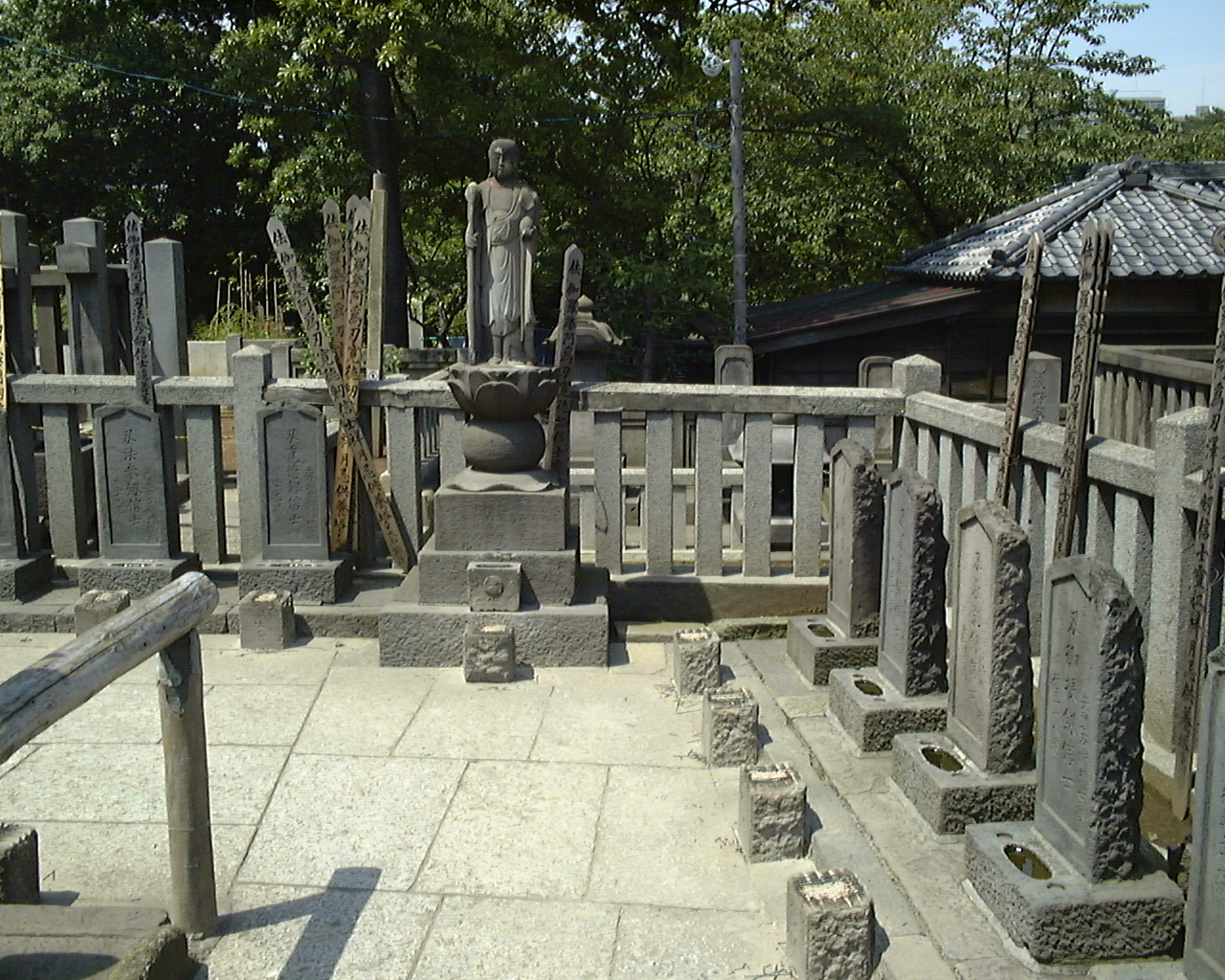
As I wrote in my previous post about the seasonal events of December, the last month of the year is the season that traditionally the story of the Forty-Seven Ronin (also called Chushingura, "the Treasury of Loyal Retainers," after the title of the puppet drama) is performed in the puppet theater and the Kabuki, while on TV both older movie versions are shown as well as newly made TV films. Why December? Because the final act of the story took place on the 14th day of the 12th month of the year Genroku 15 according to the Japanese calendar (January 30, 1703, in the Gregorian calendar). It has become a typically Japanese year-end tradition like playing Beethoven's Ninth Symphony in concert halls around the country. December 14 is also the day of the Gishisai or Festival of the Loyal Retainers at Sengakuji Temple in Tokyo - Sengakuji is the temple where they and (some years earlier) their lord were buried after committing seppuku. On December 14, many people visit their graves and also come to watch a parade of persons dressed up as these 47 loyal retainers. In Ako in Hyogo Prefecture, the location of the castle of Lord Asano, a similar parade is held on that date, as well as at the Oishi Shrine in Kyoto's Yamashina.

[Incense smoke billowing over the graves
of the 47 ronin in Sengakuji, Tokyo]

The story of the Forty-seven Loyal Ronin is based on a historical incident, but also has inspired countless fictional media, from kabuki and bunraku to film, theater, novels and manga. That means it has been snowed under by fictional elements and unfounded interpretations. Below I will first look at the facts as they stand; after that we will consider the fiction in the form of Bunraku / Kabuki plays and 20th c. movies.

The Facts
The Ako Incident (Ako Jiken) occurred when a band of forty-seven former retainers of Asano Naganori (1667-1701), the late lord of Ako, led by chief retainer Oishi Yoshio / Kuranosuke (1659-1703), raided the residence of Kira Yoshinaka (1641-1703), a direct vassal of the Tokugawa shogun, and assassinated him.

The assassination originated in another incident. Asano Naganori had been in charge of ceremonies such as receiving delegates from the imperial court to Edo castle. In the course of that task, on the 14th day of the 3rd month of Genroku 14 (21 April, 1701, in the Gregorian calendar), he drew his sword and lightly wounded Kira, who was the shogunate's chief protocol officer and therefore Asano's superior. Drawing one's sword in the shogunal palace was a capital crime and Asano was ordered to commit seppuku within that same day. His domain was confiscated by the shogunate and his retainers were disbanded and became masterless samurai (ronin).

Back to 1703. After the assassination of Kira, forty-six of the samurai (one had been sent back to Ako before the actual attack) marched to the grave of Asano in Sengakuji temple where they presented the enemy head to the last resting place of their lord. They also notified the shogunate of their deed, awaiting arrest. It took the authorities six weeks of debate before coming up with the judgement that the samurai were to be sentenced to death by seppuku. Thus they committed ritual suicide in March 1703, all forty-six, ranging in age from 15 to 77. Later their ashes were buried in the small graveyard of Sengakuji, next to those of their lord.

[Corner of the graveyard for the 47 Ronin at Sengakuji, Tokyo]

Historical evidence about the incident is scarce. Why did Asano attack Kira in the first place? Why did the masterless samurai assassinate Kira? Why did they wait a year and half to do so?

The meagerness of facts has led to much speculation. Some seek the reason for the original feud between Asano and Kira in romantic competition about a woman; others in economic motifs (Ako was a small fief, but rich thanks to the salt industry), or again in psychological issues (Kira's purported arrogance). 

There is similar disagreement about the reason for the later attack on Kira's mansion. The modern popular view is that the Ako samurai were motivated by vengeance for the death of Asano, in line with "samurai duty." This is often linked with ahistorical concepts of Bushido - incorrectly, because "Bushido" was an invention from the late 19th century, by the philosopher Inoue Tetsujiro and others; around 1700, Bushido did not exist, the ideology of the samurai was Confucianism (I know this is against popular opinion, but please read the wonderful study Inventing the Way of the Samurai by Oleg Benesch if you still need to be convinced!). Moreover, the action by the Ako ronin was an anomaly: it was the only case in the long Edo-period of a lord being avenged by his retainers! Revenge killings (adauchi) occurred, but only in cases when the killing of a parent had gone unpunished - wholly in line with Confucianism. Confucianism does stress loyalty, but the most important virtue is filial piety, "loyalty to the own parents," rather then to the ruler. 

But even if lord-vassal vendettas had been the rule, the Ako Incident would not have fit the definition, because Kira did not kill Asano. Kira was merely the plaintiff in a case in which the shogunate condemned Asano to death. 

So rather than an exemplary manifestation of samurai behavior, the Ako Incident was unique and anomalous - and that is why it still continues to attract such a lot of interest. Various alternative motivations for the action of Oishi and his fellow ronin have been proposed. By the confiscation of the domain, the Ako retainers had lost their income and position, and perhaps they thought they could regain their former status by demonstrating their prowess via this martial deed. They may also have wanted to distinguish themselves in front of potential new employers. These views are supported by the fact that they did not immediately perform seppuku when offering Kira's head to the grave of their former master - they had no clear course of further action and seem to have waited for the reaction of society. And indeed, the reaction from the authorities took six weeks to formulate, so this was apparently not a clear-cut case.

[The grave of Oishi Kuranosuke]

Fiction - Popular Performance Arts
The uniqueness of the case and the mysterious motivations of its protagonists, soon made this story of the "Tormented Lord" and his "Loyal Retainers" extremely popular as fictional material, although the action had to be transposed back several centuries and the identities of its actors had to be hidden as commentaries and plays about contemporary events and persons were forbidden by the shogunate. Between 1706 and 1892 about seventy Kabuki and puppet plays were written about this hot subject. 

The most famous of these became Kanadehon Chushingura, "Kana practice book Treasury of the Loyal Retainers," an 11-act bunraku puppet play from 1748 (a Kabuki version of the same play also soon appeared; in Kabuki it became customary to perform just a few selected acts and not the whole work). The "kana practice book" in the title refers to the coincidence that the number of ronin matches the number of kana syllables. In this play, the personal relation between Oishi and his lord is the central element; he takes possession of the dagger used by Asano during his seppuku and this becomes his keepsake, almost a fetish; in the end he will plunge the weapon into his lord's enemy. Kanedehon Chushingura also made the loyalty of the retainers a central theme and as the shogunate saw this as a desirable virtue, they allowed the Forty-Seven Loyal Retainers to become popular heroes - in 1703, the historical retainers had rather been seen as a threat to the state as they had upset the order in Edo. The virtue of loyalty was thereby promoted among commoners - samurai, by the way, did not visit Kabuki or the puppet theater, their form of theater was the Noh.

[Graves of the rank and file of the retainers in Sengakuji]

In Kanadehon Chushingura the names of the protagonists have been changed and the story is transported several centuries back. Asano Naganori becomes Enya Hangan, Kira Yoshinaka becomes Ko no Moronao and Oishi Kuranosuke Oboshi Yuranosuke. The division of the story is as follows (note the generous addition of fictional elements):

Act I: The Hachiman Shrine (Introduction in which Ko no Moronao tries to seduce the wife of Enya Hangan)
Act II: The Mansion of Wakanosuke (Wakanosuke, a colleague of Enya Hangan, wants to kill Morono but is prevented by his retainer)
Act III. The Pine Corridor (The taunted Enya Hangan attacks Ko no Moronao)
Act IV: Enya Hangan's Seppuku (The seppuku scene; with his dying breath Enya Hangan asks Oboshi Yuranosuke to avenge his death)
Act V: Musket Shots on the Yamazaki Highway (Kanpei, a former retainer of Enya Hangan who wants to join the vendetta, by mistake shoots a robber and finds a purse with cash)
Act VI: Kanpei's Seppuku (Kanpei mistakenly thinks in the previous scene he has killed his father-in-law and commits suicide)
Act VII: The Ichiriki Teahouse (Yuranosuke pretends to be debauched by making fun in Kyoto's licensed quarter)
Act VIII: The Bride's Journey (Konami, the betrothed of Yuranosuke's son Rikiya, travels to Yamashina)
Act IX: The Retreat at Yamashina (Yuranosuke's wife is against the marriage of her son with Konami, but relents when Konami's father Honzo commits suicide to atone for his act of restraining Enya Hangan in the past)
Act X: The House of Amakawaya Gihei (The ronin test the trustworthiness of Gihei, a Sakai merchant who will transport their weapons to Edo)
Act XI: The Attack on Moronao's Mansion (The assassination of Moronao, whose head is then carried to Hangan's grave)

Certain elements of this Bunraku / Kabuki play became standard to the story; others proved more extraneous. Central were acts III, IV, VII, and XI.

[The well where the Ronin washed Kira's head at Sengakuji, Tokyo]

In the 19th c. the story of the Forty-Seven Loyal Retainers also was taken up by Kodan storytellers. Kodan evolved out of lectures on historical topics given to high-ranking nobles and samurai. Because of these origins it is usually performed sitting behind a lectern, and using wooden clappers or a fan to mark the rhythm of the recitation. In the Edo-period it became a popular form of entertainment. Kodan storytellers were mainly responsible for further developing the character of Lord Asano. He was turned into a sincere and pure youth (reason why in later films he is usually clothed in light blue), who suffers various humiliations because he refuses to give his mentor Kira a bribe. While in Kanadehon Chushingura Kira's lust for Asano's wife had been the impetus of the tragedy, the role of women became rather insignificant in the Kodan versions of the story and the theme of loyalty among men was further emphasized.   

That submissiveness became even more important in another genre which came up at the beginning of the 20th c., rokyoku or naniwabushi, a form of storytelling with shamisen accompaniment, often about sad subjects. All romantic interludes were cut and complete loyalty was stressed. This also fit the atmosphere after the Russo-Japanese war of 1905, when feudal loyalty was associated with loyalty toward the emperor. 

[Souvenir shop selling replicas of the drum used to sound the attack at Kira's mansion]

Fiction - The Movies
This is also the period when the first film versions of Chushingura were made, often combining episodes from Kabuki and Kodan. Chushingura films were generally box office hits, they served to propagate the ideal of loyalty and self-sacrifice on a massive scale. In total about 70 film versions of the story were made in the 20th c. (mainly between 1907 and 1962), plus about 30 TV versions.

The first Chushingura film based on a Kabuki play was made in 1907, and Japan's pioneer director Makino Shozo shot his first (of many) Chushingura films in 1910, with Japan's first star actor Onoe Matsunosuke in the main role, that of the leader of the 47 Ronin, Oishi Kuranosuke. The whole movie (including the sub-stories) consisted of 130 film rolls, so it rivaled the large films of D.W. Griffiths in length. This is the oldest surviving version of the story, and the oldest surviving print of any Japanese feature film. A completely static camera just films scene by scene from a performance of Onoe's Kabuki troupe. Onoe starred in at least eight other versions of Chushingura, but these were all lost. In contrast to naniwabushi, Makino Shozo tried to attract women viewers by drawing out the parting scene between Oishi and his wife. But "male bonding" remained paramount, as can be seen in the "tender parting looks" exchanged between Asano, on his way to seppuku, and one of his retainers in many later film versions.

Some of the more important prewar film adaptations were the 1928 version by Makino Shozo, called Jitsuroku Chushingura (A true record of Chushingura), made to celebrate the 50th birthday of the director (although the negatives were destroyed by a fire, about an hour of this film has been restored from existent prints); the 1934 Nikkatsu version with Okochi Denjiro as Oishi; and the 1938 Nikkatsu version with Bando Tsumasaburo as Oishi.

[Gate of Sengakuji, Tokyo]

Renewal in this period came from the popular novel, which had also picked up the 47 Ronin theme. The most famous of these was Ako Roshi or The Ronin from Ako by Osaragi Jiro from 1927. In line wth the liberal trend of the 1920s, Osaragi turned the loyalty of Oishi and his fellow retainers into anger at the injustice of their lord's death sentence, and interpreted the assassination of Kira as protest against a corrupt government. But also in nationalistic accounts of the story, it became common to describe Oishi's times as degenerate. And Osaragi's theme of upright men in corrupt times also appealed to rightists, who saw themselves in a similar position. Osaragi's novel, by the way, had much influence on Chushingura films from the 1950s and early 1960s. 

In 1934 another stage in the development of the 47 Ronin story was reached with the modern Kabuki play Genroku Chushingura by Mayama Seika ("Genroku" is the name of the period in which the incident took place). The author placed emphasis on historical accuracy and took for his central theme the fear of Oishi that his loyalty toward his dead lord could be construed as disloyalty toward the emperor (this theme was of course totally ahistorical, as the emperor in Kyoto did not play any role in the minds of samurai living around 1700). This was a new interpretation and one of the high points of the play is that Oishi is secretly told of the emperor's approval. Overjoyed, he is now determined to act on his decision. Heavily based on the naniwabushi version, Mayama in fact celebrated modern patriotism.

[Oishi's mansion in Banshu-Ako]

This modern Kabuki play became the basis of the film made in 1941 and 1942 by Mizoguchi Kenji. The film shows its wartime origin in its sober and grave dignity. On top of that, Mizoguchi left out the final vendetta in the snow, as well as the tormenting scenes between Kira and Asano, which were Kodan additions. But in this way Oishi's loyalty was made into something unconditional and impersonal, simply directed toward anyone in a higher position. This is most dramatically illustrated when Oishi bows in front of the ancestral altar of Asano and is shot by an overhead camera as if bowing for some kind of god. After the assassination of Kira, he bows in the same way for the proclamation allowing him to commit seppuku. In other words, what we see here is total submission to authority - Mizoguchi has given perfect expression to Japan's wartime ideology. The military had demanded this film from Shochiku because the studio had failed to make a sufficient number of "national policy films." This internalized, ideological version of the famous story, however, flopped at the box office as Mizoguchi had left out the fighting scenes people enjoyed most. Despite the monumental visuals (which have made the film posthumously famous), I find it rather boring and certainly not one of Mizoguchi's best films.

How did the story of the 47 Loyal Retainers fare in Japan's democratic, postwar period? The large number of films on this subject made between 1952 and 1962 demonstrates that, while very few postwar Japanese would support the feudal virtue of loyalty toward a superior, Oishi's devotion to his dead lord was still considered as appealing. Many of the films were based on Osaragi Jiro's novel, and the element of criticism of a corrupt government was strong.

During the Occupation period (1945-1952) feudal subjects had been forbidden in films, so immediately after Japan was free from foreign authority, a veritable flood of such subject matter was released in cinema houses around the country. The popularity of period films remained strong until the early 1960s, when the genre moved to TV and yakuza took the place of samurai on the big screen.

[A restored corner tower of Ako Castle]

Between 1952 and 1962 there were at least nine major productions of Chushingura films: four by the Toei studio, two by Daiei, two by Shochiku and one by Toho. As the Japanese knew this often repeated story by heart, most directors took a certain familiarity with the story-line for granted, although usually none of the famous scenes were entirely cut. In fact, the films made in this period are rather similar and also include literal remakes (sometimes by the same director and with the same group of actors).

Toei was a new studio especially set up to make period films. The company managed to gather many great period film actors under its umbrella and soon grew into the largest producer of films. It made the first film about the loyal retainers immediately after the ban on period films had been lifted, in March 1952 (Ako Castle (Akojo) by Hagiwara Ryo, with Kataoka Chiezo as both Asano and Oishi). The other Toei Chushingura movies were made by one and the same director: Matsuda Sadatsugu (1906-2003), a Toei genre director who was the son of pioneer director Makino Shozo and half-brother of the better-known director Makino Masahiro: in 1956 Ako Roshi (The Ako Retainers), based on the above mentioned "liberal" novel by Osaragi Jiro, with a screenplay by Shindo Kaneto; in 1959 Chushingura, and in 1961 a remake of Ako Roshi. Oishi was played either by Ichikawa Utaemon or Kataoka Chiezo.

In the 1956 version I especially like the scene where Ichikawa Utaemon is finally on the way to Edo for the vendetta; he hides his identity and pretends to be a certain "Tachibana Sakon." But to his consternation suddenly the real Tachibana Sakon appears in front of him (played by Kataoka Chiezo). The confrontation between the two great actors consists of a largely non-verbal "conversation," with as result that the real Tachibana Sakon clears the field to help Oishi.

[Ukiyoe depicting the assault of Asano on Kira
in the Great Pine Corridor of Edo Castle]

Daiei was known for its magnificent period films as Rashomon and Ugetsu, and also the lavish color film The Gate of Hell. The Daiei Chushingura version of 1958, with Watanabe Kunio as director, shines through the large number of actresses taking part (typical for Daiei), albeit in minor roles: Kyo Machiko as a spy on behalf of Kira; Yamamoto Fujiko as Asano's wife; Kogure Michiko as the top-class prostitute (Taiyu) Ukihashi; Awashima Chikage as Oishi's wife; and Wakao Ayako as Orin, a carpenter's daughter who obtains a map of Kira's mansion for the assassins. Hasegawa Kazuo played Oishi and Ichikawa Raizo Asano. A solid classical version that however looses a bit steam after the first 30 minutes. An interesting scene is when Oishi brings Ukihashi, his new "girlfriend" home and asks his surprised wife to kindly clear out of the premises - despicable behavior that is even too much for the Taiyu Ukihashi! But Oishi wanted to demonstrate that he was totally debauched and not anymore interested in vengeance.

The 1962 Chushingura version by Inagaki Hiroshi made for Toho is usually considered as the best of these classical postwar versions. It is a lavish adaptation in two parts (Hana no Maki, Yuki no Maki), with Matsumoto Kojiro as Oishi. Sets and scenery are gorgeous. Lord Asano is presented as the incarnation of sincerity. The film pays much attention to the detailed political dealings between the very large group of characters, sometimes dropping the pace to a crawl, but ends with a riveting, climactic battle scene. Hara Setsuko played her last film role here, as the wife of Oishi. Among the all-star cast was also Mifune Toshiro, for whom a new subplot had been devised.

[Ukiyoe version by Yoshitoshi of the attack on Kira's mansion]

After 1962, only two major films on the subject of Chushingura were made in the rest of the century, simply because the period drama had moved to the new medium of television. That is where many Chushingura adaptations saw the light of day, in fact until the present times. Some major productions are the NHK drama Ako Roshi from 1964 (with Hasegawa Kazuo as Oishi); Dai-Chushingura with Mifune Toshiro by Asahi TV; the same company's 1979 version called Ako Roshi with Nakamura Kinnosuke; and the 1990 Chushingura with Beat Takeshi by TBS, to name a few.

The two feature films - the only ones remarkable in the last five and half decades - are Akojo Danzetsu (The Fall of Ako Castle), by maverick yakuza film director Fukasaku Kinji (Toei, 1978), with Nakamura Kinnosuke (Oishi), Chiba Shinichi and Watase Tsunehiko; and Shijushichinin no shikaku or Forty-Seven Assassins made in 1994 by veteran director Ichiwaka Kon. Fukasaku's film sparkles in the mob scenes, like his Battles Without Honor and Humanity film series, but for the rest his treatment of the story is remarkably conservative. More interesting is the film by Ichikawa, featuring Takakura Ken as Oishi, and based on a novel by Ikemiya Shoichiro, which provided a fresh perspective on the old story. For example, it starts in medias res, the story of Asano's seppuku is told in flashbacks; Takakura Ken's Oishi is cool and stoic, in contrast to the emotional performances by Kataoka Chiezo or Hasegawa Kazuo; he falls in love with a young woman (Miyazawa Rie) who joins him while he is lying low in Yamashina and even bears his child (no playing around with geisha or taiyu here) - therefore Oishi is torn between a new beginning or a violent finale to his life; Asano is not taunted by Kira for private reasons, but becomes the victim of an economic power struggle with the strong Uesugi clan (more convincing); Kira has defended his mansion with ninja-like traps, what leads to a riveting fight scene. Is the last major film version also the best? Contrary to other critics who are generally more negative about this film (they find that it is too far removed from the classical story), it gets my vote - together with the classical Inagaki version.
Partly based on information from Archetypes in Japanese Film by Gregory Barrett and Inventing the Way of the Samurai by Oleg Benesch, as well as Japanese Classical Theater in Films by Keiko I. Macdonald.