Posts tonen met het label Japanese Film. Alle posts tonen

11 juni 2023

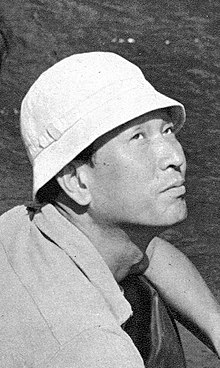
Kurosawa Akira (Great Auteur Film Directors)

Kurosawa Akira (1910-1998) is the most famous Japanese film director outside of Japan, the first Japanese prize winner at an international festival, and someone who has contributed greatly to the international recognition of Japanese cinema. But in Japan, Kurosawa's position was far from secure - in fact, he was somewhat negatively regarded as the "most (or: "too") Western" of its great directors. His style, after all, is somewhat similar to the Anglo-Saxon "action and ethics" style, and Kurosawa had a tendency to confront certain moral and social problems head-on, with a rather "preachy" attitude, which is rare in Japan. He was also inspired by Western literature, such as Shakespeare and Dostoyevsky, in several of his films. Interestingly, Kurosawa is also appreciated in the West for his depictions of Japanese culture, especially in his so-called "samurai films," which had a major influence on the Western genre in the 1960s. One could say that Kurosawa was neither very Japanese nor very Western, but rather stood between the two cultures.


These elements are characteristic of Kurosawa:

1. Movies about men (samurai and businessmen). Kurosawa was a macho director. Unlike other prominent Japanese directors such as Mizoguchi, Naruse and Ozu, women played a minor role in his films (the only exception being the early No Regret for Our Youth).

2. Humanism

3. Technique
- Use of long lenses
- Influence on silent film
- Static formalism from Red Beard on (in all later films)


Kurosawa's career can be divided as follows:


1. 1940s: the early films (war and immediate post-war years)
Sanshiro Sugata is a judo film that glorifies the wartime "hard school" of training among macho men - such men should not be "weakened" by women, so there is not even a kiss between Sanshiro and his girlfriend. The Most Beautiful is the kind of cheap propaganda film that could have been made in Mao's China or Stalin's Soviet Union. One Wonderful Sunday is full of Hollywood bathos. In fact, the best film Kurosawa made during this period was the Kabuki-film The Men Who Tread on the Tiger's Tail, which however wasn't released until many years after it was shot.

2. 1950-1963: the great films

3. 1965-1993: the late movies


In conclusion, I think Kurosawa is somewhat overrated, especially in the West. But he did make a number of wonderful films - such as those listed up below.

The ten best films by Kurosawa are:

1. Stray Dog (Nora inu, 1949)

Nora Inu ("Stray Dog") is about a young policeman (Mifune Toshiro) whose gun is stolen and used to kill someone. He goes almost crazy to get it back and runs all over Tokyo. His superior (Shimura Takeshi) gives him moral support. The movie shows that in a more individualistic society you have to bear the consequences of your actions. The last part is an almost documentary-style chase film in which the hunter and the hunted (both ex-soldiers) become more and more alike. With its visual innovation and themes of obsession, doppelgangers, and post-war chaos, this is one of the greatest films Kurosawa ever made.

2. Rashomon (1950)

An innovative period drama that questions the nature of memory: four contradictory and incompatible eyewitness accounts of the same rape-murder incident show that the witnesses are only concerned with their own pride (or, in Japanese, "face"). The truth cannot be known because the movie registers all four accounts in the same realistic way. This was contrary to what Japanese audiences expected, as movies had always told them what to think and what reality to believe in. The audience was confused, but that was Kurosawa's intention, as he wanted the Japanese to become stronger individuals who could think for themselves and make up their own minds after their passivity during the war years. The movie ends with a humanistic message when the woodcutter who witnessed the crime decides to raise a foundling as his own child. Despite being a "difficult" film, Rashomon was a financial success in Japan, being the fourth highest grossing of the fifty-two films released by Daiei in 1950. After winning the Golden Lion at the Venice Film Festival the following year, Rashomon was released to great acclaim in the U.S. and other countries. The film had been invited to the festival without Kurosawa's knowledge, and no Japanese were present. Even Daiei president Nagata was surprised (he had no faith in this difficult film), but he smelled money and in the following years would consciously make films aimed at foreign film festivals, trying to repeat the success of Rashomon; other studios would follow suit. The movie also marked the breakthrough of actor Toshiro Mifune. See my detailed review.


3. Ikiru (1952)

Akira Kurosawa's Ikiru wins the Kinema Junpo Award for best film of the year. It is Kurosawa's clearest and most compassionate statement of his existential humanism, in the story of a dying bureaucrat, Watanabe, who bypasses bureaucracy to help others and give his life meaning, even by doing one small good. Previously, he had been so immersed in his small daily routine that he had never learned to live. Probably Kurosawa's greatest achievement, quiet and contemplative. The first half of the movie gives us Watanabe's inner state in a straightforward plot, the second half fragments the story into flashbacks, as the various colleagues at Watanabe's funeral review his struggle through their eyes - failing to give him any credit for his efforts to build a playground in a small wasteland in a poor part of town. Shimura Takeshi gives a great performance as Watanabe - his big, pleading eyes and his hangdog face are unforgettable. Won the Special Prize at the 1954 Berlin International Film Festival.

4. Seven Samurai (Shichinin no Samurai, 1954)

The greatest samurai movie ever made, a thrilling three-hour epic. In this seamless fusion of philosophy and entertainment, seven ragged samurai set out to protect a poor farming village from bandit raids in exchange for nothing more than room and board. They win after stunning battle scenes in the rain and mud (though three of their number are killed), but find that the real winners are the farmers, who no longer need them and want them gone so they can get on with their normal lives - leaving the samurai to wonder about the meaning of life. Daily life, in this case the cycle of seasons with its agricultural activities, is more important than winning a war, than friendship, even than love. Won the Silver Lion at the 1954 Venice Film Festival.


5. Throne of Blood (Kumonosujo, 1957)

Shakespeare's Macbeth transported to medieval Japan and the slopes of Mt Fuji and brought to the screen with interesting elements from the Noh theater. Very stylized cinematic technique. Strong performances by Mifune as the hardened, animalistic warrior and Yamada Isuzu as his ruthless wife. Set in an unforgettable ghostly, fog-enshrouded landscape. Arguably, the best Shakespeare adaptation ever made.


6. The Hidden Fortress

Kurosawa Akira's "The Hidden Fortress" is an entertaining period movie set during the civil wars of the sixteenth century. Two clownish peasants help a young princess and her faithful retainer travel incognito through a war-torn region in exchange for gold, not knowing that he is a general and the woman is a princess. Kurosawa's pioneering film in the widescreen format, which he uses to great advantage, and his biggest box-office success of the fifties. This fast-paced, meticulously staged adventure was a major influence on George Lucas' Star Wars, particularly in its technique of telling the story from the perspective of the film's lowest characters. Almost all of the major characters from Star Wars have clear analogues in The Hidden Fortress, including the princess. Berlin Film Festival Director's Award.


7. The Bad Sleep Well (Warui yatsu hodo yoku nemuru, 1960)

An attack on the collusion between big business and the government, a great social problem film (shakai-mono) with noir overtones and a very dark ending. After all, it was 1960 (the year of the big demonstrations against the renewal of the security treaty with the USA) and rebellion against the authorities was in the air. A man (Mifune Toshiro) hides his identity to expose corruption in a construction company with government ties and to avenge the forced suicide of his father. Some elements of Hamlet have been incorporated into the story - there is even a kind of ghost. Mori Masayuki plays the boss and Kagawa Kyoko his crippled daughter. Very suspenseful drama. Marks the debut of Kurosawa's own production company - Kurosawa's films were more expensive than those of other directors at Toho and the studio asked him to step in as co-producer. Included in the 11th Berlin International Film Festival. This movie may be less known, but it is certainly not a lesser Kurosawa.


8. Yojimbo & Sanjuro

Yojimbo is a hard-boiled Western in samurai garb that would inspire countless Westerns, including Sergio Leone's A Fistful of Dollars. A thoroughly amoral ronin (Mifune) arrives in a small town where competing crime lords vie for supremacy. The two bosses each try to hire the newcomer as a bodyguard, and the ronin sardonically plays both sides, encouraging the bad guys to wipe each other out. Full of brutal and subversive humor, as in the grotesque opening shot of a dog holding a severed human hand in its mouth. The film's dynamic energy explodes in the finale, a duel with a gun-toting gangster (Nakadai Tatsuya). A well-deserved Best Actor award at the Venice Film Festival for Mifune Toshiro. Yojimbo did what Seven Samurai had not yet been able to do: it dealt the deathblow to Toei's soft-hearted, warm, family-like period films (a style that was now moving to TV).

By the way, Toho sued Sergio Leone for copyright infringement, as A Fistful of Dollars was effectively an unofficial and unlicensed remake of Kurosawa's film (the matter was eventually settled out of court). Leone, by the way, claimed that both films were based on two earlier, alternative sources that neither of them had acknowledged: both films were partly derived from Dashiell Hammett's novel Red Harvest (1929), but mostly from Carlo Goldoni's eighteenth-century play Servant of Two Masters (according to British critic Sir Christopher Frayling). The basic premise of Goldoni's play is that the protagonist plays two camps against each other. The plot of Servant of Two Masters can also be seen in Hammett's detective novel Red Harvest. Significantly, the Continental Op hero of the novel is a man "without a name" - like Mifune in Yojimbo.

A kind of sequel to Yojimbo was Tsubaki Sanjuro ("Sanjuro"): the same hero as in Kurosawa's previous film acts as a mentor to a group of nine idealistic young samurai who try to root out corruption in the clan administration. Most of the movie is a light-hearted black comedy, but the final confrontation ends with an impossible "fountain of blood" that would become the beginning of over-the-top violence in genre films. From now on, the floodgates of blood would be open. Together with Yojimbo, Tsubaki Sanjuro started the genre of "gruesome period films" (zankoku jidaigeki).


9. High and Low (Tengoku to jigoku, 1963)

A thriller in which shoe magnate Gondo (Mifune) learns that his son has been kidnapped. An outrageous ransom is demanded that will surely bankrupt the businessman. Then the son is discovered at home, unharmed - by mistake the kidnapper took the chauffeur's son. But the ransom remains the same, and Gondo is faced with a moral dilemma: should he still pay the bankrupting ransom, even now that his own son is no longer involved? This first part takes place in "Heaven", Gondo's huge mansion on a hill in Yokohama. The second half of the movie is set in "Hell" (Yokohama's poor and wild downtown) and shows the police investigation, as usual in Japan, conducted by a large group of detectives working together as a team (the chief detective is played by Nakadai Tatsuya). In the finale, Gondo confronts the kidnapper (Yamazaki Tsutomu), who has been sentenced to death for killing two of his colleagues, in prison in a harrowing scene. The motivation for the crime was envy - the kidnapper, a poor intern at a hospital, had to look up from his poor hovel at the Gondo Mansion, which stands proudly on the hill above the city. Loosely based on a novel by Ed McBain (King's Ransom, 1959).

10. Ran (1985)

Ran by Kurosawa Akira is a monumental movie that transports Shakespeare's King Lear to 16th-century Japan: an elderly lord (superbly played by Nakadai Tatsuya) abdicates to his three sons, two of whom turn against him. Actor Peter (of Funeral Parade of Roses fame) plays the transvestite jester, and there is a Mahleresque score by Takemitsu Toru. A majestic and monumental movie that shows the scourge of greed and the thirst for power, as well as the folly of war. Among the many awards Ran received, Wada Emi won an Oscar for Best Costume Design.


Studies about Kurosawa:

  • The Films of Akira Kurosawa, by Donald Richie (Revised edition, University of California Press, 1984)
  • The Warrior's Cinema, by Stephen Price (Princeton University Press, 1991)
  • Kurosawa, Film Studies and Japanese Cinema, by Mitsuhiro Yoshimoto (Duke University Press, 2000)
  •  Kurosawa's Rashomon, by Paul Anderer (Pegasus Books, 2016)
  •  Waiting on the Weather, by Nogami Teruyo (Stone Bridge Press, 2006)
  • Something Like an Autobiography, by Akira Kurosawa (Vintage Books, 1983)


10 juni 2023

Japanese Comedy Films

Horror, samurai, and gangster movies travel more easily between cultures than comedies - humor is very culturally specific. Here are 13 Japanese comedies that should transcend cultural boundaries. The comedies set in the business world of the 1960s and the economic miracle are particularly interesting, also from a social point of view, and Tora-san is the eternal outsider, whose tragic fate confirms how lucky the other Japanese are to lead such respectable lives as families together.


1. Umarete wa mita kedo, "I was born, but..." (Ozu Yasujiro, 1932)

A family consisting of a father, a mother, and two young boys has moved to the outskirts of Tokyo and is now living near the company president's residence. The father has always been the boys' hero, but now they see him humbly greeting the big boss every day, so they are very disappointed. This leads to disobedient behavior and even a tantrum from the children, until the boys learn that society has its ranks and that their father can't do anything about it. The only antidote is to attain high positions themselves. (Also see my blog article about Ozu Yasujiro)

2. Hyakuman Ryo no Tsubo, "The Million Ryo Pot", (Yamanaka Sadao & Okochi Denjiro, 1935)

A breezy farce about the fruitless search for a lost pot that is believed to contain a treasure map. The film features the famous one-eyed and one-armed swordsman Tange Zazen, played by Okochi Denjiro - a heroic staple of jidaigeki since 1927 - but Yamanaka turns him into a soft-hearted slacker who sponges off the much stronger woman who runs a shooting gallery (the only film role played by Kiyozo, a real-life geisha from Tokyo's Shinbashi district). This subversion of bushido (and the tateyaku type) is typical of the humanist Yamanaka - there is no swordplay in this domestic comedy. In the end, Tange and the shooting gallery mistress adopt a little boy who helped them find the pot, and they become a happy family. (Also read my blog article about Okochi Sanso, the villa of Okochi Denjiro in Kyoto's Arashiyama)


3. Hesokuri Shacho, "The Boss and the Slush Fund", begin of the Company President series by Toho that ran from 1956 to 1970 and in all consists of 33 installments (Morishige Hisaya, 1956) 

The Shacho series was Morishige Hisaya's greatest cinematic achievement. Morishige plays a spoiled but lovable company president. Although Morishige and other actors appear again and again in these movies, the settings are different each time. For example, one time it is a food company, another time a real estate company, a department store, etc. Morishige is married and rather afraid of his wife (usually played by Kuji Asami), who torments him with health food. More than his work during the day, he seems to be interested in what happens "after five" when he often has to entertain clients in ryotei (expensive Japanese style restaurants) and bars. He always falls in love with the madams and mama-sans of these establishments, even taking them with him on business trips, but he never manages to be unfaithful to his wife, no matter how hard he tries. At the last moment, before his lips meet hers, there is inevitably a knock at the door and something unforeseen disturbs his amorous plans. (Based on my blog article about Morishige Hisaya)

4. Giants and Toys (Masumura Yasuzo, 1958)

A deliciously wicked satire on the new cutthroat competitiveness of the postwar corporate world and the economic miracle - more vicious than the "Company President" films made around the same time by Morishige Hisaya. Still, there is no lack of humor in the competition between three candy companies (World, Giant, and Apollo) for caramel sales. World decides to make Kyoko, an unknown working-class girl with bad teeth, the star of their new advertising campaign, dressed in a space suit and wielding a ray gun. Meanwhile, the advertising manager's assistant, on orders from his boss, is having an affair with Apollo's ad girl in order to learn about her campaign plans. As Kyoko's popularity rises to unprecedented heights, the young woman is less and less inclined to go along with World's plans for her, working on a career as a singer and dancer, and upsetting the company's carefully laid plans. After a story by Kaiko Takeshi. (Also read my blog article about Masamura Yasuzo)

5. Daigaku no Wakadaisho, begin of Wakadaisho series (Kayama Yuzo, 1961)

The role with which actor and singer Kayama Yuzo became identified was that of Wakadaisho, the "Young Guy" (literally "young captain", the leader of a sports team). Wakadaisho ran from 1961 to 1971. All of the films are in color and CinemaScope, and feature broadly filmed sporting events (it was no coincidence that the series started a few years before Japan hosted the Olympics in 1964). Kayama plays Tanuma Yuichi, the son of a traditional sukiyaki restaurant owner and the leader of a sports club at university - a different sport in each film. He lives with his rather irascible father and a sweet and funny grandma Riki (a great performance by Iida Choko). Tanuma's counterpart at the same university is the "Aodaisho" played by Tanaka Kunie. "Aodaisho" is actually the Japanese Rat Snake, and in the movie is a spoiled rich kid (who looks unattractive and funny) with a yacht and a sports car, who uses his money power to compete with the Wakadaisho for girls. The movies all follow the same pattern. The Wakadaisho meets a nice young woman and they fall in love. The Aodaisho hinders their courtship in one way or another, while the fact that Tanuma is very popular with other women causes the new face to have fits of jealousy. Then Tanuma wins first place in an important sports event, and the young lovers become close again. (From my blog article on Kayama Yuzo)


6. Nippon Musekinin Jidai, "The Age of Irresponsibility in Japan", begin of series with Ueki Hitoshi as irresponsible salaryman (Ueki Hiroshi, 1962)

In the classic comedy The Age of Irresponsibility in Japan Ueki Hitoshi played an idiosyncratic salaryman who captured the spirit of the times. Thanks to the hard work of its people, Japan had returned to prosperity. The 1960s was the time of consumerism, of TVs, cars and "my homes". It was just before the Tokyo Olympics and the nation felt confident about the future. It was even possible to work a little less hard and enjoy life, which is exactly what Ueki's salaryman type does. He is "genki", optimistic and energetic. While his colleagues sit yawning at their desks, he storms into the office, yells "Work, work" and starts working the phones to make a sales appointment with a big voice and a smile - his toothy grin has become his trademark. He almost seems to be the archetype of the ideal employee, but he also has an "irresponsible" side: he doesn't care about small rules and procedures, sets his own time, jumps the hierarchy and uses very unusual methods to be successful. He boldly says what he thinks. Any real-life employee who tried to behave like Ueki would have been fired within seconds. But it was satisfying to see a guy in the movie breaking all the office rules! It gave the real salarymen of Japan the motivation to continue their grinding work. The Age of Irresponsibility was so popular in Japan that more movies featuring Ueki were made at a rapid pace. Another group of Ueki films was created around the title "Nippon Ichi no XX Otoko", "The Best XX Man of Japan", starting with Nippon Ichi no Iro Otoko, "The Sexiest Man of Japan", followed by Nippon Ichi no Gomasuri Otoko, "The Greatest Flatterer of Japan" and Nippon Ichi no Gorigan Otoko, "The Greatest Pusher of Japan". A total of ten of these films were made by 1971. (From my blog article about Ueki Hitoshi)


7. The Graceful Brute, by Kawashima Yuzo (1962) 

Shitoyakana kedamono ("Elegant Beast") is a dark satire that turns Ozu on his head. A greedy, materialistic family of four (parents and adult son and daughter) lives together in a small two-room apartment, but they are completely supported by the dubious activities of the children. Instead of taking a job himself, Maeda Tokizo had his daughter Tomoko seduce the famous novelist Yoshizawa Shuntaro, from whom the family immediately started borrowing money, with no intention of ever paying anything back. Their apartment was actually bought by the famous writer as a love nest for his trysts with the daughter, but she moved in with the family, and now the writer has to take her to hotels, and no matter how he tries, he can't get the family out. Thanks to Yoshizawa's recommendation, the son Minoru lands a job with talent agent Katori Ichiro, from whom he immediately starts embezzling. His boss wants the money back to hide his own dubious financial adventures from his clients and the tax collector - but his books are so irregular that there is no chance of him going to the authorities. When Katori climbs the stairs to the apartment at the beginning of the movie, the family hastily hides all their valuable possessions out of sight, because it doesn't hurt to look poor - a poverty they knew in the past and still fear so much that they have become fraudsters. But even among swindlers, there is always someone who will outwit you. This is the "Beautiful Beast", Mitani Yukie, the chic but also selfish and calculating bookkeeper of the talent agency, played in a great role by Wakao Ayako. The son Minoru is in love with her and has given her at least half of the money he managed to embezzle. But Minoru is not the only one who put money in her pocket. Katori, his external account and even the tax collector have all fallen for Yukie's charms. Yukie now quits her bookkeeping job because she has saved enough money to buy a love hotel - an investment in her future, as she has a young son, and knows that it would be difficult to get married as a single mother (and she is not really interested in marrying either). She is the perfect femme fatale because she doesn't look like one! The Maedas are truly a viper's nest, a symbol of the materialistic society of the early 1960s. Shot entirely in the family's apartment, with many interesting camera angles (like Rear Window). The screenplay was written by Shindo Kaneto. A masterwork. (Text copied from my blog article about Wakao Ayako).


8. Otoko wa Tsurai yo, "It's Tough Being a Man", beginning of the Tora-san series of 48 feature films (Yamada Yoji & Atsumi Kiyoshi, 1969)

The Tora-san films ran from 1969 to 1995, and actor Atsumi Kiyoshi became synonymous with the character of Tora-san, concentrating on a role that increasingly seemed to be a part of himself. After his death at the age of 68, the series was cancelled, and Tora-san died with Atsumi Kiyoshi. The character of Tora-san was created jointly by Atsumi Kiyoshi and the series' director/scriptwriter, Yamada Yoji. As Tora-san, Atsumi Kiyoshi plays a tekiya, a yakuza type who peddles junk at temple and shrine festivals. He travels around the country with his suitcase full of cheap stuff, dressed in geta, a brown checkered jacket, a hat and a haramaki (a knitted belly band). Although he is rather excitable (more so in the early movies than in the later ones), he also has a big heart. He is yasashii (soft, friendly) and as the Japanese used to say, "wet". He always wants to help others, but because he is a bad listener and too hasty, he often makes the situation worse. Over the course of the long series, Tora-san became nothing less than a national hero.

All the movies follow the same pattern: Tora-san returns home to Shibamata, where he is warmly welcomed, especially by his half-sister Sakura (who acts as his surrogate mother), but inevitably he starts an argument or quarrel. In a huff, he leaves for the Japanese countryside, where he meets a damsel in distress, helps her with whatever problem she has, and falls in love with her. Tora-san in love is so shy that he is a sight to behold - he is unable to explain himself and only stutters. From the "Madonna's" side ("Madonna" was the title used for Tora-san's love interest, played by a different popular actress in each film), there usually seems to be more sisterly affection than love, but Tora is blind to this. This is usually followed by another visit to Shibamata with the girlfriend, so the family can shake their heads at the lovelorn Tora-san. In the end, he usually sets his girlfriend up with another man (a husband she ran away from, a boyfriend she just had a fight with, etc.). This is also partly out of kindness. And after that, he goes back on his travels to heal his broken heart. (Also read my blog article about Atsumi Kiyoshi, including profiles of all Tora-san films)

9. Torakku Yaro: Goiken Muyo, "Truck Guys: Your Opinion is Useless", beginning of the Truck Guys series (Suzuki Norifumi with Sugawara Bunta and Aikawa Kinya, 1975)

Sugawara Bunta and Aikawa Kinya play two truckers who travel around Japan in highly decorated trucks ("dekatora"). Sugawara is unmarried and lives in his truck (after sometimes spending the evening in a "soapland"), while his colleague has a motherly wife with seven or eight children and another one on the way. The plot formula borrows one element from Tora-san: as soon as Sugawara falls in love, he becomes immensely shy. Moreover, like in Otoko wa tsurai yo, his choice is always an unlucky one, as he ends up having to help his beloved in her romance with another man. In the movie's finale, he has to race his truck to meet a deadline to bring the couple together. Although completely unknown abroad, this ten-film series is considered in Japan as "cult director" Suzuki Norifumi's greatest contribution to cinema. (From my blog article: A History of Japanese Film by Year: Decline and Stagnation (1975-1979))

10. Marusa no Onna, "A Taxing Woman," begin series of satirical films made by Itami and his wife Miyamoto (Itami Juzo & Miyamoto Nobuko, 1987)

Itami Juzo (1933-1997), the son of prewar satirical jidaigeki director Itami Mansaku, first worked as an actor before taking the director's chair. He achieved international fame with Tampopo in 1985. His most characteristic style was social satire, lampooning the extravagances of the bubble economy era. His humor stemmed from incongruous situations and the resourcefulness of his heroines in the face of adversity. With A Taxing Woman, Itami hit the jackpot with a light comedy starring his wife, actress Miyamoto Nobuko, as a plucky tax inspector who goes after tax cheats, represented by tax evader king Yamazaki Tsutomu. Part 2 was made in 1988 and features a religious sect led by Mikuni Rentaro as a holy tax evader. Besides the social satire, the films are interesting in that they present a strong, modern type of female lead. This funny first film deservedly won the Kinema Junpo Award for Best Film of the Year and the Japan Academy Prize for Picture of the Year. (From my blog article: A History of Japanese Film by Year: Disintegration of the Studio System (1980-1989))

11. Tsuribaka Nisshi, "Fishing Fool's Diary", begin of a series (Nishida Toshiyuki & Mikuni Rentaro, 1988)

Tsuribaka Nisshi is a comedy film by Kuriyama Tomio, based on a fishing manga by Yamasaki Juzo and Kitami Kenichi. It is the first movie in a series that would run to twenty installments by 2007. Most of the early films were released on a double bill with Otoko wa tsurai yo. The movie focuses on the salaryman Hamasaki Densuke ("Hama-chan", played by Nishida Toshiyuki), who is a typical irresponsible salaryman a la Ueki Hitoshi, as his overriding passion is fishing. His unlikely fishing buddy is the CEO of the construction company where he works, Suzuki-san (Mikuni Rentaro), who was bored to death with his job, but regains his vitality thanks to his fishing expeditions with Hama-chan. At first, Hama-chan is completely unaware that the lonely old man he meets after being transferred to the Tokyo headquarters is the boss of his construction company. The two men become friends over their shared passion for fishing. But this is something that has to be hidden from his colleagues at work, especially from his irascible boss Sasaki (played by Tani Kei)! In this first movie, Eri Ishida plays Hamachan's wife. (From my blog article: A History of Japanese Film by Year: Disintegration of the Studio System (1980-1989))

12. Minna Yatteru ka? "Getting Any?" (Kitano Takeshi, 1994)

Getting Any? is a compilation of comedy sketches that begins with a pleasant idiot dreaming of car sex and ends with him where he belongs: (literally) on a big pile of shit. This was not the way to win over moviegoers in Japan - the movie was mostly met with silence and misunderstanding, and at first glance it was not the way to stay popular at international film festivals either. But the movie is actually quite interesting and fits Kitano's biography like a glove. Kitano started out as a Manzai comedian in the 1970s, part of a duo called "Two Beats", with in-your-face jokes that were often cruel and politically incorrect. In the 1980s, Kitano also started his own group of young manzai comedians that he trained. So manzai was very much a part of his life, and in this movie, manzai-style comedy is not only the inspiration, but also the subject - in the sense that even manzai is parodied. The main character is played by Dankan, one of Kitano's manzai students. Note the deadpan face, which is typical. In little sketches that could be part of a Monty Python movie, Dankan goes from having car sex to becoming a movie star, which gives Kitano the opportunity to include spoofs of samurai movies (Zatoichi, which he would later remake), yakuza movies (another genre that would become very dear to his heart), and pink movies, to end with Toho monster movies. To emphasize Kitano's dual personality, the movie is announced as "the fifth film by Kitano Takeshi" and "the first film by Beat Takeshi" (using his Manzai name - this is also his TV name, but this movie has nothing to do with Kitano's TV work). On a cultural level, the movie ironically shows the completely wrong ideas some Japanese young men can have about women. The movie premiered at the London Film Festival. (From my blog article: A History of Japanese Film by Year: The Rise of Indies (1990-1994))

13. Shall We Dance? (Suo Masayuki & Yakusho Koji, 1996)

Suo Masayuki's Shall We Dance? served to prove that Japanese directors can make perfect Hollywood-style feel-good, slick romantic comedies. Though one might question whether this is the way to go for Japanese cinema, Shall We Dance? is so well done in every way that it silences such a discussion. It is also an interesting look at the traditional "salaryman" life: married at 20, a child at 30, and a house at 40 - meaning that you are tied to your company and your job for the rest of your life. In the movie, Sugiyama, such a "salaryman" (Yakusho Koji) tries to find a purpose outside of his mortgage and office drudgery through ballroom dancing - not very common in Japan and often considered something for "lecherous men" until this movie changed that view. It helps that he falls in love with his dance teacher Mai (Kusakari Tamiyo) after he sees her at the window of the school from his commuter train (in Japan, train lines and buildings are very close together!). Takenaka Naoto plays his dance-crazed office mate, who is obsessed with Latin dancing and hides under a big wig. Yakusho's wife Masako wonders why he regularly comes home late and hires a private detective to find out if he is seeing another woman (in Japan, many people find it difficult to ask confrontational questions and therefore opt for such solutions). In the end, of course, the hard-working salaryman returns to his family, and his wife allows him to continue dancing, having seen how much it has given him a purpose in life besides his job - they even take a few tentative steps together in the garden. Kinema Junpo Award for Best Film of the Year and Japan Academy Award for Picture of the Year. The film became the highest-grossing Japanese film in the U.S. to date, and was also remade. (From my blog article: A History of Japanese Film by Year: Revival (1995-1999))


8 juni 2021

Onibaba by Shindo Kaneto

The film Onibaba (1964) by expressionist director Shindo Kaneto came as a shell shock when I saw it for the first time. It is an aggressive masterwork from the heyday of Japanese cinema that hits you squarely in the face – in a most pleasant way. Just as its contemporary The Woman in the Dunes by Teshigahara is completely dominated by shifting sands, so Onibaba is in the grip of fields of waving long susuki grass.

“I was enslaved by the waving susuki field,” says director Shindo. The grass hides beauty and savagery, terror and death, and supports the attempt at survival in times of war by a few poor peasants.


[Poster of the film Onibaba]

A mother and her daughter-in-law hide out here to kill stray, wounded samurai and sell their weapons and armor on the black market. The bodies are dumped unceremoniously in a deep hole in the center of the grassy realm.

Then a young man of the village returns and reports the son and husband killed. He and the young woman, now widow, are sexually attracted to each other and meet in scenes of violent eroticism – the grass now becomes the swaying of sexual impulses.

The mother fears she will loose her livelihood if the daughter-in-law leaves her and tries to shock her away from her lover by donning a demon mask she has stolen from a samurai she kills for the purpose.

Thus she becomes the Onibaba, the “Devil Woman,” of the title. But there is a catch: she is not able to remove the mask anymore, and when she finally succeeds with the help of the young woman, after much pulling and wringing, her face is terribly disfigured...

The film is shot in fierce contrasts of black and white, extreme close-ups are mixed with long shots, long silences alternate with the thundering sound of drums. It is the kind of minimalist art film that invites thick tomes of commentary, but I would say, see it for yourself... Driven by primal emotions, dark eroticism, a frenzied score by Hikaru Hayashi, and stunning images both lyrical and macabre, Kaneto Shindo’s chilling folktale Onibaba is a singular cinematic experience.

21 april 2020

Naruse Mikio (Great Auteur Film Directors 6)

Film director Naruse Mikio (1905-1969) is considered, along with Mizoguchi and Ozu, one of the three greatest Japanese directors of his generation. For most of his career he pursued the theme of the social status of women in patriarchal Japanese society, but his films are very different from those of that other "woman director," Mizoguchi.

Born in Tokyo, his family's poverty prevented him from going to university; instead, he became a propman at Shochiku. But where most of his colleagues like Mizoguchi, Ozu, Shimizu and Gosho, in one or two years became directors in their own right, Naruse had to slave for ten years before he was allowed to make his first film. He didn't hit it off with Shochiku's director Kido, and in 1934 moved to rival P.C.L., which soon became Toho. Here he was recognized as a major filmmaker and Naruse even attained some international acclaim when one of his first sound films, Wife, Be Like a Rose! (1935), was shown abroad in the United States.


Naruse remained the rest of his life at Toho, where he was appreciated for the fact that he always turned out high-quality films efficiently and economically (within budget and time - important at Toho which was run like an American studio). After the war, he remained a major force in Japanese cinema with such noted films as Mother (1952), Floating Clouds (1955), Flowing (1956) and When a Woman Ascends the Stairs (1960). In his 37 years as a director (between 1930 and 1967) he produced 89 films.

Naruse, who seems to have been a silent an unsociable man, has been called the "materialist par excellence. [...] His characters battle to satisfy basic physical, social and economic needs. [...] His central characters are single women coping with the problems of making a living, supporting a sick parent or child, finding companionship and sexual partners, seeking ways of reducing their burdens and improving the quality of their lives." (Freda Freiberg in Senses of Cinema)

Characteristic for Naruse are the following elements:

1. Struggle with the world
Naruse's genre is the shoshimin-eiga, the realistic film about the lower middle classes, within which his specialties are the precise delineation of social milieus and of material hardship. His characters are engaged in a constant struggle, a struggle that the frequent open endings of his films indicate is one that will continue. His characters will fight on. Naruse's subtle and profound realist dramas are distinguished by careful observation and superb acting. They are energized by the force with which his characters struggle with the world, leading to an underpinning with a steady onward flow, which is very inspiring.

2. Women's films
Films about struggling women. Naruse shows compassion for the plight of Japanese women in an essentially male-dominated world. The women in his films are full-blooded heroines who do not indulge in self-pity but face the world with gritty resolve (especially when played by Naruse’s frequent collaborator Takamine Hideko). Though they may be handicapped by circumstances beyond their control, they confront life squarely with courageous determination and without delusion.

3. "Enlightened defeats"
There are no easy victories in Naruse's films, his work doesn't fit in the Hollywood-type "feel good" mode. The endings of Naruse's films often affirm the impossibility of escape: the discontented wife returning to an unhappy marriage in Repast (1951); the aging bar hostess climbing to work once more in When a Woman Ascends the Stairs (1960); the young geisha at her sewing machine in Flowing (1956), etc. Audie Bock, an authority on Japanese film, sums up Naruse'’s oeuvre as follows: "There are no happy endings for Naruse but there are incredibly enlightened defeats."’

4. "Invisible" cinematic technique
Naruse's auteurist films lack the strong formal distinctiveness that characterizes Ozu, Mizoguchi or Kurosawa, but all the same, Naruse's use of cinematic techniques is very sophisticated. Virtually every shot stands out for its carefully composed artistry. The director also utilizes montage effectively. Naruse's films are characterized by the simplicity of the screenplay, with all superfluous dialogue stripped away; unobstructive camera work and an inconspicuous studio set. Naruse’s style has been called “invisible,” one that is in the first place put in the service of the story, of the characters and the emotions in any given scene. The unifying features of his mature films are thematic rather than stylistic. His austere method is concentrated on the everyday drama of ordinary Japanese in their struggle with life’'s tribulations, with a maximum of psychological nuances in every glance, gesture and movement.

We can divide Naruse's career as follows:

1. Silent Films at Shochiku (1930-34)
At Shochiku Naruse made 24 films, of which 5 have been preserved. The content is based on a combination of Japanese shinpa melodrama and Hollywood; the style is Modernist, with some excesses. These are typical early "city films," featuring young modern men and women, and a dynamic style of shooting and editing. Every Night Dreams, discussed below, is a good example, but other interesting films are Apart from You (geisha milieu) and Street without End (about a waitress in a Ginza cafe, with great shots of the 1930s Ginza).

2. P.C.L./Toho (1935-39)
Naruse made 10 films during his three years at P.C.L., all in the style of vernacular Modernism. This became the first period of personal and artistic success for him. The most famous of these films is Wife! Be like a Rose! which was also shown in New York under the title Kimiko.

3. 1940s (War and aftermath)
Naruse's production during and just after the war was less successful and rather uneven. During the war years, Naruse made 13 films at Toho. Like films by other directors at this time, these are mostly atypical costume dramas as well as films set in the ideologically "safe" world of traditional art. The most interesting film from the war years is the comedy Hideko the Bus Conductor with a very young Takamine Hideko. In the Occupation period Naruse made the usual pro-democracy films (10 in total). None of these films is very good, also because Naruse was not able to work with top actresses.

4. Women Films of the Fifties & Sixties (1951-1967)
Naruse came back in full force in 1951 with Meshi based on a Hayashi Fumiko story and Ginza Gessho. He could now work with top actresses as Tanaka Kinuyo, Hara Setsuko and Takamine Hideko. He based six successful films on the popular novels of Hayashi Fumiko and worked with excellent screenplay writers as Mizuki Yoko. Naruse now produced a consistent body of great films, although he was never granted the auteurist position that Ozu and Kurosawa occupied - at Toho, he remained a company man and also had to do some projects that were not ideally suited to him.

The fifties and sixties are sometimes divided as follows:
1950-56: Ginza Cosmetics marked the start of the top period of Naruse’s work, and is followed by such masterworks as Repast, Lightning, Older Brother - Younger Sister, Sound of the Mountain, Late Chrysanthemums, and Floating Clouds.
1956-67: Although there is some falling-off in the quality of the work in this last period, it still includes superb films like When a Woman Ascends the Stairs and Midaregumo.

The best films by Naruse (I make a rather large selection because Naruse is unjustly still relatively unknown):

1. Every Night Dreams (Yogoto no yume, 1933)
Yogoto no Yume ("Every Night Dreams") is a melodrama about the poor, visually influenced by Von Sternberg's 1928 The Docks of New York. In a Japanese harbor town (Yokohama?), a young woman (famous silent star Kurishima Sumiko), abandoned by her husband (Saito Tatsuo, the father in Ozu's I Was Born, But...) and seeking to support her little boy, works as a hostess in a bar patronized by sailors. She seems on the verge of being forced into prostitution. Then the husband suddenly returns to resume living with her, but is unable to find a job. He spends his days playing with their boy. When the boy is hit by a car and wounded, the desperate father becomes a robber (there was no general health insurance yet). Pursued by the police, he finally drowns himself in the harbor. When his wife learns of his fate, she is overwhelmed by grief but urges her son to be strong in adversity as the film ends. The focus on losers (those who are too weak to even try and those who give up) and battlers (those who at least put up a fight or keep struggling) would be typical for all Naruse's films. Yogoto no Yume placed third among the year's outstanding productions cited by the prestigious Japanese film magazine, Kinema Jumpo, behind Ozu's Dekigokoro (Passing Fancy) and Mizoguchi's Taki no Shiraito (The Water Magician) and just ahead of another Naruse film, Kimi to Wakarete (Apart From You). Like in all his silent films, every scene has been carefully composed in a typical Modernist style.

2. Wife! Be Like a Rose! (Tsuma yo, bara no yo ni, 1935)
When Naruse moved to P.C.L., he immediately made five films in 1935, of which one, Wife! Be Like a Rose! won the Kinema Junpo Best Film award. It is a fine comedy, with a lighter touch than is usual for Naruse. The speed is also brisk. The film's lively formal invention is always at the service of the relationships between the characters and their emotions. A bright and modern office girl (Kimiko, played by Chiba Sachiko, usually dressed in a suit), who lives with her mother, a tanka poet who is obsessed with literary creation, laments that her father for the last fifteen years has been staying in the countryside with his disreputable mistress, a former geisha. Kimiko is hoping to marry her boyfriend and her father must at least show his face to her in-laws! She travels to Nagano Prefecture intending to track down her errant father and ask him to come back home. But she discovers that he has found a happier relationship with another woman and their two children, and finally comes to accept that situation. She also sees the disinterested love of the mistress for her father. In fact, the daughter discovers the mistress to be good and the official wife to be the worse of the two. Although the father comes to town to prepare for her wedding, he soon returns permanently to the other family, for that is where he now belongs (and it is clear he has nothing in common anymore with his poet-wife). We find a mature acceptance of life as it is in this Japanese film, rather than a forced moralistic ending in Hollywood-style. Much like Renoir's films from the same period, Naruse displays a great openness to unorthodox models of social relationships and a skeptical attitude to the conventional nuclear family. Wife! Be Like a Rose! became the first Japanese talkie to be shown abroad, in New York, but it had a rather mixed reception, as it probably was too modern and foreign for its viewers.

3. Hideko, the Bus Conductor (Hideko no shasho-san, 1941)
At the beginning of the war, Naruse makes Hideko no Shasho-san ("Hideko, The Bus Conductor"), based on a short story by Ibuse Masuji, and starring the young Takamine Hideko. Hideko works as conductor for a company in the countryside (Yamanashi), where the number of passengers is dwindling. To save the company, she asks a visiting author to write commentaries on local sites so that she can recite these to the passengers during the trip through the countryside. Not only a wonderfully peaceful and pleasant film, but also a remarkable story about a vivacious young woman coming out as a professional. She is a typical Naruse heroine in that she fights back and puts up a struggle, here to keep the bus company afloat so that she doesn't loose her job. And, as in some films from the 1930s, for example Arigato-san by Shimizu Hiroshi, there are great location shots through the windows of the bus.

4. Ginza Cosmetics (Ginza Gesho, 1951)
Ginza Gesho ("Ginza Cosmetics") depicts a few days in the life of a Ginza bar hostess, and is a sort of precursor to Naruse's later When A Woman Ascends the Stairs. Tanaka Kinuyo plays the bar hostess, an unmarried woman (or widow) with a young son, and it is interesting to see her playing against type: she is a somewhat rough-and-ready, hard-drinking and chain-smoking hostess. The film also brings on one of Naruse's trapped characters, as the hostess is unable to escape from her hard life by catching a suitable husband. Ironically, when she is together with a suitable man and trying to show herself from her best side (no smoking!), her son disappears and she leaves to search for him, entrusting her would-be partner to her younger sister. Sister and partner hit it off so well, that then and there they decide to marry - and Tanaka Kinuyo accepts this with resignation.

5. Repast (Meshi, 1951)
Repast is a nuanced psychological masterpiece on the home life of a childless couple, a low-salaried clerk (Uehara Ken) and his wife (Hara Setsuko) living in Osaka. The wife begins to realize that all those years of marriage have given her no feeling of self-realization and she starts weighing her options - which are however rather meager. The situation is brought to a head by the arrival of a niece, a young woman, with whom her husband starts flirting. The wife returns to her family in Tokyo, seeking a job, but in the end resigns herself to going back to her husband. Naruse portrays life in post-war Japan in an almost documentary fashion, particularly in his location sequences. This is the first of six films that Naruse in the coming decade will base on the novels of Hayashi Fumiko. He even made a film about her life, Horoki (A Wanderer’s Notebook, 1962). This film was Naruse's return to critical esteem sixteen years after Wife! Be like a Rose!.

6. Mother (Okasan, 1952)
Okasan ("Mother") by Naruse Mikio was one of the most successful of postwar shoshimin-eiga. A daughter witnesses her widowed mother (with three children), a tenacious, aging woman, struggling to keep the dry-cleaning business left by her husband going and avoid poverty. Melodramas about maternal love and sacrifice, so-called "haha-mono," were popular since the early fifties (Daiei made scores of sodden sentimental ones with actress Mimasu Aiko, "the mother of Japan" - these films about mothers suffering for the sake of their offspring apparently took their cue from Henry King's Stella Dallas, but it is also an age-old Japanese theme). Naruse's film is an ironical variation on the "mother" theme. There is a voice-over from the daughter who talks in a funny and loving way about her mother, but who in reality manipulates her. Casual viewers may miss this, and it is not put into words in the film, but after the death of the husband the mother is helped in her laundry by an uncle. There is a suggestion that she would not be averse to him staying and marrying her and this feeling seems to be reciprocal. But by her attitude the daughter makes clear she is against her mother remarrying, and the mother therefore consciously lets the chance slip by. This is selfishness of the daughter, for the mother has a hard time alone; and the daughter has already a boyfriend so will soon leave the house. Another interesting point is that the death of the older brother and the father are both almost elided, in contrast to other "mother" films where they would be milked for sentimental effect.


7. Inazuma (Lightning, 1952)
Based on a novel by Hayashi Fumiko and featuring the director's frequent muse, Takamine Hideko. In contrast to the previous film, this is a story about a weak-willed mother with four children by different fathers - a rather dysfunctional family, at least as the three eldest children are concerned. The youngest, unmarried daughter tries to break away from the sordidness around her, but in the end cannot help being kind to her pathetic mother. In Naruse's films the inner conflicts of the characters are subtly indicated by the absence of prolonged eye contact or by glances filled with a hidden flash of disgust. 


8. Sound of the Mountain (Yama no oto, 1954)
After the well-known novel by Kawabata Yasunari, one of the writer's masterworks. The heroine of this film (Hara Setsuko), a young bride, finds relief from marital distress when her husband slights her for another woman, in the friendship with her father-in-law (Yamamura So). The husband is again played by Uehara Ken, as in Meshi, now an active philanderer. The youthful enthusiasms of the wife are crushed by the unfeeling husband and only the aging father-in-law is moved by her sadness. Mizuki Yoko, who was responsible for the scripts of other masterworks by Naruse, has shifted the emphasis of Kawabata’s novel away from its male point of view and focus on the psychology of the elderly father-in-law, to the feelings of the daughter-in-law. This daughter-in-law is increasingly (silently) angered by her husband's bad behavior (he has a child by his mistress), so much that when she notices she is pregnant, she has an abortion without consulting anybody in the family. In the end she leaves her husband; the final scene is set in Shinjuku Gyoen Park, where she has a farewell meeting with her father-in-law. 

9. Last Chrysanthemum (Bangiku, 1954)
A film about the loneliness and disillusion of three aging geisha, struggling to retain their dignity in a cold and unfeeling world, a subject Naruse had already touched on in Apart from You (1933). Naruse again demonstrates his deep understanding of female psychology in these sharp portraits of women who are experienced, proud and disillusioned. Forced into retirement by age and financially struggling in their meager second careers, these proud but flawed women persevere through economic hardship, alienation from their adult children, and personal heartbreak. Permeated with a general feeling of regret and sadness. Based on three short stories by Hayashi Fumiko.

10. Floating Clouds (Ukigumo, 1955)
Naruse's most popular but also somewhat melodramatic film. Set in a post-war devastated Tokyo and a society that is in dissolution, the film shows us the tenacity of an ill-fated woman, Yukiko (Takamine Hideko), in love with a worthless married man, Tomioka (Mori Masayuki), she met in S.E. Asia during the war. After the war, Tomioka returns to his wife and family; when Yukiko follows him, he appears a completely changed man. The novel is set in the poverty and degradation of bombed-out Tokyo, where everybody suffers the pangs of hunger. Yukiko accepts every sort of humiliation at Tomioka's hands - even when he takes up with another mistress, or leaves her simply behind when he has a job transfer. To survive, she has to turn to prostitution - at all stages of her life she is manipulated be men. She keeps following her lover, all the way to the remote island of Yakushima (the edge of postwar Japan), where she finally dies. In the chilling last scene, Tomioka carefully puts lipstick on her dead lips. Based on a novel by Hayashi Fumiko. Kinema Junpo Award for Best Film of the Year.


11. Flowing (Nagareru, 1956)
A film about the decline of a geisha house on the Sumida River, based on the expert novel by Koda Aya. The events are seen through the eyes of the middle-aged maid Rika (Tanaka Kinuyo) who begins to work there at the start of the film. We witness the slow dissolution of a once viable way of life in a time of economic hardship, and also the decline in status of the geisha after the war. The long-established geisha house run by the proud Otsuta (Yamada Isuzu) is heavily in debt, and the mistress desperately tries to save her business. In that, she is assisted by her practical daughter Katsuyo (who is not a geisha and wants a regular job; played by Takamine Hideko), but the forces opposing her are very strong. There are various subplots, but the structure of the film is unified through the use of the architecture of the house. The title "Flowing" points literally at the Sumida River flowing at the back of the establishment, but also at the uprootedness of the characters - and perhaps also to "the flow" of money that is so important in the film, as survival depends on it.


12. When a Woman Ascends the Stairs (Onna ga kaidan wo agaru toki, 1960)
A film set in the milieu of bars and hostesses, and the men who visit such bars. Keiko (Takamine Hideko) is a beautiful hostess who manages a bar in Tokyo's Ginza district as the "mama-san" although she does not own it. In her behavior, she is demure and conservative, seldom showing her feelings; she is always impeccably dressed in kimono. She is in her thirties (she is a widow) and it is therefore time to settle down, by either acquiring an establishment of her own, or by leaving the water trade through a second marriage. Her present bar is on the second floor, and every evening she has to climb the stairs. She hates the look of those steep stairs, and the grind work that awaits her at the top of them, but once she is inside her bar, she shows an impenetrable smiling face - a professional accessory - and can take everything that comes her way. She also keeps her style and her independence. In her own words: "Around midnight, Tokyo's 16,000 bar women go home. The best go home by car. Second-rate ones by streetcar. The worst go home with their customers." But as the films shows: this type of work is hard and it is difficult to find security. Every man in her life deserts or disappoints her, but in the evening, resigned but tenacious, she again climbs the stairs to her bar to spend another night serving selfish and exploitative customers.

13. Scattered Clouds (Mideragumo, 1967)
The last film (the English title is often changed into "Two in the Shadow") by Naruse, made two years before his death. Tsukasa Yoko plays a widow (Yumiko) who falls in love with the driver, Shiro (Kayama Yuzo), who accidentally killed her husband in an accident. She gives a beautifully restrained performance which indeed symbolizes the end of an era. The sedate pace and slow-burning kind of passions in the film have evoked comparisons with Douglas Sirk and Wong Kar-wai. But it is not surprising that it takes a long time for Yumiko's feelings to change towards the man who after all was responsible for her husband's death. Shiro, a professional driver, has been cleared of wrongdoing, but does feel guilty for what has happened, particularly when Yumiko is disinherited by her husband's family. A delicately understated and poetic film.

20 juni 2016

Ozu Yasujiro (Great Auteur Film Directors 4)

Ozu Yasujiro (1903-1963) has been called the "most Japanese" of Japan's film directors, but I believe such a designation can only lead to a misunderstanding of his art. After all, I can't say that Ozu is more Japanese than for example Mizoguchi Kenji, Naruse Mikio or Imamura Shohei.

The films Ozu made fall all in the category of home dramas (shoshimin eiga), which are of course Japanese in their details and sensibility, but (in his case) also universal in their meaning so that the whole world can enjoy them. And the very characteristic style Ozu forged during a lifetime of film making, is not so much "typically Japanese" as "typically Ozu" - also in Japan nobody else comes close to Ozu's style.

As in the case of other great directors, Ozu has been variously positioned both as a radical Modernist and as a conservative nationalist and even as a Zen poet (probably from the Western viewpoint that "simplicity is Zen") - but he transcends all these limiting qualifications.


What are the characteristics of Ozu's films?

1. The family as central subject ("home drama")
Ozu's forte was a detailed, sensitive portrayal of the daily lives of average people. His films fall in a genre that in Japanese is called shoshimin-eiga," "films about ordinary people" or "home drama," which includes the emergent middle class which also formed the public for these films.

Although set in a particular Japanese environment, and imbued with Japanese sentiments, these are problems human beings all over the world face in their lives: the struggle for self-definition, individual freedom, disappointed expectations, the impossibility of communication, separation and loss brought about by the inevitable passages of marriage and death.

Shoshimin-eiga was the brand of the Shochiku studio, which introduced it in the 1920s (inspired by American cinema of the 1910s and 1920s) and kept making such films after Ozu's death with director Yamada Yoji (on a very different level!). Other important shoshimin-eiga directors who were contemporaries of Ozu were for example Gosho Heinosuke, Shimazu Yasujiro, Shimizu Hiroshi and Naruse Mikio.

In their best prewar films these directors presented the family (mostly lower middle class and sometimes also blue collar) in a tense confrontation with society; after the war, this social criticism is lost and, like the whole of Japan, the families represented become more well off, rising to upper middle class.

Ironically, Ozu as Japan's iconic home drama director, never had a family himself - he never experienced college, office work or marital life.

2. Stoic acceptation of life's various stages
There is a secondary theme in Ozu's work, too, that of a "rite of passage:" life consists of several stages and we have to move on, even if that means leaving loved ones. Home drama is thus a genre about change - about the inevitability of life's changes, signified by birth, marriage and death, and of the tensions between generations, as well as the impact of modernity which threatens the stability of the home (in the Japanese case, the loss of authority of the father and consequent dissolution of the Meiji-period family system). Accepting life's changes is also a form of transcendence.

3. Distinctive "Ozu"-style
Ozu exerted total control over all aspects of every production. His films never are a haphazard presentation of Japanese customs, but through his superb cinematic technique they can be understood cross-culturally. Ozu's distinctive style was polished during his long career, and the following are the main features according to Japanese film critic Sato Tadao:
  • The low-angle shot. Ozu positioned his camera just above the floor or ground (the cameraman had to lie flat on his belly). This has been compared to the view the Japanese have when sitting on tatami mats, but is in fact lower than that - it is not a cultural matter but an idiosyncrasy of Ozu.
  • The stationary camera. Almost no crane shots or dolly shots.
  • The arrangement of characters. When two or more charachters appear in the same shot, they are often facing the same direction and assuming the same pose.
  • The avoidance of movement. Not only do Ozu's characters almost never show any aggression, their general movement is also restricted so that they almost never walk across a shot.
  • The full-face shot of the speaker. Profile shots of characters delivering a line are very rare, for when a characters speaks, Ozu normally brings the camera around so that he or she faces it almost head on. 
  • The stability of the size of camera shots. Ozu never took close-ups and never used telescopic or wide-angle lenses. 
  • Linking by means of cutting alone. Except in some early films, no dissolves, fade-ins or fade-outs.
  • Curtain shots. Ozu used to insert shots of inside or outside scenery between sequences. 
  • Tempo. Ozu matched tempo to the actual time it took characters to walk out of the room, go upstairs via a staircase, etc.
  • Choreographic acting directions. Ozu's characters are always calm and deliver their lines at a measured rate. It is as if Ozu wanted to make perfect still-life pictures on film.
To this list can be added: the elliptic story line (certain major events are elided, such as the marriage ceremony in Late Spring); Ozu's interest in the interaction of characters, not in plot, so the stories are consciously slight; the refusal with some exceptions to use non-diegetic music; and a studio-based style, Ozu usually avoids location shooting because there is too much contingency.

Finally, there is the well-known disregard for eye-line matches, but that is not typical of only Ozu's style, we also find it in other major Japanese directors of the same period, especially Naruse. This is a cultural trait, as in Japan it is considered uncomfortable to look at length into someone's eyes during a conversation.


Ozu's life and career can be divided as follows:

1. From Nonsense Comedy to Social Realism (1927-1937)
Ozu Yasujiro (1903-1963) was born in downtown Tokyo, but educated in Matsuzaka in Mie Prefecture and in Nagoya. He was a fiercely independent character, who never submitted to authority (unless they wanted him to do what he already wanted to do) and who found various ingenious ways to skip school and the military. When his family returned to Tokyo in 1923, he joined the recently founded Shochiku studios against the opposition of his father. He became assistant director and was, among others, trained in "nonsense" comedies, often not more than strung together gags. His debut was in 1927 with a period drama, but from 1928 on he became a comedy director (inspired, among others, by Hollywood's Ernst Lubitsch). The black humor satire I Was Born, But... from 1932 is considered his first masterpiece. In this period, Ozu made 37 films, of which 17 have been preserved. Except the last two, all films are silent ones.

2. The War Years and their Aftermath (1941-1948)
Because of the disruption by the war (Ozu himself had been drafted from September 1937 to July 1939, and lived again from 1943 to the end of the war in occupied Singapore), in this period Ozu only makes four films, two during the war, and two in the Occupation period. Due to censorship during the war, one of his scripts had to be discarded, and the other films, especially There Was a Father (Chichi ariki) bear the marks of wartime in an emphasis on patriarchal social order. In contrast, the two first postwar films depict the scars left by the war: war orphans in The Record of a Tenement Gentleman (Nagaya shinshiroku) and the economical plight of women whose husbands take a long time to return after the war has ended (A Hen in the Wind / Kaze no naka no mendori).

3. The Great Mature Films (1949-1962)
In this period Ozu makes 13 films, about one per year. These are the great years of the collaboration with script writer Noda Kogo, as well as numerous great actors and actresses, educated in Japan's studio system. There are no really weak films in this period. From the first film in this period, Banshun, on, Ozu's subject is the loss of traditional family values, especially the care family members used to have for each other, and which used to be more important than personal gratification.

Although Tokyo Story from 1953 is now considered as one of the best films ever made in the world, Ozu as a director was late in breaking through outside Japan. During his life, his films were not even entered in international film festivals. Only when Tokyo Story was shown in New York in 1972, almost ten years after his death, it won the hearts of viewers. Instrumental in the breakthrough of Ozu was the unflagging advocacy by Donald Richie, whose detailed study on Ozu was published in 1974, finally convincing critics that this quiet filmmaker was one of cinema's finest artists.

Ozu died on his 60th birthday. His grave at Engakuji in Kamakura bears no name - just the character mu ("nothingness").

Here are Ozu's ten best films:

1. I Was Born, But... (Umarete wa mita kedo..., 1932)
The greatest film ever made about the hierarchies imposed by company life, which clash with other hierarchies. This was Ozu's 24th film, shot from November 1931 to early April 1932. Two small boys have to learn to live with the fact that their father (Saito Tatsuo) is not a great man, but simply a company employee ("salaryman"), who has to be obsequious to his boss (Sakamoto Takeshi). The worst moment comes when the boss gives a show for the neighborhood of a home movie he shot in which the father is shown clowning to please his superior. The boys ask why their father has to behave so silly, and why they can't beat up the boss' kid when they are stronger? In the end, of course, they have to learn something of the ways and compromises of the adult world. A serious comedy, funny and devastating at the same time, that teaches us to accept life as it is. Technically, in this film also Ozu's systematic low-angle frontality begins to appear.

2. The Only Son (Hitori musuko, 1936)
Ozu finally changes to sound in The Only Son, an example of Japanese "neo-realism" avant-la-date. This was Ozu's 36th film, shot from April to September 1936. A mother (Iida Choko) has slaved to send her son (Himori Shinichi) to college in Tokyo. After she has not heard anything from him for a long time, she unexpectedly visits him, using up all her savings. She finds him poor, a teacher at a night school, living in eye-sore suburbia, with wife and child (the existence of both also new to her!), and wholly disillusioned. The mother's hope that he would advance in his career has not been fulfilled. But he borrows money to entertain his mother and she returns to the countryside where she still pretends to her friends to be proud of him. A moving work about the disappointments of family life, and the essential loneliness of human beings. The first film in Ozu's fully established mature style. Interesting is the use of off-screen sound: when we are in the living room of the son's house, we constantly hear the clicking of the machinery of a nearby textile factory.

3. Late Spring (Banshun, 1949)
A masterpiece on the peaceful life of a middle-class family, in which the most ordinary things happen in a moving way. This film (Ozu's 42nd, shot from May to September 1949, and the first of his long collaboration with scriptwriter Noda Kogo) that laid the groundwork for all other twelve films from Ozu's mature period. A daughter (Hara Setsuko) lives with her widowed father (Ryu Chishu). He wants her to get married and have a life of her own, she wants to stay at home and look after her father - I suspect her attitude stems more from amae (indulging herself) than from oya-koko (filial piety). In the end, the father pushes her into marriage by falsely pretending he himself is also getting married again (something the daughter considers as repulsive). After she has married, he sits alone in the now empty house, feeling sad. Interesting is that the wedding ceremony - which in a Hollywood film would have formed the grand finale - is entirely left out. We even never get to see the bridegroom! Set in a quiet residential area of Kamakura, this film which came out four years after the end of WWII, and is imbued with an iconography of "Japaneseness" (Zen gardens, Noh Drama, the tea ceremony) made audiences feel that peace indeed had come to Japan and that the worst chaos of the postwar years was over. Seasons are important in Japan, so this film literally takes place in late spring, a season of quiet before the rainy season starts with its violent rains; similarly, the film describes the daughter's quiet content of unmarried life with her father before the start of the stormier existence of a late marriage. 

4. Early Summer (Bakushu, 1951, lit. "Wheat Harvest Season")
The 44th film, shot from June to September 1951 at the Shochiku Ofuna studio, Ozu's homebase. Chronicles three generations of the Kamakura-based Mamiya family, which is seeking a promising match for the eldest daughter, Noriko (Hara Setsuko). But Noriko has firm ideas about how and to whom she will give herself and surprises her family when she abruptly opts for a childhood friend, a poor doctor going to be posted in far-off northern Japan. Noriko fulfills her family's wishes, but also tears them (willfully?) apart by her perverse choice. For after she moves away, the extended family lacks her contribution to the household income and has to split up. The grandparents have to leave and move to the countryside of Nara - they are resigned to their own lonely fate. Although the story superficially resembles Banshun, and Hara Setsuko plays the lead in both films, this is a completely different film, with a much darker atmosphere. Noriko's brother Shoji, who was killed in the war, is something of an unseen presence. At the end of the film the grandparents view a field of wheat - the innumerable ears of wheat are like the souls of dead soldiers, waiting to transmigrate to new life. 

5. Tokyo Story (Tokyo monogatari, 1953)
The 46th film, shot from July to October 1953. An elderly couple (Ryu Chishu, Higashiyama Chieko) from Onomichi in western Japan visits their preoccupied children in Tokyo (the son has a busy medical clinic, the daughter a hairdressing salon), but they are clearly a burden and packed off to Atami. Like the mother in The Only Son, the parents are not satisfied with their children's life in Tokyo. But there is no dramatic tension, as the parents' attitude is one of resignation and tolerance. Back home, the mother dies, and now it is the turn of the children to visit the town where they were born. The only child genuinely affectionate is the widowed daughter-in-law (Hara Setsuko); she is also the only one who understands the feelings of the widowed father. She offers to stay with him now that he is alone, but he refuses - he accepts life as it comes. 

6. Equinox Flower (Higanbana, 1958)
Equinox Flower is Ozu's 49th film (shot from May to August 1958) and his first color film. A daughter (Arima Taeko) wants to make her own choice of marriage partner; the despotic father (Saburi Shin) opposes, but the mother sympathizes and the father is finally won over. The film shows how later in his career Ozu became increasingly sympathetic with the younger generation. Also, with its satire, pure comedy and deep irony, this is a much lighter work than Ozu's previous films, which tended to become a bit darker. The film contains one of the best later roles by Tanaka Kinuyo, while also typical Japanese kimono beauty Yamamoto Fujiko makes an appearance. By the way, Ozu choose the more subdued Agfa color film (in contrast to the popular Eastman color film) - probably, he also liked the red color of Agfa. 

7. Floating Weeds (Ukikusa, 1959)
The 51st film, shot from September to November 1959, and made for the Daiei studio, with actors from Daiei. A remake of Ozu's 1934 silent film A Story of Floating Weeds, a film about the head of a traveling theater group who in a small village meets a former mistress and the - now grown-up - son who was the result of the casual affair of long ago. The title refers to ukikusa or duckweed, and thus metaphorically to the aimlessness of life's journey. The traveling entertainers are on the one hand homeless but on the other hand at home everywhere, as they move from theater to theater across the country. What they play is taishu kabuki, a kind of third-rate kabuki that is specific to modern Japan, an assemblage of song spectacle and samurai melodrama, along with comedy and dance routines, combined into a vaudeville-like sequence of acts. It was performed in rural theaters and small variety halls in urban entertainment districts. Taishu kabuki was especially popular in the 1930s when the original film was shot, but when Ozu made the present film it was disappearing, so the film is doubly nostalgic. This is also a story about the disintegration of parental authority, as the son refuses to accept the "floating weed" traveling actor as his father - especially when the father forbids the son to have a member of his troupe as his girlfriend and even slaps him. With Nakamura Ganjiro and Kyo Machiko as the theatrical couple, Sugimura Haruko as the former mistress, and Wakao Ayako as the girlfriend. Set in a port town in Wakayama instead the mountain location of the older version. Beautifully photographed by Daiei cameraman Miyagawa Kazuo. 

8. Late Autumn (Akibiyori, 1960)
Ozu's 52nd film, shot from July to November 1960. Made again in the Ofuna studio, with an uptown Tokyo setting. Shows a mother-daughter instead of a father-daughter relationship as in Late Spring, but the story is similar. Three middle-aged men try to help the widow of a late friend to marry off her daughter. The daughter is less than happy at the proposals, mainly because of her reluctance to leave her mother alone. Hara Setsuko now plays the mother, Tsukasa Yoko the daughter (both borrowed from Toho by Shochiku). "Akibiyori" literally means "a clear autumn day," in Japan more an "Indian summer" than the dark and stormy impression that the term "late autumn" makes on my Northwest European sensibility. This film is a variation on the story of Late Spring, but the distinctive feature is the importance of the characters that appear around the central figures of mother and daughter (company directors, university teachers, and their families). The record of their friendship is interwoven with the plot of their late friend's daughter's marriage. This is a very stylish color film, with as main tones white and blue. 

9. The End of Summer (Kohayagawa-ke no aki, 1961)
Ozu's 53rd film, shot from June to September 1961. As compensation for "borrowing" two Toho stars in his previous film, Ozu made this film for Toho affiliate Takarazuka Eiga. Nakamura Ganjiro delightfully plays the broad-minded patriarch of the Kohayagawa family, which runs a sake brewery in Kyoto's Fushimi ward. His family shockingly discovers that at his advanced age he is visiting a mistress from his youth. They become concerned about his health and money spending. Interwoven with this is a story about the daughter's marriage. Ozu makes the most of the delicious role played by Nakamura Ganjiro. Hara Setsuko, Aratama Michiyo and Tsukasa Yoko play his daughter-in-law and daughters. The ending of the film is rather dark: the patriarch has died and while smoke rises from the chimney of the crematory, ravens fly in the sky and a farmer washes radishes in the river; the daughters sit on the dyke and talk about transience without emotion. Title lit. "The Autumn of the Kohayagawa Family." 

10. An Autumn Afternoon (Sanma no aji, 1962)
The 54th and last film by Ozu Yasujiro, shot from August to November 1962, and again set in uptown Tokyo. A widower (Ryu Chishu) arranges the marriage of his daughter (Iwashita Shima) and is left with the realization that he is growing old. The greatest performance of Ryu Chishu's career, bringing out the loneliness of old age. The marriage story is again mixed with the friendship of some middle-aged men as in Late Autumn. But new elements are also introduced, such as the married son's contemporary life in a modern flat, and the former middle-school teacher's misery. The father also visits a cheap bar where the proprietress reminds him of his late wife. Note that the daughter is unable to marry the man of her choice, but goes ahead with a marriage proposal brought forward by her boss. This is for financial reasons, because she has to support the brother who lives in an apartment. It can be seen as a final statement about the failure of the father (and brother) to fulfill their responsibilities towards the family. A film with a rather bitter taste. Luminous color photography by Atsuta Yuharu. 

About Ozu: Ozu and the Poetics of Cinema by David Bordwell (Princeton UP); Ozu: His Life and Films by Donald Richie (California UP); Currents in Japanese Cinema by Sato Tadao (Kodansha).
References: The Rough Guide to Film (Penguin Group, 2007); Have You Seen...? by David Thomson (Penguin Books, 2008). IMDB, The Criterion Collection, Slant Magazine, Senses of Cinema, Bright Lights Film Journal. 
Japanese Film Index

8 maart 2015

"Rashomon" by Kurosawa Akira (1950) (film review)

Rashomon was the great international breakthrough film for Japanese cinema, winning the Golden Lion at the Venice Film Festival in 1951, and an Academy Honorary Award at the 24th Academy Awards in 1952. The film caused great excitement among Western film scholars, critics and directors; it received heaps of praise and also became a source of inspiration. It also helped establish Kurosawa's name as an important authorial director, both in and outside Japan, and established Mifune Toshiro as a commanding new star.


The film starts with a frame story. While they are sheltering from the rain under the eaves of the dilapidated Rashomon Gate forming the southern entrance to Kyoto, about one thousand years ago, a woodcutter (Takashi Shimura) and priest tell the story of a rape and murder to a peasant they meet there (the woodcutter and the priest have been present at the trial as witnesses).

When traveling through a forest near Kyoto, a noblewomen (Machiko Kyo) was raped, her samurai husband (Masayuki Mori) killed, and a robber named Tajomaru (Toshiro Mifune) arrested for the crime. Rashomon relates through flashbacks four versions of the crime, as told by Tajomaru, the woman, the dead samurai (a medium is used to let his spirit speak) and the woodcutter, who discovered the crime and as now comes out, was also an unseen witness (although he kept that secret at the trial as he didn't want to get involved).

It is impossible to reconcile the four narratives and the film leaves the viewer with the ambiguity of the situation. There simply is no way of knowing who is telling the truth. At the basis of this problem is human pride, or in Japanese cultural terms, "Face," which also encompasses a person's identity. As Kurosawa remarked: "Human beings are unable to be honest with themselves about themselves. They cannot talk about themselves without embellishing."

The robber confesses the rape but maintains he killed the samurai in an honest and fair duel with swords, presenting the image of a "noble robber." The noblewoman stresses that after she had been raped, the look of loathing on her husband's face drove her almost to madness, and in a fit she planted her dagger in his breast, presenting an image of a rightful lady. The dead samurai - lying from beyond the grave - tells that his wife after she had been raped, wanted to join the robber and even asked for the death of her husband - out of mortification, the husband later committed suicide with a dagger (suicide is more honorable than being murdered). The woodcutter (who at the trial claimed he only found the body of the samurai but did not witness the crime) now tells he saw the crime after all: it was a duel between the robber and the samurai, but they were both fearful and it was a sorry fight, won by the robber through a stroke of luck. The samurai even begged for his life before being killed, the woodcutter maintains. The noblewoman had fled in terror. The woodcutter finally steals the samurai's sword. He shows the perspective of a common man, but also his story is doubtful, as he kept it from the court at the trial.

Rashomon is now generally considered one of the greatest films ever made. Here are the reasons this film is special:

  • Visual technique: This wonderful film tells large parts of its story with only the camera, harking back to the silent cinema of Murnau and Eisenstein, and inspiring, for example, Bergman in his Virgin Spring. Especially the long shots where the camera follows the woodcutter or robber, running trough the forest, are impressive. Interesting is also the trial, where the accused and the witnesses face the viewer, who thereby becomes the judge (in fact the magistrate, as there were no specialized judges in ancient Japan) we never see. The robber and the witnesses give their testimony from the courtyard of the magistrate's mansion, where they kneel on the white gravel. The magistrate would sit on the raised veranda, so higher than the accused, but in the film the camera has been placed on the same level for more effect. 
  • "Rashomon-effect:" The same set of events is recalled in strikingly different terms by a group of characters - this phenomenon, which points at the cultural notion of the relativity of truth, was made well-known through the present film, although it was in turn based on a short story from 1922 by Akutagawa ("In the Grove"). This idea fit the existential despair over the instability of truth and value going strong in the Europe of the 1950s (think of Sartre and Camus). In a wider sense, Rashomon reflects on more general philosophical questions, such as loss of faith in human beings, the human propensity to lie, pride and egoism, and the world as hell.  
  • Acting: Over the top performances as in silent film and the traditional Kabuki theater work well in combination with the long silent passages. Especially the big laughs Mifune lets roll from his chest reminded me of the Kabuki. The miko (female medium) who summons the spirit of the dead samurai is also very effective, speaking very uncannily with a low male voice.
  • Symbolism: Not only does the dilapidated and disused Rashomon Gate serve as a symbol for the chaotic times, in which authority has been crumbling, the heavy rains (obtained by hosing water mixed with black ink) also represent the turmoil of the age (and of our own time as well!), while perhaps also having a cleansing effect - at the end, the crime has been washed away and a humane gesture has become possible. And, even more than gate and weather, the shifting light and shadow with the sun shining through the dense leaves in the forest (obtained by using mirrors to reflect the light) expresses the continuous shifting of the truth. At the end of the film, a baby is found, discarded under the eaves of the gate. The peasant reveals his real character by stealing the clothes of the child and running off. But the woodcutter, who has already five kids, decides to bring up the baby as his own. This is the glimmer of hope in human nature with which the film ends.