Showing posts with label Museums. Show all posts

June 7, 2020

Shiga Naoya's House in Nara

The author Shiga Naoya (1883-1971) often moved house, but he lived for nine years in Nara, where he designed and built his own house. That house is now a museum and stands in Takabatake, at the foot of Mt Wakakusa and Mt Kasuga. Shiga lived here from 1929 to 1938.

[The garden]

Shiga was born into an ex-samurai family of Tohoku, but grew up in Tokyo where his father was a banker. His family was so well-off that Shiga always had the security of money, although the fact that he went his own way and became a writer led to a long quarrel with his father.

[The sun room]

Shiga Naoya wrote relatively little: one novel (A Dark Night's Passing), one novella (Reconciliation) and about 60 short stories. For Shiga, writing was a spiritual exercise, and once he acquired the necessary tranquility, he stopped writing. There was also no financial necessity to work, as we have seen.

[View from the bedroom]

Shiga mostly found his subject matter in his autobiography. He disliked plot as "too fabricated" and gives us realistic and psychologically insightful vignettes from daily life. But although nothing seems to happen in his stories, the protagonists always come out of them as transformed persons. Shiga has often been misunderstood by Western commentators who disliked his lack of plot. But in Japan he has always had a very high status: especially the perfection and sincerity of his prose style are highly praised.

[Gate of Shiga Naoya's House]

Shiga's Nara residence is in mixed Japanese-Western style, a sprawling structure with a large garden. The front garden is in classical Japanese style, the garden at the back features a large lawn. It is a comfortable house, a house built by someone with taste. What I liked most was the Sun Room, a sort of conservatory, with comfortable chairs and a glass window in the ceiling.
Tel: 0742-26-6490
Hours: 9:30-17:30 (in winter: 16:30)
Entrance Fee: 350 yen
Access: 10 min walk east from the Wari-ishi bus stop on the Nara Shinai Junkan line

February 28, 2017

Science & Education: Two Museums in Kyoto

Science and education are the pillars of a modern country. This is demonstrated clearly by the development of Japan since the late 19th century. Two small museums of Kyoto reflect this development in their displays: The Kyoto Museum of School History shows how the citizens of Kyoto tried to shore up the city's economy, damaged by the departure of Emperor and court to Tokyo, by themselves introducing universal education before the national government did so. And the Shimadzu Memorial Hall shows how interest in science and technology, here by a father and son who were both inventors, has created today's advanced industry in Japan.

[Kyoto Museum of School History] 

1. Kyoto Municipal Museum of School History (Kyotoshi Gakko Rekishi Hakubutsukan)
Kyoto was faced with an economic crisis when in 1868 the capital was transferred to Tokyo and the court and aristocracy, which for many centuries had been catered to by Kyoto's numerous artisans, packed up and left. Happily, the citizens of Kyoto were intelligent and wise, and they realized the enormous importance of education for the future. They were also already organized in a form of communal self-governance based on city wards, which made it easier to come into action. So based on donations by almost every family in Kyoto, 64 "bangumi" primary schools were founded in 1869 ("bangumi" are school districts based on wards). In other words, the citizens of Kyoto introduced general compulsory education three years before it was introduced in the whole country.

To commemorate this fact, Kyoto has set up the Kyoto Municipal Museum of School History, which is aptly located in a former Meiji period primary school, south of Shijodori and Gion not far from Bukkoji Temple. It has educational materials and textbooks on display, but also paintings and crafts donated by the graduates of those schools. There are displays on late Edo-period education, about the setting up and history of the "bangumi" schools, and about the education system in the Meiji, Taisho and Showa periods. There is a room with textbooks everyone can read (in copy). A film is also shown about the history of schools in Kyoto. Finally, the Japanese-style paintings in the collection form an extra enticement to visit.

[Shimadzu Memorial Hall]

2. Shimadzu Foundation Memorial Hall (Shimazu Sogyo Kinen Shiryokan)
Shimadzu is a manufacturer of precision measuring, medical, aviation and industrial instruments. It is one of the many companies originally set up in Kyoto, showing that this city was not only bent on tradition but also had (and still has) a strong innovative side, not in the least thanks to its many excellent universities. Shimadzu Corporation was set up by Shimadzu Genzo in 1875 at Kiyamachi in Kyoto, at the northern end of the Takase River (there were more laboratories and industrial facilities in this area in the early Meiji period using the latest technologies from Europe).

The museum is housed in a historical two-story wooden building in which Shimadzu Genzo lived for 45 years and which he used as his head-office. Shimadzu Genzo was the son of a craftsman of Buddhist altars, but as he was interested in science, he studied at the Physics and Chemistry Research Institute in the Nijo district and started manufacturing instruments for physics and chemistry. Although born in traditional Kyoto, he strongly believed Japan should become a world leader in science. In 1882, his catalog of scientific instruments had expanded to 110 items. He was also invited to teach at the Kyoto Prefectural Normal School. Unfortunately, he suddenly passed away in 1894.

His son, Genzo Jr., succeeded him and happily, the son was even more of a science geek than the father. He was a remarkable inventor who earned the nickname "Edison of Japan." In 1896, only a year after Wilhelm Röntgen discovered X-rays, he succeeded in producing an X-ray image and in 1909 he developed the first medical X-ray device in Japan (exhibited in the museum). Ever since, Shimadzu has remained a pioneer in the field of medical X-ray devices. In 1895, Genzo Jr. also began manufacturing storage batteries, which led to a new business, GS Battery (named after his initials), which now is GS Yuasa Corporation, and one of the world leaders in its field - its batteries are used in electric cars as well as in the space station.

In 1934 Shimadzu developed Japan's first spectograph, entering the field of analytical instruments, which since has remained a core business. Shimadzu's technology really came into its own during the years of rapid economic growth after WWII, and many important products were introduced one after another. The company also expanded abroad.

In 2002, Tanaka Koichi, at that time assistant manager at Shimadzu Corporation's Life Science Research Center, was awarded the Nobel Prize in Chemistry, which drew much attention from around the world.

This interesting history is highlighted in the museum, with a collection of historical and new instruments as well as various related historical reference materials and artifacts. The museum really helps visitors understand how Japan could grow into such an advanced science nation.

[For opening days/hours and location - plus maps - see the English websites of these museums, via the links above in the post]

April 29, 2016

Best Places to See in the Kobe Area

It may come as a surprise to hear that my present hometown Kobe is a popular tourist destination (more than 22 million annual visitors incl. day trippers)... but these are mainly Japanese tourists and they come in my view for the wrong places (and not only as tourists but also to marry - Kobe is a popular wedding ceremony destination!).

What I mean with the "wrong places" is that Japanese visitors throng to the Ijinkan, the foreigner's houses in Kitano, or to Kobe's Chinatown – both solid tourist traps, without anything of historical value to attract the serious visitor. No wonder that most foreign tourists prefer to remain among the temples of Kyoto.

That being said, there are several extremely interesting destinations in the wider Kobe area (incl. Ashiya, Takarazuka and the Hanshin area between Kobe and Osaka) that are worth giving up your Zen garden for and traveling the short distance to this port city, but these are not very well known (and perhaps a bit specialist in nature). But if you are interested in sake, architecture, literature or art, they are certainly worth your time!

Here they are:

[Kikumasamune Sake Brewery Museum]

1. For sake buffs: Nada Gogo - Sake breweries and brewery museums
Wedged between the green Rokko Mountains and the blue waters of Osaka Bay, the sake area of the Five Nada Districts stretches from Nishinomiya to Kobe (skipping Ashiya), with in all several tens of large and small breweries. Today, it is not such a beautiful area as it has been densely built up in a haphazard way with flats, outlets and warehouses, but you will forget this once you stand inside the breweries which often feature buildings in historical style.

In the Edo-period, it became clear that the Nada area was optimally suitable for sake brewing due to the climate (cold winds blowing down from the Rokko mountains in winter); the water (the famous Miyamizu, the iron-less, mineral-rich water found in certain wells in Nishinomiya); the streams running down from the mountains which made rice polishing by water mills possible; the availability of good rice in the immediate vicinity; and, finally, being at the seaside with good natural harbors which made transport of the sake to Edo (Tokyo) easy.

Several breweries in the area operate small museums that offer visitors a glimpse into the history, traditions and methods of the craft of sake brewing. They also give visitors ample opportunity to find out what makes Nada sake special — and to taste the difference. I will publish a full guide to the Nada Gogo on this blog, so here are just two highlights from among the museums with exhibits of traditional sake brewing tools: those of Kikumasamune and Sawanotsuru, both housed in traditional wooden buildings.

The Kikumasamune Sake Brewery Museum is located in the Mikage district. Kikumasamune was founded in 1659 by the Kano family. One of the largest breweries in Japan, it already started exports to the U.K. in 1877. Its dry-tasting sake is representative of the sake of Nada. In the museum grounds you can see a well (with the traditional mechanism for hoisting up buckets of water) as well as the water mill for rice polishing (in the Edo-period, these mills made a higher rice polishing ratio possible, which led to a clearer taste of Nada sake and therefore an advantage in the competition with other breweries which still used hand-polishing). Inside, the museum illustrates the entire brewing process with such implements as brewing vats, koshiki (steam baskets) and a sake press.

[10 min walk south of Uozaki St on the Hanshin line; 9:30-16:30; CL New Year holidays; free].

[Sawanotsuru Sake Museum]

The Sawanotsuru Brewery, too, is one of Japan's largest brewing companies. It was one of the first Nada brewers to start producing ginjo sakes and is known for its deep-tasting products in the dry Nada-style. The Sawanotsuru Sake Museum was carefully rebuilt after being toppled in the 1995 earthquake. During the reconstruction, part of the site was excavated and an old sake press was discovered, with large ceramic pots set in the ground to receive the pressed sake. Besides a large number of impressive brewing vats and huge sake presses, particularly beautiful is also the replica of a koji room, with the small koji boxes neatly stocked against the wall.

[10 min walk southwest from Oishi St on the Hanshin line; 10:00-16:00; CL Wednesdays, Obon holidays, New Year holidays; free]


[Entrance Yodoko Guest House]

2. For architecture buffs: Yodoko Guest House or "Yamamura Residence" by Frank Lloyd Wright
A private residence designed by world-famous architect Frank Lloyd Wright (1867-1959), the only private residence he designed in Japan. Now called "Yodoko Guest House," as its owner is Yodogawa Steel Works, its original name was "Yamamura Residence." The house was constructed from 1918-1924 as a summer villa for the well-heeled sake brewer Yamamura Tazaemon (of the Sakuramasamune Brewery in Uozaki, Kobe).

[Sitting room]

The four floors of the house have been set into the hill in symmetrical steps, so that the house is nowhere taller than two stories. From all levels there are wonderful views of Kobe Port and Osaka Bay. The house has not been built from concrete, but from blocks of soft-textured Oya stone. The design is ingenious, and the decoration inside is marvelous as well, with mahogany framework, characteristic light fixtures and square copper plates with a delicate leaf design. A wonderful and magical place, designed by an architect who was in love with Japan.

[10 min walk from the north side of Ashiyagawa Station on the Hankyu Line. There is a map on the website. Hours: Open on Wednesday, Saturday, Sunday and National Holidays. 10:00-16:00; fee]


[Takenaka Carpentry Tools Museum]

3. Also for architecture buffs: Takenaka Carpentry Tools Museum (Takenaka Daiku Dogukan)
If you have ever wondered with what technical means Japan's temples, castles and palaces were built (and who hasn't?), then it is a good idea to make your way to the Takenaka Carpentry Tools Museum in Kobe. This beautifully furbished museum offers an in-depth overview of carpentry tools, their development and how they were used to build Japan's wooden architecture. The museum owns more than 15,000 traditional tools and various materials concerning their use and development. It was set up by the Takenaka construction company which originated in a carpenter's shop established in 1612. Learn all about the ax (ono) and the adze (chona), chisel (nomi) and gimlet (kiri), saw (nokogiri), hammer (tsuchi) and plane (kanna), carpenter’s square (sashigane) and marking gauge (kebiki) and the all-important and beautiful ink pot (sumitsubo) for marking straight lines on various surfaces. This is the most beautiful tool you'll find in the museum: a thread wound around a wooden spool has a needle attached to its other end. The needle is stuck in the surface and the thread unwound to mark the straight line - as it unwinds, it passes cleverly through a small ink pot.

[3-min walk from Shinkobe St. (map on the English museum website); 9:30 – 16:30; CL Mondays (the following day when Monday falls on a national holiday ), New Year holidays, occasional days; fee.]

[Ishoan]

4. For literature buffs: Ishoan - the residence of Tanizaki Junichiro
Tanizaki Junichiro, Japan's foremost 20th century author, lived from 1923 to 1943 in the Ashiya-Kobe area and Ishoan is the name of the house he rented from 1936 to 1943 (the name means "leaning on pine trees" but the trees are gone as the house originally stood on a slightly different spot). Tanizaki lived here with his third wife, Matsuko, her daughter from a previous marriage and her two sisters in a menage that must have resembled that of the The Makioka Sisters. In this house Tanizaki made his (first) modern-Japanese translation of The Tale of Genji and also started writing The Makioka Sisters. Much of the action in this novel is based on events in the lives of Tanizaki and his family in the late 1930s. I am not talking about the larger plot - the work was not autobiographical but purely a work of fiction - but about the small, seemingly inconsequential details of daily existence that together give life to the novel. The house also has many small interesting details. Note the dining room table which though small, can be extended - an example of the rational simplicity Tanizaki liked. The lamp hanging from the ceiling in the sitting room is a copy of the original and expresses Tanizaki's dislike of the bright lights you usually find in Western-style rooms: as stated in his In Praise of Shadows, he preferred half-dark and shadowy spaces, so the bottom side of this lamp is closed, and the light is only indirect. This house is a magical place!

[450 meters north of Uozaki St on the Hanshin line; or 150 meters north of Uozaki St on the Rokko Liner; or 900 meters south of Sumiyoshi St on the JR line; only open on Saturday and Sunday, now closed for repairs until February 2017; 10:00-16:00; free]


[Tessai Museum]

5. For art buffs: Tessai Museum
The Tessai Museum stands in the grounds of the popular Kiyoshikojin Seichoji Temple (one of the most interesting temples in the wider Kobe area, not because of its statues, architecture or gardens, but because it is a living temple and one of the few that has retained its fusion with Shinto and various folk beliefs). The museum houses a large collection of representative works of the last great Nanga or “literati painter,” Tomioka Tessai (1836–1924), a tradition that found its inspiration in the literati landscape painting of the Southern School (“Nanga”) in Yuan, Ming and Qing China. Important painters of this tradition in Japan had been Ike Taiga, Buson and Urakami Gyokudo.

Tomioka Tessai was born in Kyoto where he studied Chinese and Japanese classics. He championed traditional ways against the influx of Western ideas, also in painting, and traveled widely in Japan. He mostly lived and worked in Kyoto and was a very prolific painter with a total output of about 20,000 works. The works of his last years, after he had turned 80, are considered his best. Besides the literati style, he also worked in other styles as the “native” Yamato-e style, the folksy Otsu-e style and he made humorous haiga, haiku paintings. He was also a great calligrapher. His best works are large landscape paintings characterized by strong and free brushwork.

The collection is shown in rotating exhibitions of about fifty works each. The museum is a fitting tribute to this eccentric painter and the beautiful works he created.

[15 min walk from Kiyoshikojin St on the Hankyu Takarazuka line; 10:00-16:30; CL Mondays, irregularly for re-installation, summer / winter times, etc., so check in advance at http://www.kiyoshikojin.or.jp/en/tessai/; fee]


[Kosetsu Museum of Art]

6. Also for art buffs: Small museums in the Hanshin area 
The area between Osaka and Kobe ("Hanshin area"), along the various train lines that connect both cities, is characterized by the presence of many interesting private museums, set up by entrepreneurs from Osaka, who also had their residences here. Although they possess interesting collections with rare art works, these museums are easy to miss as they are only open a few weeks each spring and autumn (therefore, be sure to check if the museum is open before going there!). Here follows a brief overview of the best small museums:

Hankyu Kobe line:
Mikage: Kosetsu Museum of Art
Sitting in a quiet street close to Mikage Station, this museum houses the small (about 500 pieces) but fine collection of Murayama Ryuhei (artistic name: Kosetsu), the founder of the Asahi Newspaper. There are Chinese paintings and ceramics, Japanese paintings, Buddhist images, swords, armor, tea ceremony utensils and Korean ceramics. Exhibitions are held twice a year in spring and autumn, when about 50 objects are on view. The quality of this small collection is excellent.
[5-min walk south-east from Mikage station on the Hankyu Kobe Line; 10:00-17:00; only open in spring and autumn, check in advance; no CL during exhibitions; fee; http://www.kosetsu-museum.or.jp/]

Hankyu Kobe line:
Mikage: Hakutsuru Fine Art Museum 
Kano Jihei, president of the Hakutsuru Breweries, founded the Hakutsuru Fine Art Museum in 1931 as one of Japan’s first private museums, housed in a traditional-style building. That building from 1934 is a delight: a two-storied building in Oriental style, its roof and other design features mimicking Momoyama architecture. The main part of the 1,300 pieces strong collection is formed by Chinese art, from bronzes to ceramics and paintings. Japanese items include archaeological treasures, decorated sutras, handscrolls and screens. The museum shows a selection of about 120 pieces in two thematic exhibitions a year. (Note that this museum is different from the sake brewery museum also operated by Hakutsuru and located near Hanshin Uozaki St)
[15-min walk northeast (and uphill) from Mikage St on the Hankyu Kobe Line; 10:00-16:30; only open mid-Mar - early Jun & mid-Sept - late Nov., CL Mondays - check in advance at http://www.hakutsuru-museum.org/; fee]

[Hakutsuru Fine Art Museum]

Hankyu Kobe line:
Ashiyagawa: Tekisui Museum
Tekisui (“Fresh Green”) was the artistic pseudonym of banker Yamaguchi Kichirobei, who founded the Yamaguchi Bank in Osaka, and after his retirement enjoyed his hobby of collecting tea utensils and tea ceremony objects. What adds color to the collection are the other interests of Tekisui: karuta or Japanese playing cards, clay dolls and hagoita or battledores. The collection consists of about 1,500 objects.

[10-min walk from Ashiyagawa station on the Hankyu Kobe Line (in fact, not far from the Yodoko Guest House); 10:00-16:00 (enter by 15:00); CL Monday, summer, winter - check in advance; fee; http://tekisui-museum.biz-web.jp/]

[Kurokawa Institute of Ancient Cultures]

Hankyu Kobe line:
Shukugawa: Kurokawa Institute of Ancient Cultures
A collection of rare artefacts from China and Japan, set up by Kurokawa Koshichi, a financier from Osaka, to administer the collection of art and antiquities of his family. As the name indicates, it is primarily a research facility. Many of the 10,000 pieces owned by the institute are rare and unusual. They are from both China and Japan. In the Chinese section, we find oracle bones, jade and bronzes from the Shang and Zhou Dynasties; belt hooks, roof tiles and tomb slabs from the Han dynasty; and bronze mirrors from all periods. From the Yuan, Ming and Qing Dynasties we have paintings and calligraphy, as well as inkstones, ink sticks, seals and rubbings. In the Japanese section we find bronze bells from the Kofun period and mirrors and roof tiles from all periods. There is also a large collection of swords and sword ornaments. Then we have a large group of sutras (Nara and Heian) and objects used in Buddhist rituals. Besides calligraphy, we also find paintings by Korin, Hoitsu, Kiitsu and Goshun.

[Take a bus from Hankyu Shukugawa St and get off at Kayando stop, then walk 800 m west (walk back in the direction from which the bus came and take the first road to the right - there is a sign also in English pointing here. Follow this road uphill). Or take a 10-min taxi from Hankyu Shukugawa St; 10:00-16:00; CL Mondays; only open during spring and autumn exhibitions, see website for dates: http://www.kurokawa-institute.or.jp/; fee]

Hankyu Takarazuka line:
Ikeda: Itsuo Art Museum
This museum houses the art objects collected by Kobayashi Ichizo (1893-1957), the founder of the Hankyu and Toho consortia of companies. The emphasis is on works related to the tea ceremony, as well as paintings by Buson and Goshun. Mr. Kobayashi was born in Yamanashi Prefecture and came to Tokyo where he joined the Mitsui Company after university. He founded his own company, the Hankyu Railway at age 34 and went on to establish the Hankyu Department Store and the Toho Movie and Theater Company not long afterwards. He set up several other business organizations as well. In the war years he served as cabinet minister, but a more enduring feat was the establishment of the Takarazuka All Girl’s Revue. From his forties he also took an interest in the tea ceremony and started a large collection of tea utensils, calligraphy and paintings for the tea room, lacquer ware and Buddhist objects. The total collection of Kobayashi Ichizo comprises 5,000 pieces, among which are fifteen important cultural properties.

[10 min walk from Ikeda St on the Hankyu Takarazuka line; 10:00-17:00; CL Mon (except NH), NY, BE (check in advance); fee; http://www.hankyu-bunka.or.jp/]

Hankyu Imazu Line (for Takarazuka)
Kotoen: Egawa Museum of Art
The small Egawa Museum exhibits the collection of Mr Egawa Tosuke, former chairman of thr Kofuku Bank. Set up in 1973, unfortunately the museum experienced some problems in the period after Japan's economic bubble burst, and had to sell off part of its holdings. But there is still enough to see. The collection is focused on paintings (suibokuga and Edo-period literati paintings, such as work by Ike Taiga) and implements for the tea ceremony. A small but fine museum.

[5 min walk from Kotoen St on the Hankyu Imazu line; 10:00-16:00; only open for exhibitions in spring and autumn, CL Mondays; fee; http://www.egawa-mus.or.jp/]

August 28, 2013

Ozu Yasujiro - Museums and Shooting Locations

Is it possible to visit any places in Japan associated with the famous director Ozu Yasujiro, such as museums or shooting locations?

Let's start with the museums. I have found the following two:
  • There is a small museum in Matsusaka, a historical town in Mie Prefecture, called Ozu Yasujiro Museum "Seishunkan". Ozu was born in downtown Tokyo, but in 1913, at age ten, he was sent to live in his father's hometown Matsusaka. He would stay there until 1924. The museum stands on the spot of the house where Ozu lived, but the house itself has been destroyed by a fire in the 1950s. The museum has been built to resemble on the outside the Kaguraza movie theater (also defunct) that Ozu used to visit in Matsusaka, and inside visitors find a living room, movie room, and commemorative hall. There are videos introducing the director, as well as panels with photos of his work. Note that the small museum is only open on Friday, Saturday, Sunday and Monday. 
  • Onomichi Motion Picture Museum. Onomichi, a nostalgic port town on the Inland Sea, located in the Eastern part of Hiroshima Prefecture, was and is a favorite shooting location - not only for Ozu who used it in his Tokyo Story. The small Onomichi Picture Museum displays materials and photos connected with film projects that were shot in Onomichi. There is also a tiny theater where visitors can see movies that were filmed in Onomichi. The museum is closed on Tuesdays.
[Onomichi]

Unfortunately, that seems to be about all. Ozu lived in Kamakura, but there is nothing to visit there except his grave. That grave is in the Engakuji Zen temple in North-Kamakura (the temple sits immediately next to North-Kamakura Station). Ozu's grave is crowned by a large stone inscribed with the word "MU," "Nothingness." It is rather difficult to find in the extensive temple grounds, but this website may be of help.

When in Kamakura, you may also visit the Kamakura Museum of Literature, which - besides being a beautiful spot, a 1936 Western-style villa with an immense lawn - occasionally may have some materials on view about Ozu.

Another film-related place in Kamakura is the Kawakita Film Museum, which organizes exhibitions and film screenings - Kawakita Nagamasa and his wife Kashiko were founders of the Art Theater Guild (ATG, set up in 1961), which imported foreign art films and also supported independent Japanese directors, as the Nouvelle Vague directors Oshima, Yoshida and Shinoda. The museum stands on the location of their Kamakura residence. This is however not connected to Ozu - the ATG was backed financially by Toho, and not by Shochiku.

The Shochiku studios where Ozu worked (first in Kamata, later in Ofuna) have unfortunately been demolished. It is a pity Shochiku has done nothing for Ozu.

While we are talking about film in general, let me also point to the National Film Center in Tokyo, which organizes screenings and also has a gallery where films stills and posters are shown. See the website for the program. There is also a library.

And then the second point: shooting locations of films by Ozu. There is unfortunately no list of these, and, in fact, most of Ozu's films are made in the studio, on sets recreating the inside of houses and offices. And when we look at the locations Ozu used, we have to conclude that many of these have disappeared or changed beyond recognition. That is for example true for his Tokyo locations - such as the sparsely populated Western suburbs of Tokyo in I was Born, But... 


There are two locations that come to mind which are still extant, but then in a generalized way: Onomichi (used in Tokyo Story) and North-Kamakura, used in Late Spring. Onomichi is a beautiful spot, with steep lanes and old temples, looking out over the Inland Sea and an old-fashioned harbor. Just walking around here will allow visitors to imbue the atmosphere of the shots in Tokyo Story. Also see my article Best Traditional Towns in Japan about Onomichi's attractions.

The same is true of Kamakura: away from the main thoroughfares, in the quiet residential areas, there are still long bamboo fences and quiet lanes as shown in Late Spring and other Ozu films.

July 30, 2013

Asuka Historical Museum, Nara (museum reviews)

Fourteen hundred years ago, Asuka (now a quiet village) was the cultural and political center of Japan. Here for the first time a unified state was established, based on the introduction of the more advanced culture, technology and administrative systems of China and Korea. Buddhism was introduced as well and the first temples were built.

The landscape of Asuka is still dotted with the sites of palaces and temples, ancient tumulus graves, and quaint stone figures, - those last ones probably statues from the old palace gardens.

[Asuka Historical Museum]

You will find copies of those statues in the Asuka Historical Museum, both outside in the landscaped grounds and in the exhibition hall. The museum was established to display the rich archeological harvest of this area. As excavations continue, the museum collection is regularly bolstered by new discoveries, such as the ongoing excavation of the Kitora Tumulus.

The exhibition presents a historical overview, organized around the six themes of palaces, temples, tumuli graves, the Takamatsu Tumulus, stone figures and the Manyoshu poetry collection. The display consists of excavated items, models and panels with text and photos - for some visitors unfortunately only in Japanese.

[Asuka Historical Museum]

The most impressive exhibit is the restored gallery of the lost Yamadadera Temple in the second exhibition hall. Here the excavated parts of the original lattice windows have been used, which predate Horyuji, the oldest existing wooden building in Japan, by fifty years. You will also find samples of the votive objects buried under the central pillar of the pagoda of Asukadera, as well as clay plaques with Buddhist figures in relief.

The most famous gravemound in Asuka is the Takamatsu Tumulus, which was excavated in 1972. The museum displays objects found in the grave chamber, such as a beautiful mirror with a pattern of vines and sea horses. And to come back to the stones, finally, besides all the copies, the museum houses the original “Sumeru stone,” an artifact in the shape of a mythical mountain, which originally formed part of a fountain.
Tel: 0744- 54-3561
601 Okuyama, Asuka-mura, Takaichi-gun, Nara-ken 634-0102
Hours: 9:00 - 16:30; CL Mon (next day if NH), NY
Access: From Kashihara-Jingumae St on the Kintetsu line take a bus bound for Okadera and get off at Asuka Daibutsu-mae; then 10 min on foot; from Sakurai St on the Kintetsu and JR lines take a bus bound for Okadera and get off at Asuka Shiryokan. A taxi from Kashihara-Jingumae St is also convenient. 
Combine a visit to this museum with a walking or cycling tour through Asuka.Website

In the Takamatsu-zuka Wall-paintings Hall, also in the Asuka area, you will find a complete replica of the famous tomb paintings (0744-54-3340; 9:00-17:00; CL NY: 15 min walk from Asuka St on the Kintetsu Yoshino Line).

May 26, 2013

Tokyo's Mountain Shrine - Mitake Shrine

The Mitake Shrine which sits on the top of Mt Mitake (929 m) west of Tokyo, just inside the Chichibu and Tama National Park, traces its origins to an unbelievable antiquity that never was, except in myths. The mythical hero Yamato Takeru visited here and buried a cache of arms. The country around it was therefore called Musashi (written with characters meaning "military storehouse"). The next visitor was not mythical, but highly legendary: the peripatetic priest Gyoki, who is credited with setting up a statue of Zao Gongen here in 736. What this shows is that the shrine was a syncretic establishment (both Shinto and Buddhist, with the latter element perhaps even stronger) of the shugendo priests, ascetic priests who practiced in the mountains.

[Lion-dog statue watching out over the Musashi plain]

This shrine of the mountain cult was supported with gifts by various shoguns. Later, the shrine came to be regarded as a patron deity of the Edo/Tokyo area. In Meiji, when gods and Buddhas were split by the new government, the syncretic establishment was turned into a Shinto shrine. The Haiden (Prayer Hall) was donated in 1700 by the Tokugawa shogunate and is in the ornate Gongen-style of the Nikko shrines.

[The Shrine Hall on the mountain top]

That the shrine was highly regarded by those in power is attested to by the many gifts they donated. Part of these are on view in the two-story Treasure Hall. The shrine owns two national treasures: a piece of gorgeous armor (yoroi) with lacing of red thread (12th c.) and a saddle decorated in mother-of-pearl inlay with a design of circles (13th c.). The armor is counted among the three best pieces of armor in Japan and was donated to the shrine in 1191 by the military man sitting on horseback (and in bronze) in front of the museum: Hatakeyama Shigetada. The saddle is regarded as an exemplary item of horse gear from the Kamakura period.

Other items in the museum include a portable shrine (mikoshi) from 1700; a metal plate with an effigy of Zao Gongen on it (these plates called kakebotoke were hung on the walls of temples); and a set of large cups to toast with before going into battle. In short, this is a cache of armor and Buddhist art worth to climb the mountain for.

[Shrine Museum with statue of Hatakeyama Shigetada]

The most interesting way to visit is to hike from Mitake Station. Cross the bridge over the river and go up a steep road under a red torii. Skip the cable car and instead take the footpath leading away to the left. This is the original pilgrim's path and recommended if you want to get a taste of the ancient atmosphere. The wide path zigzags up the mountain slope under enormous cedar trees. It will be quiet - almost all other people take the cable car. After about an hour the path merges with a paved road and you will suddenly be joined by the crowds who have been carried up by cable car.
Where: Take the JR Chuo Line from Shinjuku and transfer 
in Tachikawa to the Ome Line to Mitake Station (on Sundays there are some direct trains as well). If you don't feel like walking, take a bus from the car park opposite Mitake Station to Takimoto at the foot of Mt. Mitake, where the cable car starts. 
How much: Grounds free. Museum small fee, 9:30-16:00.

April 13, 2013

Fujita Art Museum and Fujitatei-ato Park, Osaka

One of the most powerful early Japanese business tycoons was Fujita Denzaburo (1841-1912), who set up a conglomerate (Fujita-gumi) of companies active in mining, civil engineering, railways, electrical power generation, finance, textiles and newspapers. Mr Fujita, who was the first commoner to receive the title of "Baron," was not only a sharp businessman, he was also a cultivated person who collected art and practised the tea ceremony - he was known for his lavish spending to acquire expensive tea wares.

Fujita Art Museum and Fujitatei-ato Park, Osaka 
[The Fujita Art Museum - storehouse and pagoda]

Born in the castle town of Hagi in the Choshu fief in 1841 as the son of a sake brewer, Mr. Fujita as a young man came to Osaka to go into business. As the oligarchical Meiji government was for fifty percent formed by politicians from his old fief Choshu, we may safely assume that his "Old Boys network" was of prime importance in helping his businesses rake in profits. Besides buying magnificent art works, Mr Fujita also established villas in several prime spots in Japan. They were after his death renovated as the Taikoen in Osaka, the Chinzanso in Tokyo, the Hotel Fujita in Kyoto and the Kowakien in Hakone. 

Fujita Art Museum and Fujitatei-ato Park, Osaka 
[Fujita Art Museum seen from the Fujitatei-ato Park]

The Taikoen stands on the spot where his main residence was and here one also finds the Fujita Art Museum as well as a remnant of the original gardens. In WWII the baronial mansion was destroyed in an air raid, but fortunately the stone kura in the garden containing the artworks remained intact, and that storehouse now serves as a sort of "retro style" museum building. Through a corridor of what looks like an old school building, one comes to the storehouse. Inside, this has been beautifully fitted out with wood. Although there is an upper floor, too, the storehouse is quite small. That gives ample time to view at leisure the exquisite art works exhibited here, but it also leaves one with a feeling of disappointment: when you know how rich the total collection is, the amount on display during the two short annual exhibitions, is rather tiny (as is usual in small private museums in Japan, there is no standing exhibition).

Fujita Art Museum and Fujitatei-ato Park, Osaka 
[Fujitatei-ato Park, in the background Osaka Business Park]

The collection numbers approximately 5,000 articles and comprises 9 National Treasures and 48 Important Cultural Properties. While tea utensils form the heart of the collection (as in the case of most other Meiji industrialists), there are also excellent Chinese and Japanese-style paintings, calligraphy, sculpture and lacquerware. A famous piece is the "Yohen Tenmoku-glaze Tea Bowl" (one of the three in Osaka museums), possessing a beautiful iridescent bluish gloss on its black glaze – as if you are looking at the starry firmament. Also famous is the "Picture Scroll based on the Diary of Murasaki Shikibu," the first part of a hand scroll in Yamato-e style from the early Kamakura period (13th c.). The "Genjo Sanzo-e" (“Illustrated hand scroll of the Monk Xuanzang,” 14th c.) is a set of 12 picture scrolls depicting the life of Xuanzang, the Chinese Tang dynasty monk who made an arduous journey through Central Asia to collect Buddhist scriptures and artifacts in India. There are Chinese-style ink paintings ("New Moon over a Brushwood Gate," 1405), a sutra box decorated in maki-e lacquer with scenes from the Lotus Sutra (11th c.) and many other treasures. As the collection puts the emphasis on tea utensils, one will often encounter chanoyu bowls, flower vases, water containers, and incense boxes. Whatever is on display in this museum, the value is always high.

Yodo River Walk in spring 
[Sakura along the Yodo River on the way
from the Fujita Art Museum to Nakanoshima]

Although the museum also has a small garden with a beautiful pagoda brought down from Mt Koya, adjacent to it lies the large Fujitatei-ato Park, containing the remnants of the original gardens of Baron Fujita. These are now under the management of the City of Osaka as part of Sakuranomiya Park. Interesting is that Mr Fujita built his mansion on the site of Daichoji Temple, which figures in Chikamatsu Monzaemon's puppet play from 1720 "Ten no Amashima Suicides." The present gardens, with a grassy green and flowering trees, are pleasant as a city park, but not very special from the point of view of garden architecture, as perhaps too much was destroyed.

Where: 2 min walk from exit 3 of Osakajo-Kitazume St on the JR Tozai line. For the museum, turn left after exiting the station; for the gardens, turn right (the entrance of the gardens is therefore on the opposite side of the entrance to the museum). On the other side of the road opposite the museum stands the Taikoen restaurant, now mainly a venue for weddings. 
When: Note that the museum is only open for the spring (early March to early June) and autumn exhibition (early September to early December), when about 40-50 pieces from the collection are exhibited according to various themes. 10:00-16:00, closed on Monday (unless a National Holiday, when closed the following day). The gardens are in principle everyday open, 10:00-16:00.
How much: Museum JPY 800; gardens free. Website.
NOTE: The Fujita Art Museum is closed until 2020 for rebuilding.

March 18, 2013

Visiting Ako (Ako City Museum of History)

Ako is a municipality in the western part of Hyogo Prefecture, bordering the Bizen area of Okayama. It has a certain tourist fame thanks to the fact that Ako was the castle town of Lord Asano Naganori, also called Takumi no Kami, who only being a third-generation daimyo in 1701 lost his life and castle by impulsively assaulting one of his superiors inside the shogun's palace in Edo - a historical incident that gave rise to the famous story of the Forty-Seven Ronin or Chushingura, and the ensuing boom in Joruri, Kabuki and much later, also film and novels. In fiction, however, the character of Lord Asano was changed and from what really was a sort of villain - who attacked a colleague from behind with a sword - he was made into a tragic hero.

Ako was a small but rich fief thanks to salt production on the coast. The castle was built in 1645 by Asano Naganao on the alluvial plain of the Chikusa River. It used to have 12 gates and 10 yagura towers and as it stood immediately at the seaside, one could set sail from docks located in the castle. Salt making took place in salt pans at the seaside and the salt from Ako was sold in the capital Edo and all over Japan.

Tourism in Ako has been built around the Forty-seven Ronin memories, but the problem is that there is not really much to be seen. The castle was dismantled in the early Meiji-period, and although a wall and one gate and one tower have been rebuilt, it doesn't add up to much, especially as - in contrast to for example nearby Tatsuno Castle - the castle grounds have only partly been restored. They just peter out in fields and a large parking lot and have not been made as a whole into a park. There is no unity.

 
[Restored yagura tower of Ako Castle]

The largest space inside the castle grounds is taken up by the Oishi Shrine  dedicated to the leader of the Forty-Seven Ronin, but this was only built in 1900 and is a very commercial-looking affair, not more than a tourist trap. It is second-hand Shinto, and the Forty-seven Ronin statues outside are very ugly - there are more of these in the Treasure Hall if you can stomach the steep fee.

That leaves two things. One is the gate to the house of Oishi Yoshio (Kuranosuke), the Ako chamberlain who led the secret vendetta of the forty-seven. The gate is said to be the original one on which the messenger from Edo knocked, bringing the news of Lord Asano's forced seppuku.


[Gate to Oishi Yoshio's mansion]

The other structure of interested in the castle grounds - and for me the largest point of interest in all of Ako - is the Ako City Museum of History, built in traditional style at the site of the former rice storehouses of the castle. Its displays are mainly about salt production (tools, models) and the Forty-seven Ronin (ukiyoe). There is also a model of the type of ship that carried the salt, packed in straw, to Edo. Although there is nothing in English, two nice videos about both these subjects are shown as well.

[Ako City Museum of History]

Besides the castle and its attractions, Ako also boasts Kagakuji Temple, founded in 1645 as the family temple of the Asano clan - it features grave monuments (the main grave of Lord Asano is however in Sengakuji in Tokyo)  and more Forty-seven Ronin replicas.

Don't forget to taste the local product - salt -, which is best done in the shape of the Shiomi Manju cakes sold in the town - as usual, the inside consists of azuki bean paste, but to the shell some Ako salt has been added.
Ako is easily accessible from the Kansai area. Its station, Banshu Ako, is on a branch line from the main Sanyo line, called Ako line, but there are through trains to Banshu Ako from Kyoto/Osaka/Kobe - otherwise, change trains in Himeji. The Ako castle grounds are 20 min on foot from the station. The Ako City History Museum is open from 9:00-17:00, but closed on Wednesdays and at year end/New Year. Entrance fee is 200 yen.

January 28, 2013

Sukunahikona Shrine and Pharmaceutical Museum, Doshomachi, Osaka

In the Edo-period, Osaka was the trading center of Japan. Not only did important wares such as rice pass through its warehouses before being distributed nationwide, Osaka was also the financial center of Japan. One of the items on which merchants from Osaka had a nationwide monopoly, was herbal medine. As initially Japanese medicine was based on Chinese herbal medicine, plants, roots, bark and other substances were imported from China (or brought from other areas in Japan), collected in the Doshomachi quarter in Osaka, checked, and then distributed nationwide.

In 1722, 124 brokers of such medicinal ingredients received official permission to act as a trade association (kabunakama) - meaning they had a monopoly on the medicine trade in exchange for taxes. Of course, a practical reason was that these traders had built up enough expert knowledge to judge the quality of the ingredients (and recognize fake ones) and see to it that they were used in a proper way.

[Entrance to the Sukunahikona Shrine and Museum]

Dealing in Chinese medicine, these traders honored the Chinese Deity of Medicine, Shennong (Shinno in Japanese). Shennong ("Divine Farmer") is a culture hero and mythical figure who has been credited as the inventor of both agriculture and medicine (in the form of herbal drugs, the therapeutic understanding of pulse measurements, acupuncture, and moxibustion). In the Huainanzi he is said to have tasted hundreds of herbs to test their medical value - and in some traditions, he finally swallowed a poisonous plant and so died for the welfare of mankind. Shennong became the patron deity of farmers, rice traders, and practitioners of traditional Chinese medicine and acupuncture. The most famous ancient book on agriculture and medicinal plants from China has also been ascribed to Shennong: the Shennong Bencao Jing ("Shennong's Materia Medica"), although in fact this is a compilation of oral traditions made between 300 BCE and 200 CE. The book describes 365 herbs and therapeutic substances, among which ginseng, linzhi mushrooms and ginger. Tea, seen as an antidote to poisonous herbs, is also described and Shennong so is also seen as the inventor of tea - a chance discovery, as tea leaves on burning tea twigs were carried by the hot air from the fire precisely to his cauldron of boiling water.

[Ingredients in a store of traditional medicine]

Later, Shennong was coupled with the Japanese deity of medicine, Sukuna-hikona. This deity, whose name means "Renowned Little Prince" appears in the Nihongi as the helper of Onamuchi no Mikoto, in "animating" the newly created land. He also set forth methods for healing illness among humans and their livestock, as well as magical ways of averting disasters. On top of that, he came to be regarded as the deity of curative springs (Onsen). In 1789 a shrine was built in the Doshomachi quarter, in which eventually both deities were enshrined. The popular name of the shrine is still "Shinno-san;" the official name is Sukunahikona Shrine.

[The Sukunahikona Shrine]

In 1822 a cholera epidemic hit Japan, brought into the country via Nagasaki, the only international port at the time. Also in Osaka, hundreds of people were dying every day. The medicine traders created medicine from tiger's bones and also made toy tigers from papier-mache as offering to Shinno and Sukuna-hikona. Although this undoubtedly did not help against the disease, it became customary to purchase a toy tiger (hariko) at the annual shrine festival in November as a prayer for good health.

[Votive plates with on top the two deities Sukunahikona (left)
and Shinno (right) and at the bottom the tiger]

In the Meiji period (1868-1912) Western medicine was introduced, first from the Netherlands. The Doshomachi merchants again acted as importers, although the monopoly of course was gone. A new phenomenon occurred: production of medicines was also started in the area, and the Osaka Pharmaceutical School was set up here. Some of the famous pharmaceutical companies that grew up in Osaka and are still headquartered in Doshomachi are: Takeda, Fujisawa, Kobayashi, Shionogi, Tanabe and Dainippon. There are 300 pharmaceutical wholesalers and manufacturers in the district, many also carrying out research. There are also several companies producing more traditional medicines, as Kaigen.

[A rare traditional building of a pharmaceutical company surviving in the area]

In the grounds of Sukunahikona Shrine (on the 3rd floor of the building housing the shrine office), one finds the Doshomachi Pharmaceutical and Historical Museum, which shows how the Doshomachi district has developed over the centuries. The museum possesses a large collection of valuable documents, but also advertising posters. One can watch several interesting videos as well. Unfortunately, the museum is only in Japanese.

At the entrance to the shrine is a plaque with a replica of the handwriting of the novelist Tanizaki Junichiro - his novella Shunkinsho (A Portrait of Shunkin, 1933) is set in this area.

[Tanizaki's Shunkinsho manuscript]


Address: 2-1-8 Dosho-machi, Chuo-ku, Osaka. TEL: 06-6231-6958  
Hrs: 6:00 - 18:30. Both shrine and museum are free.  
Access: 2 min. walk from Kitahama St. on the Sakaisuji Subway Line

November 13, 2012

Kamakura Museum of Literature: Lawn above the clouds

There is not much to see in literature museums, but in the case of the Kamakura Museum of Literature you come for the great house and spacious garden. A Western-style villa right in the middle of the old warrior capital! The art deco manor was built in 1936 by the Maeda family, who had been the feudal rulers of the rich fief of Kaga, now Ishikawa prefecture with capital Kanazawa.

Many famous politicians used to come here, as prime ministers Eisaku Sato (after retirement he spent his weekends here) and Shigeru Yoshida. The house also figures in Yukio Mishima's novel Spring Snow. It was donated to Kamakura City in 1983 and after renovation became a literature museum.

That is not such a strange choice, as Kamakura has deep ties with Japanese literature. Kamakura already appears in the ancient poetry anthology Manyoshu. It also feautures in the Tale of Heike and other war literature, as well as in travelogues of the Middle Ages. One of the most important Kamakura poets was the Minamoto shogun Sanetomo, whose work has been collected in the Kinkai Wakashu after he was murdered on the stairs of the Tsurugaoka Hachiman Shrine in 1219.

Modern authors were attracted by the shrines and temples of Kamakura. Some, as Natsume Soseki, came to practice Zen meditation; he also situated his novel Kokoro in Kamakura. The haiku poet Takahama Kyoshi lived in Kamakura as well. Others came here to spend the summer, for recuperation, or to visit the charming vestiges of the old capital.

The most notable modern author who resided in Kamakura is of course Nobel Prize winner Kawabata Yasunari. Kawabata also situated important novels as Thousand Cranes and The Sound of the Mountain in the historical town. In addition, filmmaker Ozu made several of his postwar films here, marvelously capturing the relaxed residential atmosphere; Ozu is buried in Engakuji Temple (see here for directions).

The display in the beautiful house consists of manuscripts and photographs. Most interesting is perhaps the large garden, which has azaleas, roses and a lawn, that slopes down the hill. When you stand on the terrace of the house, you see the green grass of the lawn and immediately behind that, Yuigahama beach. The town is blotted out. It is as if you live in the clouds, far above the hustle and bustle of ordinary life, like all those Maeda marquises and politicians did.
Tel: 0467-23-3911

Hrs: 9:00-16:00. CL Mon.

Access: 7-min walk from Yuigahama St on the Enoden Line.

July 22, 2012

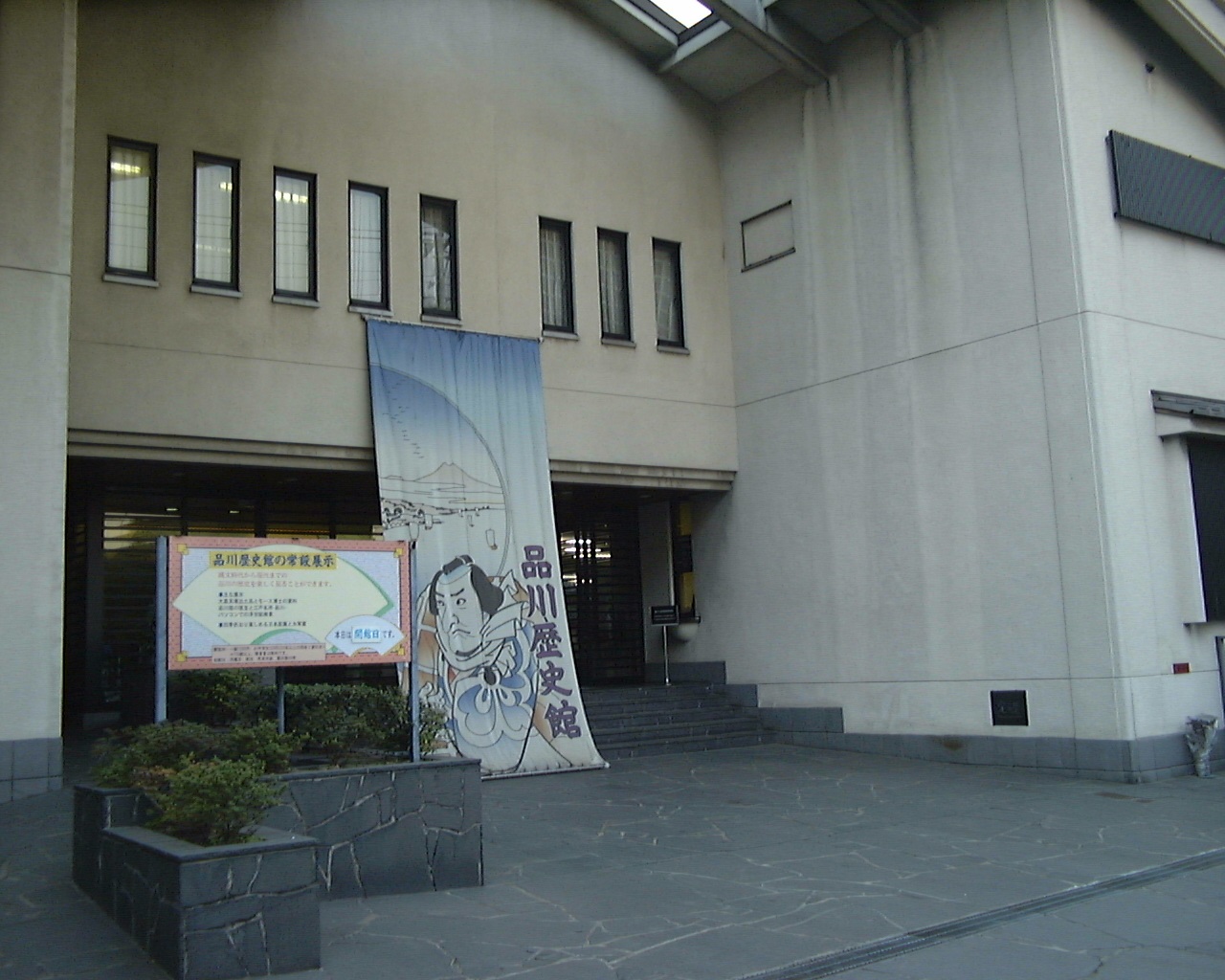
Shinagawa Historical Museum - Omori Shell Mound

The Shinagawa Historical Museum stands a short walk from Omori Station. It has a permanent exhibition in two rooms about the history of the part of Tokyo that today is called Shinagawa City.

[Shinagawa Historical Museum]

The ancient history centers on the Omori Shell Mounds and the Jomon pottery discovered there. This tableland at the coast was convenient for hunting and fishing and therefore settled from an early time.

About halfway between Omori Station and the museum you will have passed the Omori Shell Mounds Garden, where in 1877 Edward S. Morse undertook the first scientific archeological excavation in Japan. The shell mounds are from late and final Jomon (2500-400 BCE) and have delivered Jomon pottery, stone tools, bone article sand skeletons. Nothing remains of the 80 meter long site, but the garden contains a monument to Morse.

[Edward Morse examining a Jomon pot]

In later history Shinagawa’s function as the first post town on the Tokaido Highway occupies central position. An elaborate small-scale model of the post town takes central stage in the room (to see what is left of it: turn left from Shinagawa station, walk along the railway and cross this via the old iron bridge. You will then enter a shotengai shopping street which stands on the spot of the old Tokaido highway and its post station).


[Omori Shell Mound, Shinagawa, Tokyo]

There are displays about Shinagawa as a sightseeing spot in the Edo-period, centering on Gotenyama and its cherry-blossoms; about the Mt. Fuji cult; about Edo-period daimyo mansions; about fishing off the coast and the cultivation of seaweed in the bay when it was cleaner than today; and the coming of the railroads.

The second room focuses on more recent history and especially writers who lived in Shinagawa. There is also garden with a tea house, and in all this is a nice place to drop by, despite the lack of English.
Tel: 03-3777-4060
Hrs: 9:00-17:00; CL Mon (next day if NH), NH, NY (12/29-1/3)
Access:
From JR Oimachi St take a Tokyu bus bound for Ikegami or Kamata and get of at Kashima Jinja-mae stop. Or 10 min. on foot from the Sanno N exit of JR Omori St.

June 20, 2012

Basho Museum, Iga-Ueno (Museums)

The Basho Memorial Museum in Iga-Ueno was built in 1959 as a tribute to the haiku master by the town where he was born in 1644 and where he returned several times in later life, both for family visits and to have haikai sessions with local poets. For the haiku enthusiast, it is a small, but fine museum.


[Basho Museum, Iga-Ueno]

In the exhibition room are displays of haiku and haiga, the first in beautiful calligraphies by Basho himself or later followers. Copies of early editions of Basho's printed works are also on display. If one does not read Japanese, only the haiga may be of interest. In fact, to fully enjoy this museum, one must be able to read the haiku, even if only in the modern transcriptions provided on the labels. The museum provides an excellent bilingual pamphlet introducing the many other sites associated with Basho in this atmospheric old town.
Address: 117-13 Maru-no-uchi Ueno-shi, Mie pref. Tel. 0595-21-2219
Admission: 10:00-17:00; Cl. Monday, year-end and New Year period.
Access: 5 min. walk from Iga-Ueno-shi Station on the Kintetsu Line, or the bus center in the Sangyo Kaikan.

June 19, 2012

Mukai Junkichi: Painter of Minka

Traditional Japanese houses, or minka, are something I am very fond of. My dream is to live in one in the future! For now, I have to do with open-air museums, and that is not so bad, as there are beautiful traditional houses in parks like the Japan Open-Air Folk-house Museum in Kawasaki, the Shikoku Minka Museum or the Hida Folk Village in Takayama.

[Japan Open-Air Folk-house Museum. Photo © Ad Blankestijn]

Another option for minka lovers who have to still there longing somehow is to look at minka paintings. Here oil painter Mukai Junkichi (1901-1995) comes in. His work is shown in his former studio, which is now an Annex of the Setagaya Museum of Art. The only subject Mukai was interested in during the major part of his career were the traditional thatched-roof farmhouses of Japan.

Before the war, Mukai Junkichi had experimented with a variety of styles and also made a visit to Europe where he copied famous paintings in the Louvre. But he came into his own when after the war he realized that Japan’s folk-houses were a fast disappearing breed, as a result of economic development. Mukai felt sad at the loss of these beautiful structures, and traveled to all parts of the country to catch them on his canvasses.

He painted them standing lonely in the fields, with a background of magnificent snowy mountains, or huddled together in a small hamlet. The changing seasons figure prominently in all his works. Above all, Mukai depicted his thatched-roof houses with realism and vividness. In an age of abstract painting and experimentation, Mukai’s style is very traditional. What makes his paintings interesting are the folk-houses dominating them. They are in fact like living persons, all with their own character.


Since 1933 Mukai Junkichi lived in the area of Tsurumaki in the Setagaya ward, which until about 30 years ago managed to keep its rural character. Mukai’s own traditional house stood on an elevation among the fields.

When you come now, you will find a residential area where the houses have been squashed so closely together that even a blade of grass will not fit between them. The small garden of the Mukai residence with its oak and zelkova is the only spot of nature in the wide surroundings.

[Hida Folk Village. Photo © Ad Blankestijn]

Unfortunately, the original house was destroyed by fire in 1961 (taking with it many drawings, documents, photos and the like) and the house with studio you find now was put up again in 1962. Inside, however, it succeeds in keeping a pleasant folk-art atmosphere. The house was already turned into a museum in 1993, when Mukai was still alive.

The small museum organizes about four exhibitions a year, showing of course the folk house paintings, but also drawings, sketches and photos. You will also find the easels on which Mukai worked, including the small one he carried with him on his travels, now with the paint dried up.

The museum forms an elegant and engaging environment, an temporary escape from the city just as the paintings themselves. Today you will find the real folk-houses only in museums or specially preserved areas, but their spirit lives on in the paintings of Mukai Junkichi.
Tel. 03-5450-9581
Hrs: 10:00-18:00; CL Mon (next day if NH), NY.
Access: 10-min. on foot from W exit of Komazawa Daigaku Station on the Tokyu Denentoshi Line (the route is clearly indicated, also in English); 18-min. walk from Shoin Jinja Station on the Tokyu Setagaya Line; bus 5 from Shibuya Station (bound for Tsurumaki Eigyosho) to Komazawa Chugakko bus stop, then 5-min. on foot. Here is a map.

Hyogo Prefectural Museum of History (Museums)

Hyogo’s history museum stands fittingly in Himeji, on a plot of land behind the soaring walls of the castle and close to the Museum of Modern Art. It was designed by Tange Kenzo. On the first floor are two large rooms for the permanent exhibition. The first one is dedicated to the “Primitive Ages” (some interesting items are the bronze mirrors found in the Akura-Takatsu burial mound dating from the 3rd c.), the second one to the “Ancient Ages”, the “Medieval Ages” (about the spread of Buddhism and with models of important temples in Hyogo) and the “Early Modern Ages.” On the second floor is also a gallery dedicated to the “The Modern Age.” Here is also a large room for temporary exhibitions.


[Himeji Castle]

Galleries Four and Five are again for the permanent exhibition and these are perhaps the most interesting part of the museum, as they have displays about Himeji Castle and other castles in Japan. Himeji is one of the only twelve castle keeps (or donjons) that survive in their original state. Others are, for example, Inuyama (built in 1537), Matsumoto (1596), Hikone (1606), Matsue (1611) and Kochi (1745). Himeji castle itself dates from 1609. There is also a model of the now destroyed Edo Castle, which used to be the largest in the country. Most castles were destroyed in a wave of anti-feudal feelings after the start of the Meiji period, and the resulting open spaces were often used for building the new prefectural offices. After seeing all the models, from one of the northern windows of the museum you can get a view of Himeji Castle, majestically rising up like a white heron taking off in flight.
0792-88-9011
68 Honmachi, Himeji-shi, Hyogo-ken 670-0012
10:00 - 17:00; CL Mon (next day if NH), NY
5 min by Shinki bus (no. 3, 4, 5 or 64) from N side of Himeji St to Bijutsukan-mae bus stop, then walk a few min; or 20 min on foot from Himeji St

Basho Museum, Tokyo

In 1680, the haiku poet Basho moved from Nihonbashi - right in the bustling center of Edo - to a small country house in Fukagawa. Here he started new haikai activities. Away from the city with its endless rounds of linked verse (renga) sessions where he acted as referee (which brought a reasonable income), now he was free to concentrate on his art and bring it to new heights. Most famous haiku date from this period.

The same holds true for the poetical name that finally stuck with him: he named himself Basho after the plantain (some call it a banana plant) that disciples had planted in the garden of the cottage. The Koto City Basho Museum was built on what is believed to have been a place very close to Basho's hut.


[Basho Museum, Tokyo]

The original hut did not survive (in fact, there were three different 'Basho huts,' because fire once took its toll and another time Basho himself moved out on the faraway journey to northern Japan); the area was included in a samurai estate. When in 1917, after a tsunami hit a stone frog was found here that people believed to have been in Basho's possession (I do not know why, except the fact that he wrote a famous frog haiku! The frog stone can be seen in the museum), it was decided that this must have been the location of Basho's hut. Now a small Inari shrine occupies the spot just south of the museum. Opposite the shrine is a small rooftop park with a statue of Basho.


[Rooftop display near Basho Museum, Tokyo]

The museum's exhibits include calligraphies of Basho's haiku (amongst others by Buson); portraits of the poet; and an example of the clothes he may have worn when traveling, as well as an ingenious small writing brush with ink pot for use on the road. In the garden stand a few haiku stones as well as a miniature copy of Basho's hut. To remain wholly in style, the museum also has plantains growing against its walls.
Address: 1-6-3 Tokiwa, Koto-ku, Tokyo Tel. 03-3631-1448
Access: 7 min. from Morishita Station on the Shinjuku Subway line; 25 min. from Monzen-nakamachi on the Tozai Subway line; 20 min. from Ryogoku Station on the JR Sobu line.
Admission: 10:00-17:00; Cl. Monday, year-end and New Year period.
Facilities: Counter selling pamphlets (all J); meeting rooms and library; garden; separate roof garden with Basho statue.

June 17, 2012

Incline and Lake Biwa Canal Museum, Kyoto

Kyoto is often seen as purely a historical city for tourists. Indeed, when you sit in a quiet Zen garden you tend to forget that it is also a hothouse of advanced research and industry.

That was already so in the past. In the last 30 years of the 19th century, after the capital was transferred to Tokyo, the city was indeed in danger of becoming an oddity for tourists. But despite the loss of economic power and status, Kyoto's citizens fought back and realized a stunning number of modern "firsts." Kyoto became the first city to found a system of modern elementary schools, already in 1869, at the initiative of its citizens (the bangumi schools). In 1891, it realized the first hydroelectric power generation project (remember, the 90s of the 19th c. were still an age of gas lights and candles!) and in 1895 the first electric streetcar of Japan started to run in Kyoto. The first Japanese Nobel Prize was won in 1949 by Yugara Hideki, a physicist of Kyoto University.


[The Biwa Lake Canal coming out of the last tunnel at Keage - Photo © Ad Blankestijn]

The hydroelectric power project mentioned above is linked to the construction of a canal between Kyoto and Lake Biwa, seven kilometres to the east, to provide waterpower to modernise the city's textile industry, supply drinking water, provide water for fire fighting and irrigation, and, finally, make transport between Lake Biwa and Kyoto easier (mainly for the transport of rice from Shiga and Fukui Prefectures to Kyoto).

Such a canal had already been the dream of leaders as Hideyoshi, but it would take modern technology to realize it in the Meiji-period, on the strong promotion by the then Governor of Kyoto Prefecture, Kitagaki Kunimichi. The canal starts from Lake Biwa and runs through Yamashina and Keage before reaching the eastern part of Kyoto. The most difficult part of the construction was building three tunnels through the mountains - the longest measures 2.4 kilometres. Engineer of this difficult project was the Tanabe Sakuro, a "young genius" who had just graduated in 1883. Starting in 1885, it took five years to complete the whole canal. A second, almost parallel canal purely for drinking water was added in 1912.


[The boat cradle at the place where the boats were loaded unto it - Photo © Ad Blankestijn]

One problem was how to bring the flat-bottomed wooden canal boats down the sharp drop of 36 meters at the pass of Keage (near the Westin Miyako Hotel), leading from central Kyoto to the suburb of Yamashina. Finally, an inclined slope with rails was laid out here, over which flat railroad cars moved onto which the boats were hoisted out of the water (and in it again at the other end). These "boat cradles" moved down the slope of half a kilometre in about 15 minutes - one up and one down at the same time, connected by a steel cable.


[The Incline at Keage - Photo © Ad Blankestijn]

Interestingly, these railway carts were moved by electric power - the other innovation introduced by Tanabe Sakuro was building a hydroelectric plant at Keage which could use the same steep drop of 36 metres to direct the canal water through steel pipes and have it drive the wheels of two turbines. Tanabe Sakuro traveled expressly to the United States to see the first hydroelectric power plant built there, in Aspen, Colorado. Later, the electricity generated by the Keage plant was used for Kyoto's first streetcars as well as for streetlamps.


[The "boat cradle" on the Incline at Keage - Photo © Ad Blankestijn]

It is - by the way - surprising that there was still the need for such a canal for shipping, considering the fact that the first railway line between Kyoto and Otsu had already been opened in 1880!

I do not know when shipping through the canal stopped, but the incline is still there with a boat cradle and model of a flat bottomed boat - and what is more, the canal still brings drinking water to Kyoto and the power plant is also still in operation. It has been joined at Keage by a water purification plant.

The Lake Biwa Canal Museum of Kyoto is a free facility set up to commemorate the canal, the Incline and hydroelectric power plant. You will find ample photo's and materials here on the large project, as well as a power generator.


[Statue of Tanabe Sakuro at Keage - Photo © Ad Blankestijn]

From the courtyard of the museum there is a good view of the Incline, which is now a popular cherry blossom viewing spot (as are parts along the canal in Yamashina). When you follow the incline east from the museum, you come to a small park graced by a statue of Tanabe Sakuro and a memorial to workers who lost there lives when building the canal.

A branch of the canal goes east and north for irrigation purposes and passes through the grounds of Nanzenji temple via a redbrick aqueduct - a modern piece of architecture that blends remarkably well into the temple grounds and is now a popular landmark.


[The aqueduct in the grounds of Nanzenji - Photo © Ad Blankestijn]
Museum Tel: 075-752-2530
Museum Hrs: 9:00-17:00 (Dec-Feb: 16:30); CL Mon (next day if NH), NY
Free
Access (both to museum and incline): 5 min walk from Keage St on the Tozai subway line
Materials: There are several interesting articles on the Lake Biwa Canal project on the web: